Inside the former communal washhouse of Orani, Sardinia, now Museo Nivola, Hannah Levy opens Blue Blooded — Sangue blu, a body of new sculptures built around the horseshoe crab and its cobalt blood.
The limulus is the hinge. Marine arthropod, Triassic survivor, pharmaceutical infrastructure: the horseshoe crab has outlasted dinosaurs and now bleeds each summer into plastic troughs on the American East Coast so that vaccines and intravenous drugs can be tested for bacterial contamination. Its amebocyte lysate is, at the moment, one of the quieter load-bearing substances of modern medicine. Levy's first institutional solo in Italy, curated by Giuliana Altea, Antonella Camarda and Luca Cheri at Museo Nivola, treats that creature as a question rather than a motif.
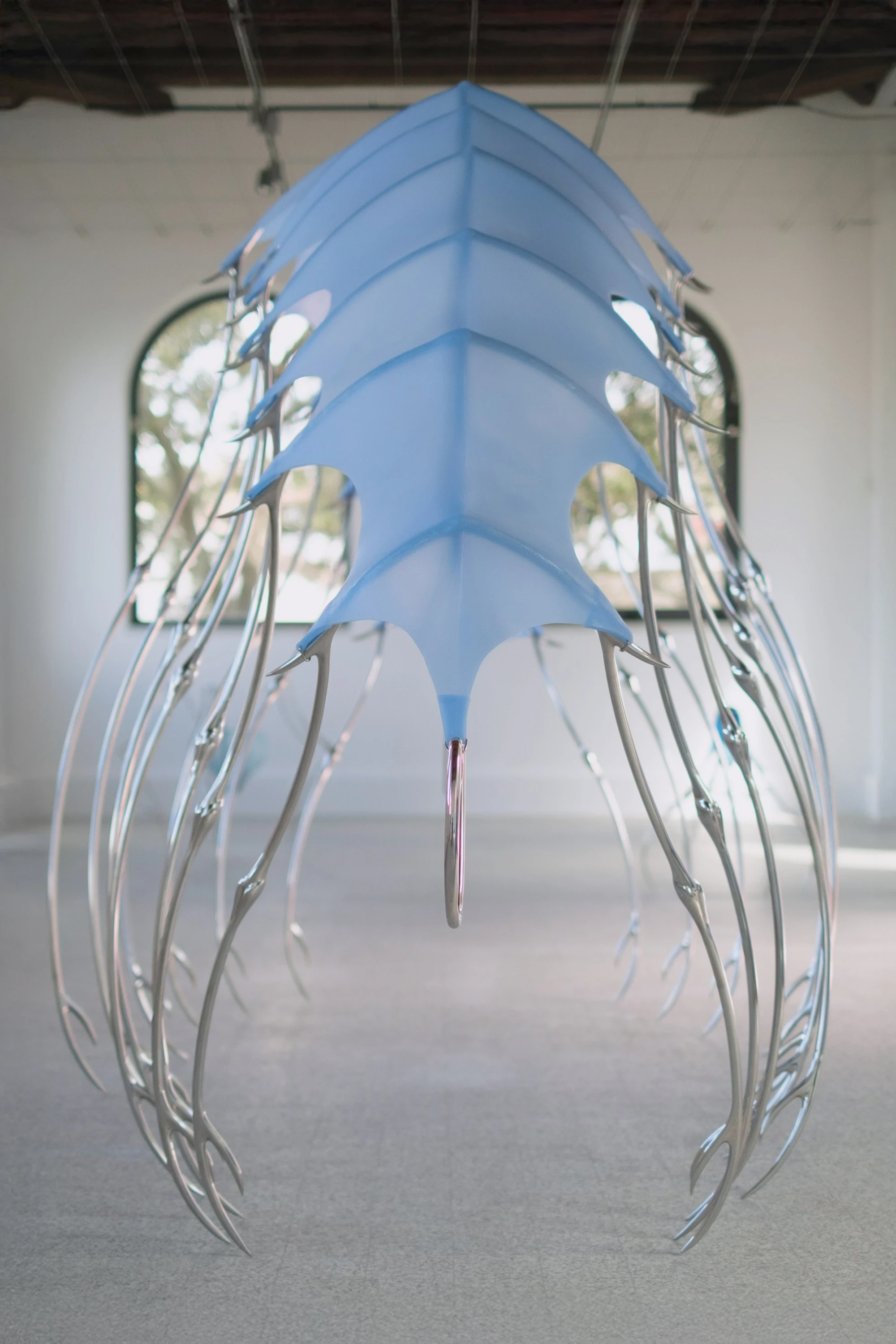
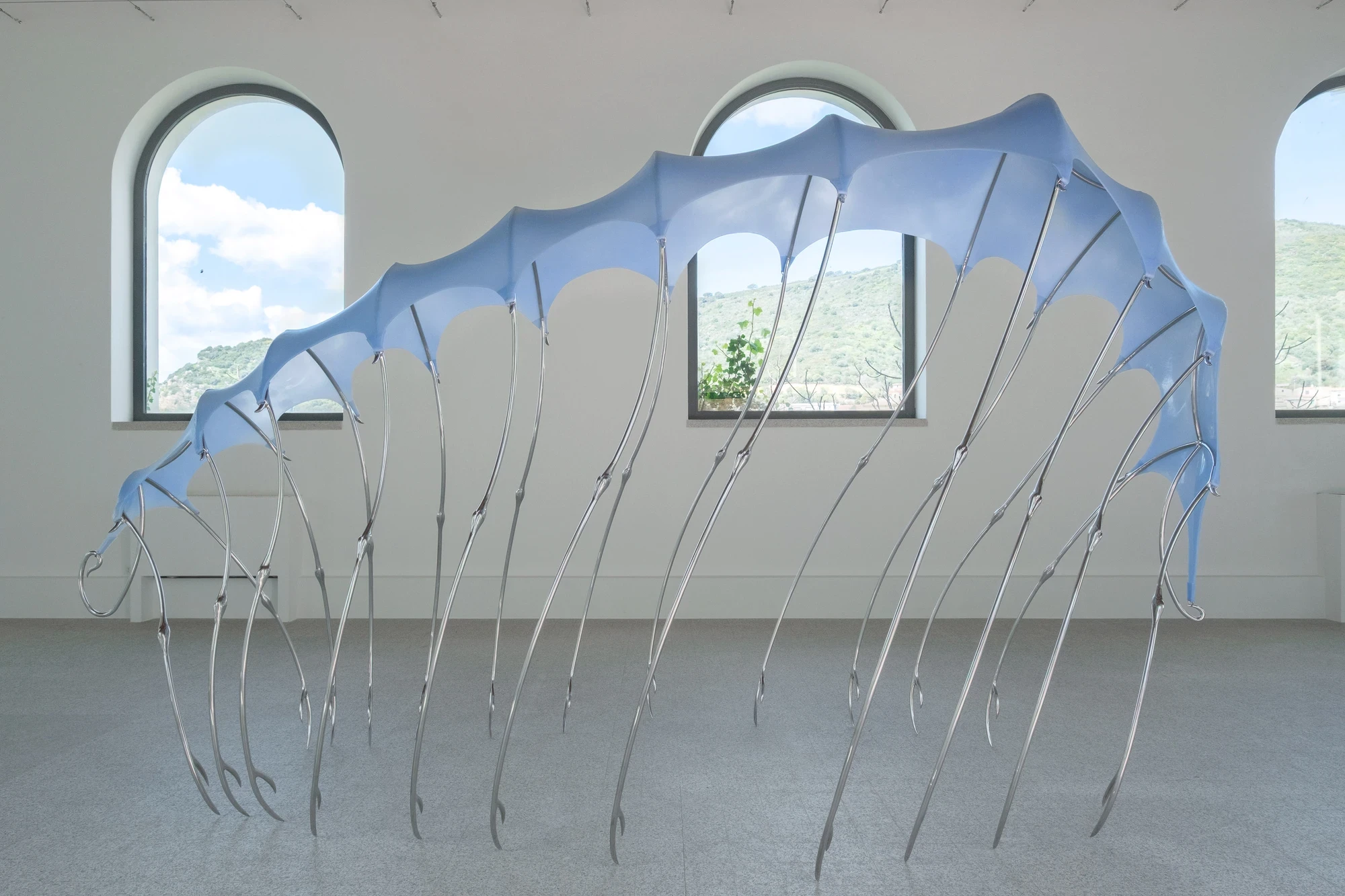
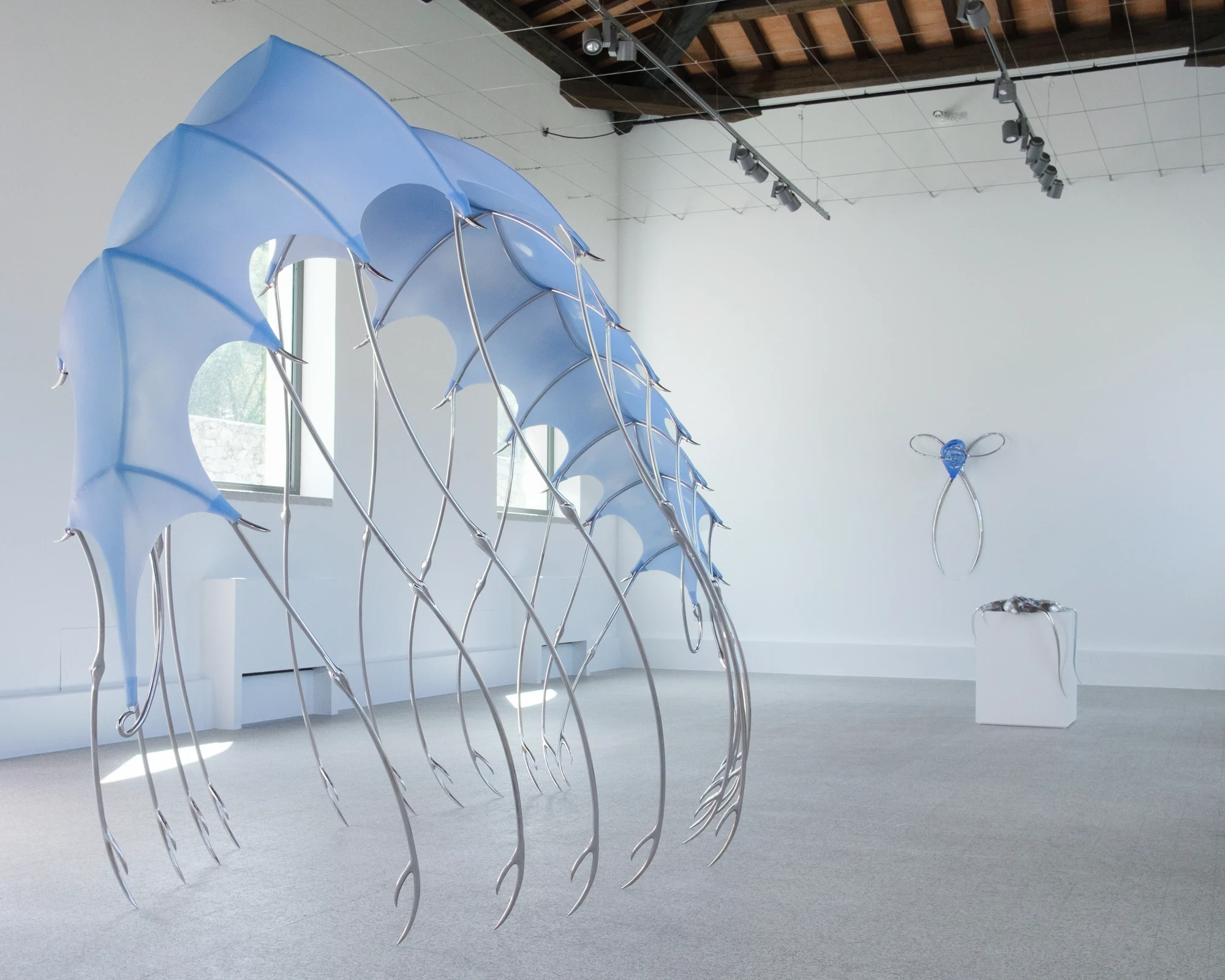
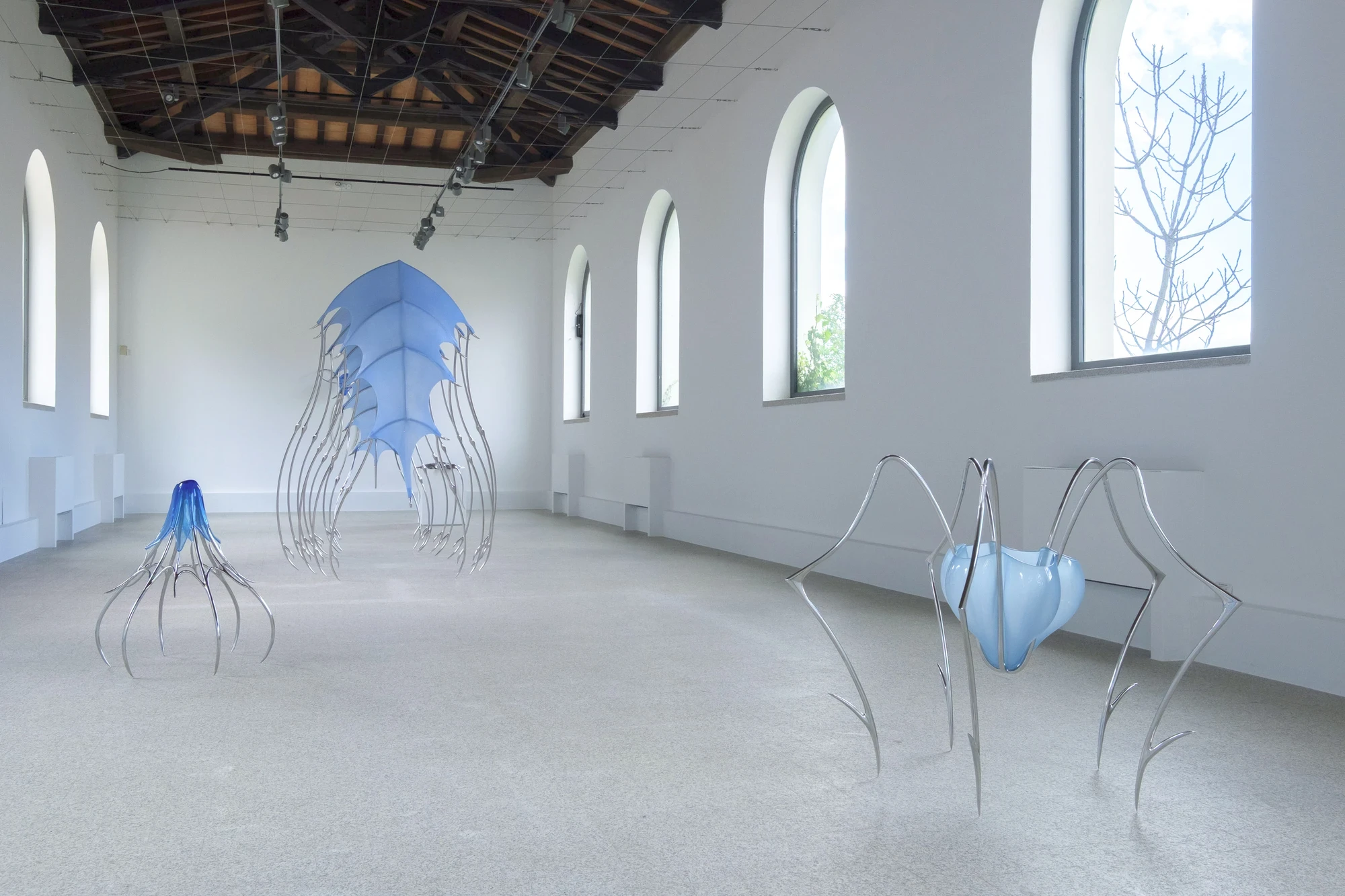
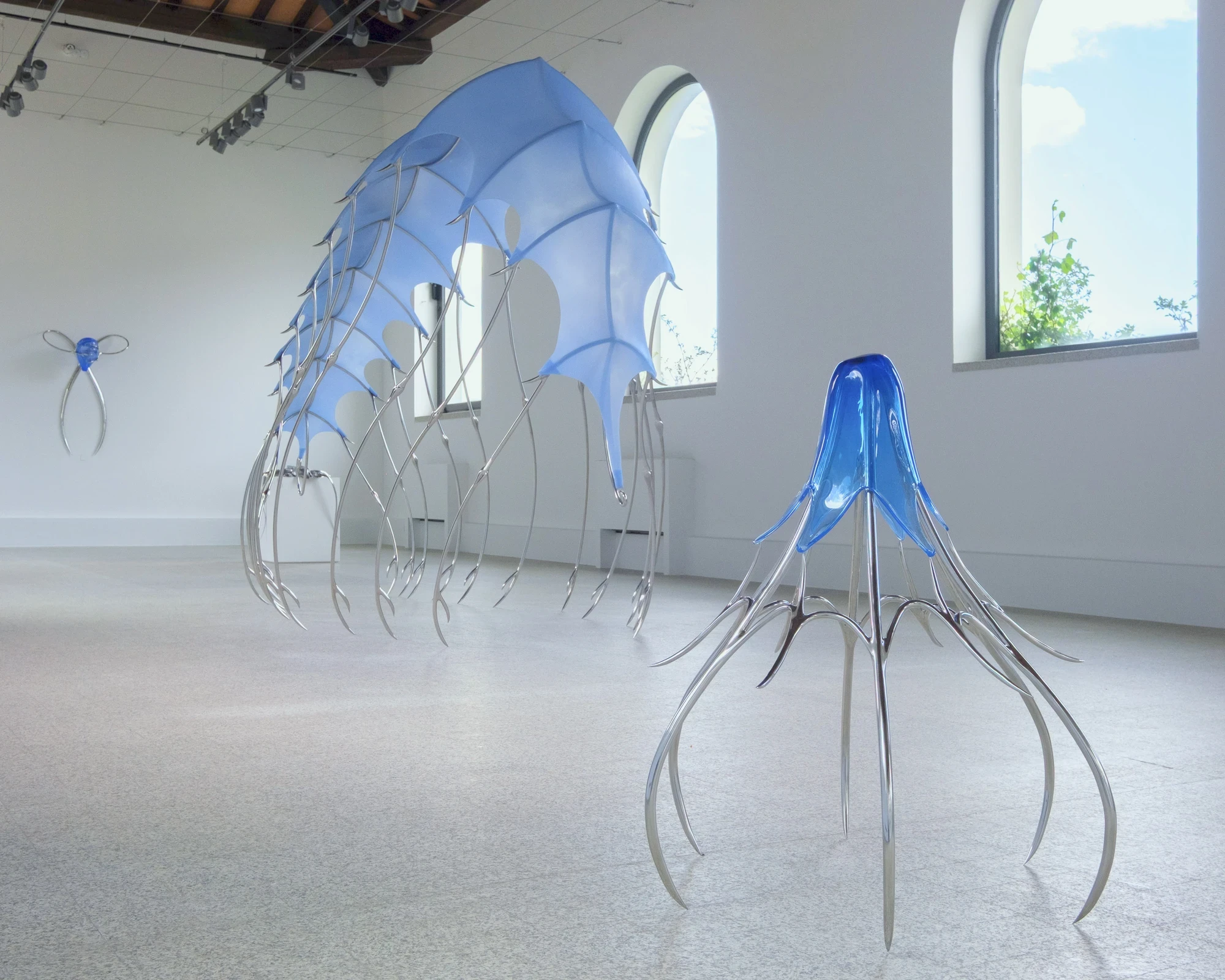
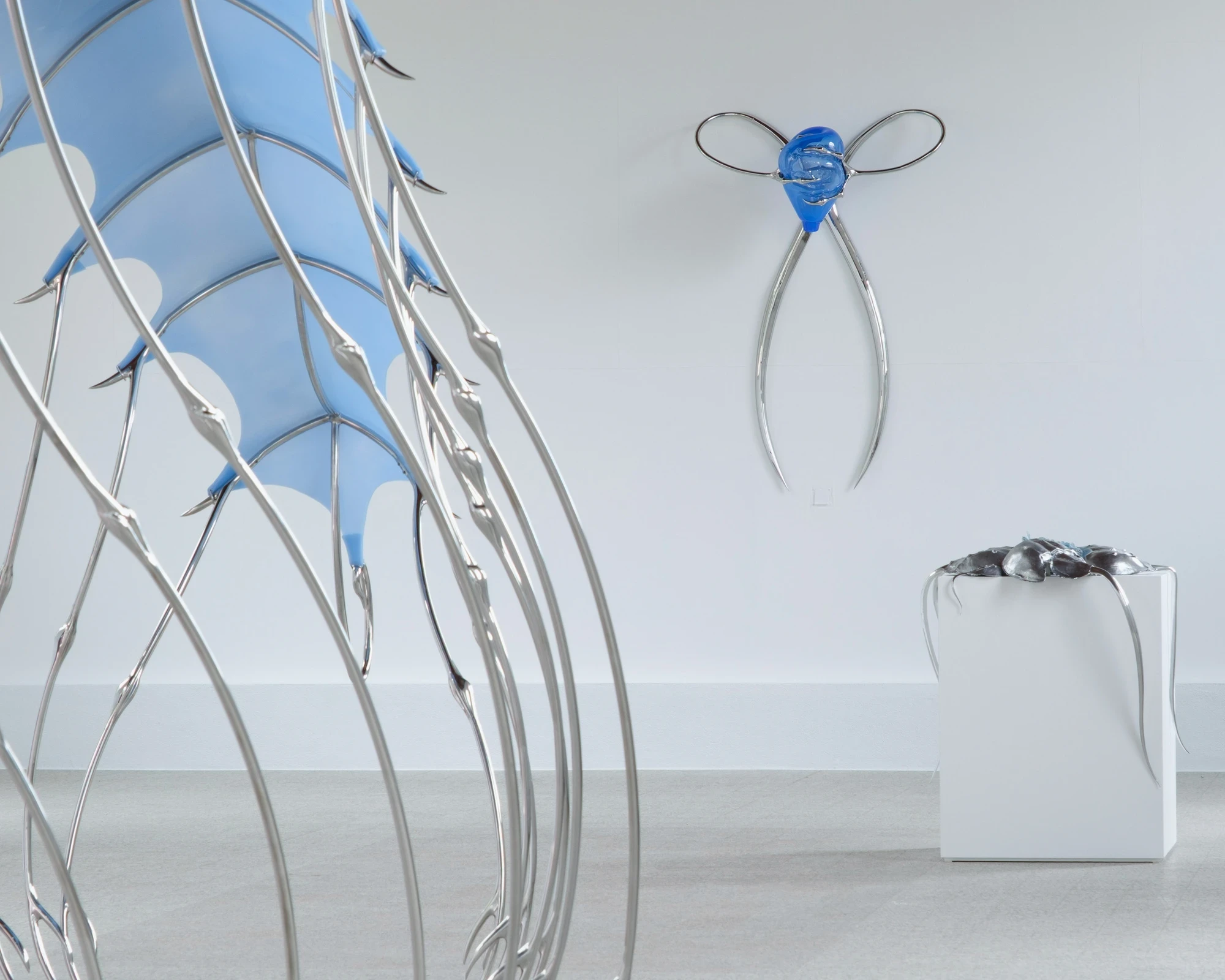
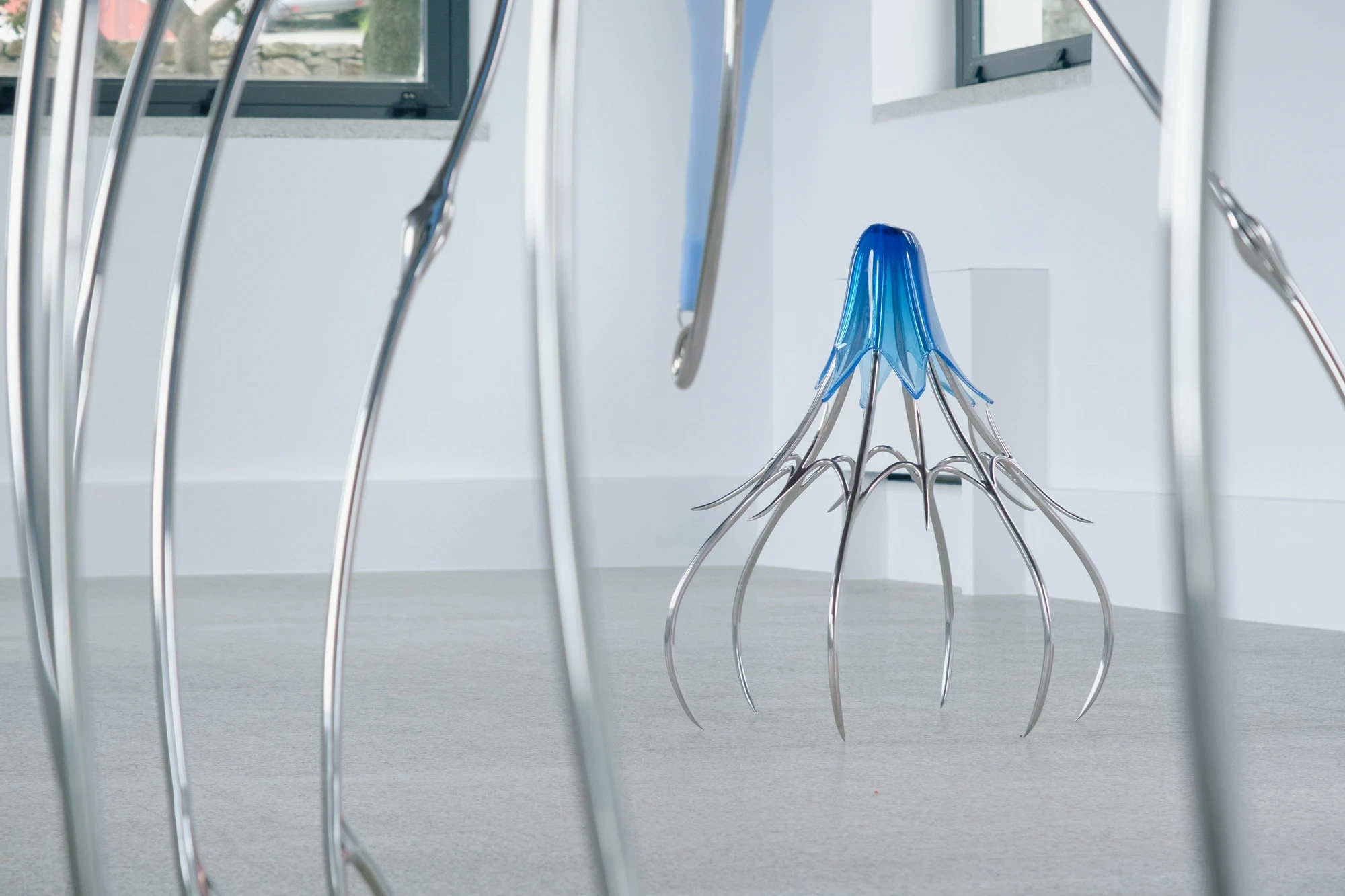
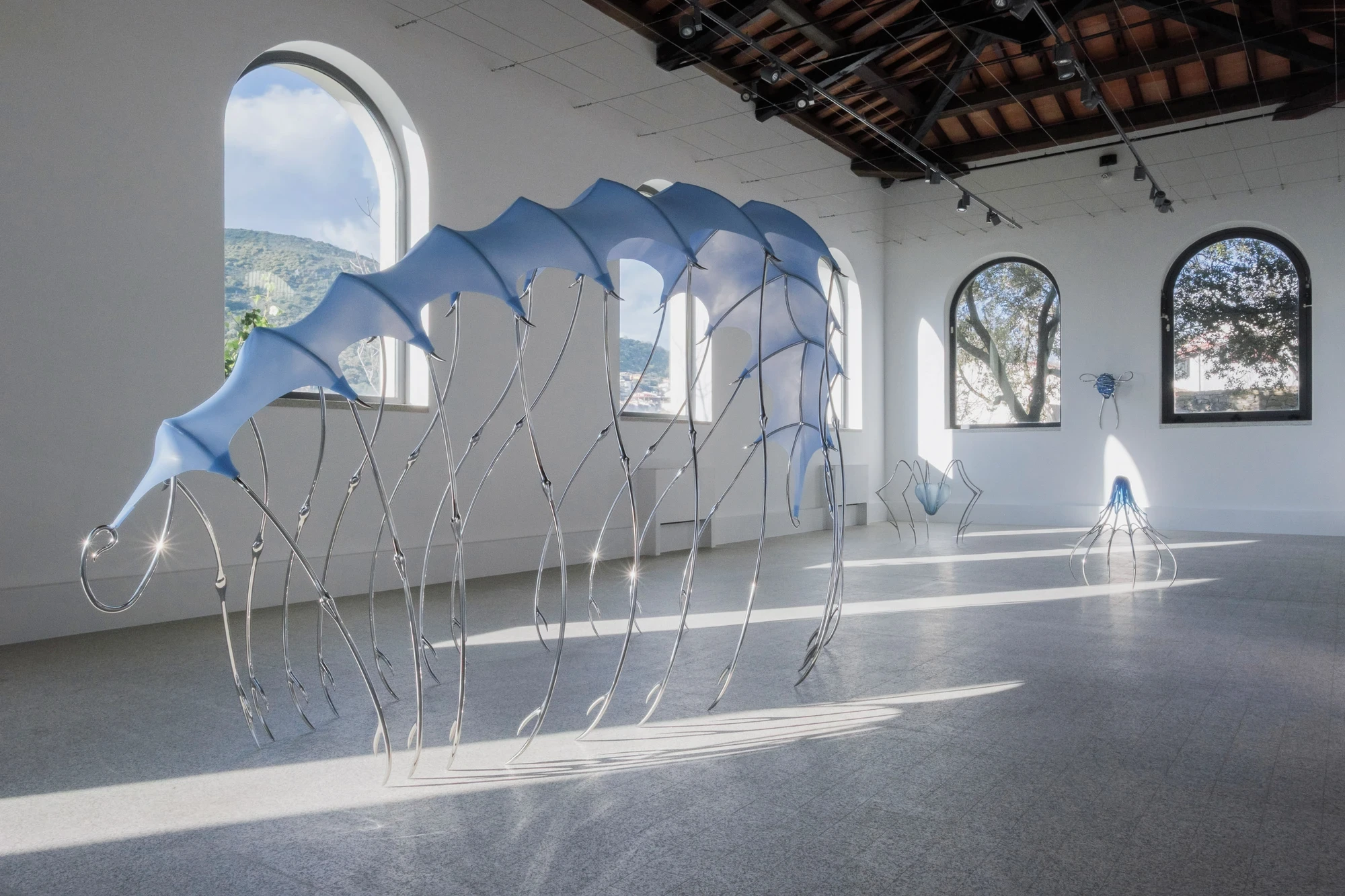
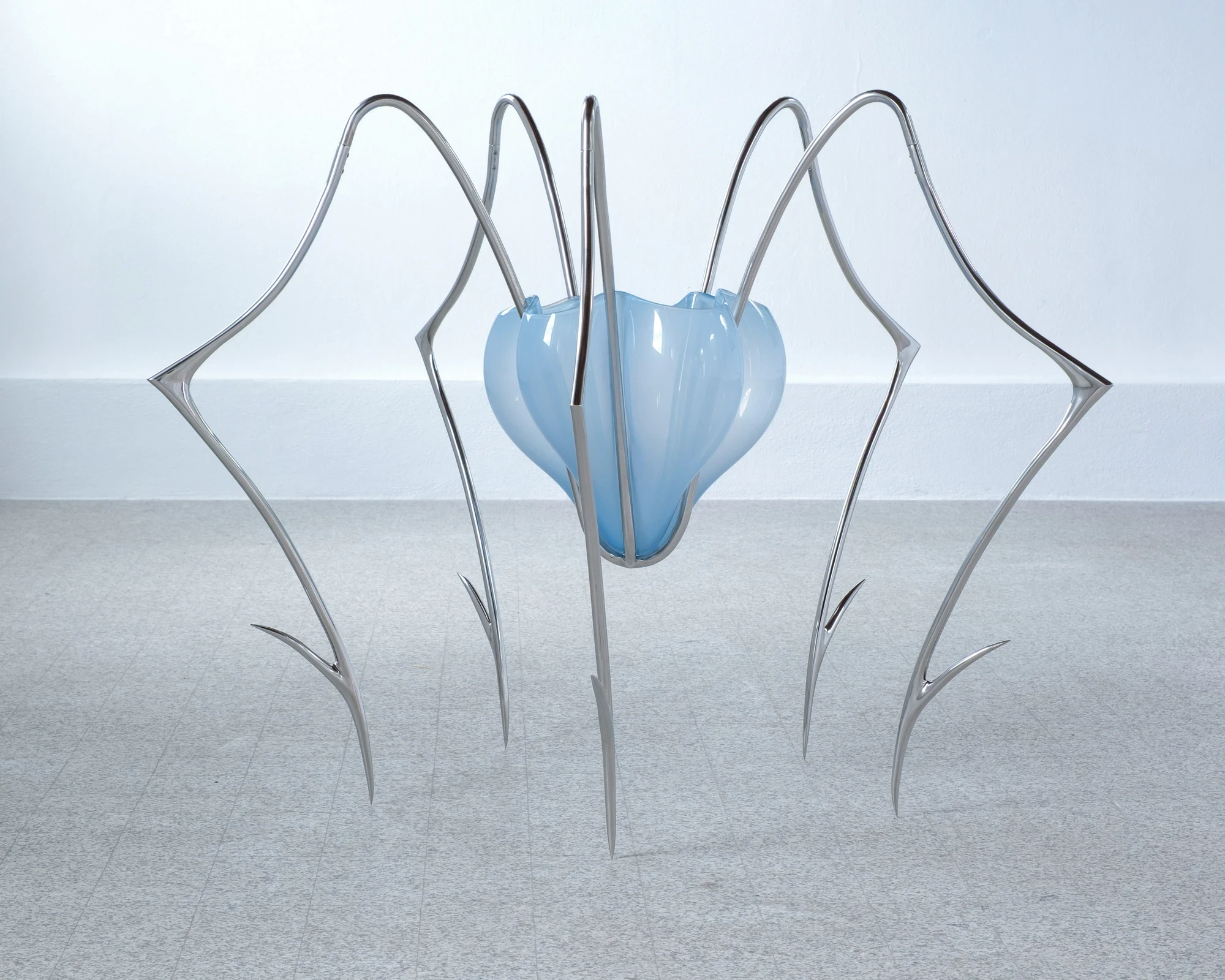
The washhouse nave is long, gabled, lined with tall arched windows that frame the Barbagia hills. Down its centre hangs the exhibition's central work: a tentacular canopy in polished stainless steel and pale silicone that reads at once as a beach shelter, a ribbed carapace, and the skeleton of something extinct mounted in a provincial natural history museum. Slender metal legs with hooked claws hold the membrane aloft. Walk underneath and the silicone glows the cold blue of a hospital corridor; walk around it and the Sardinian light passes through and casts a thin shadow on the terrazzo.
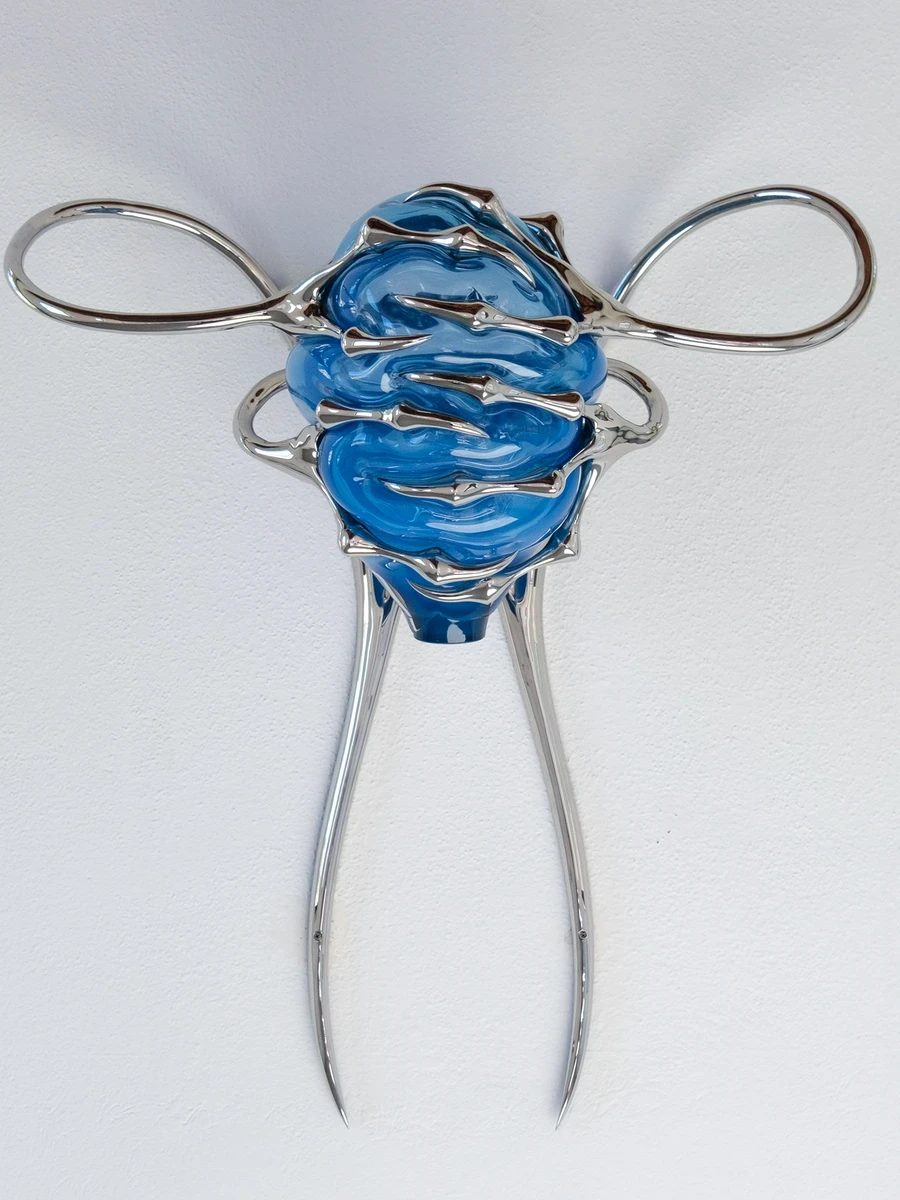
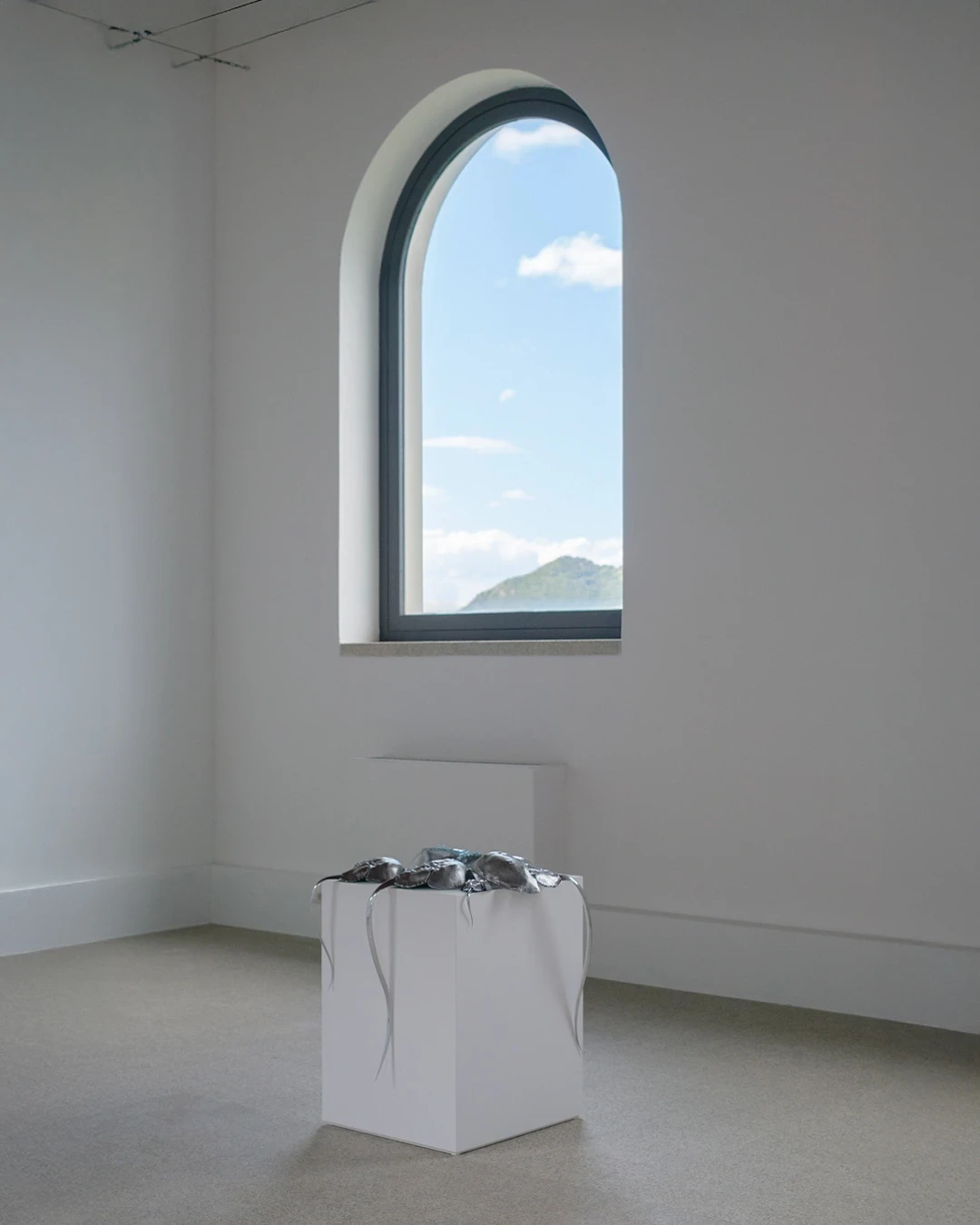
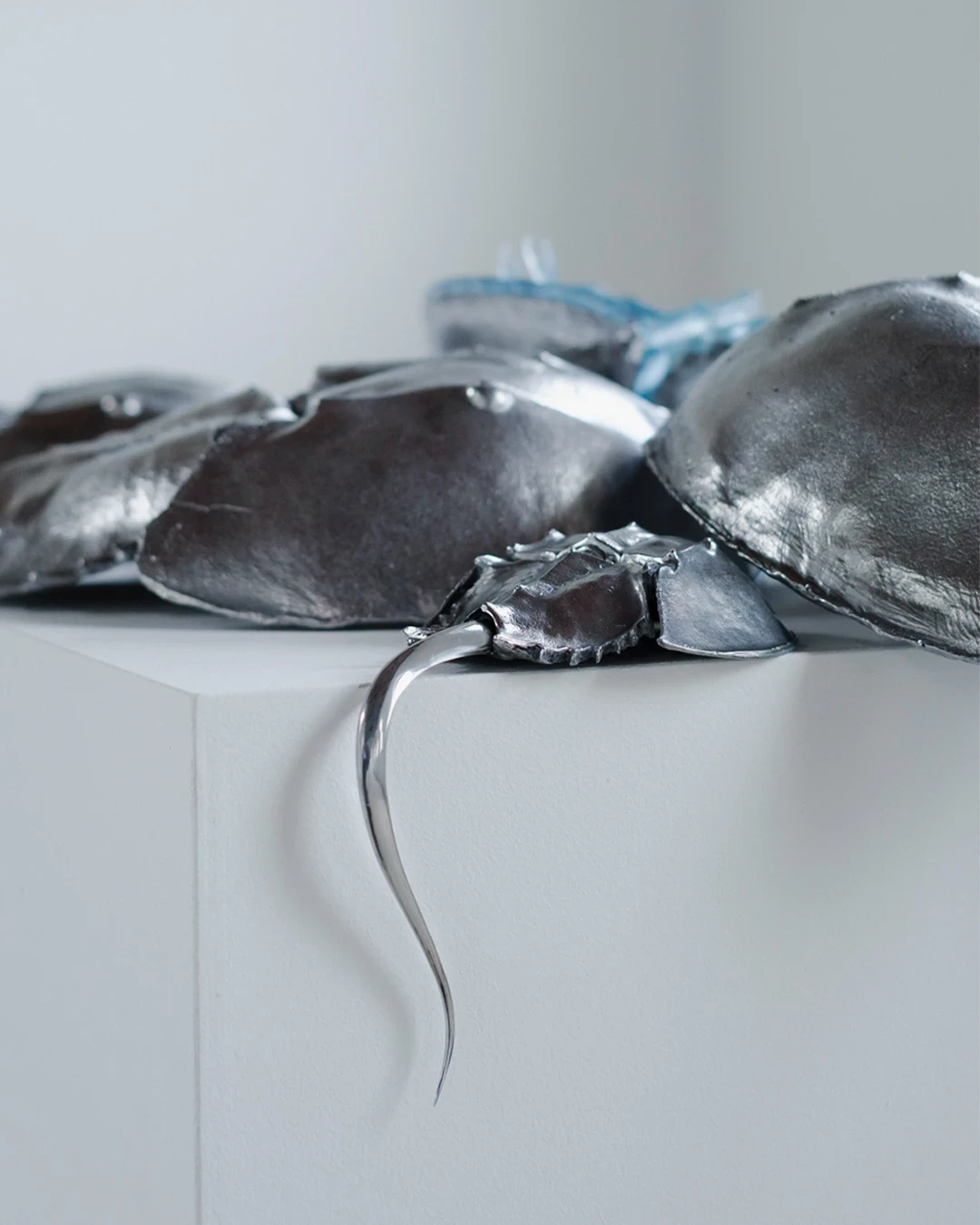
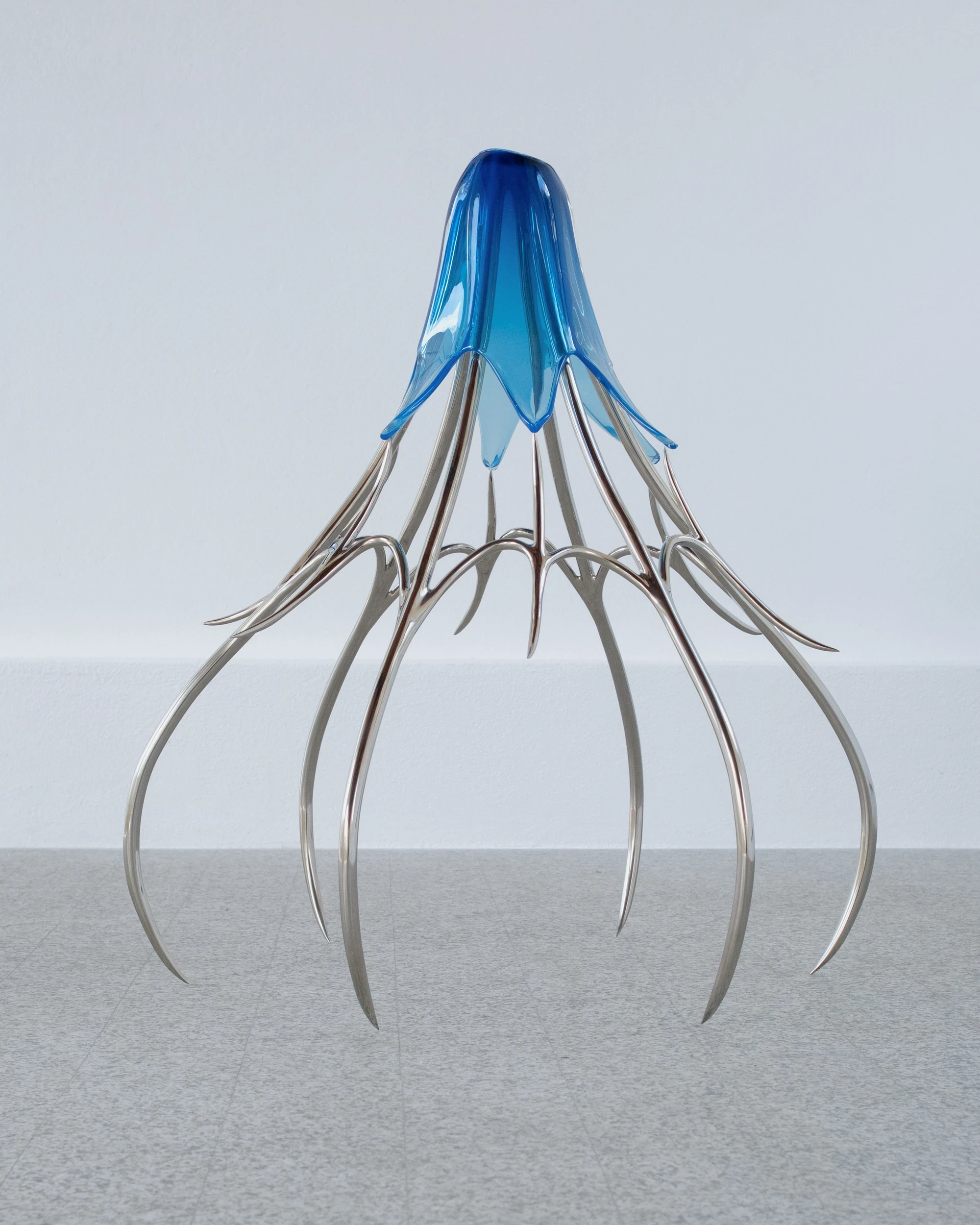
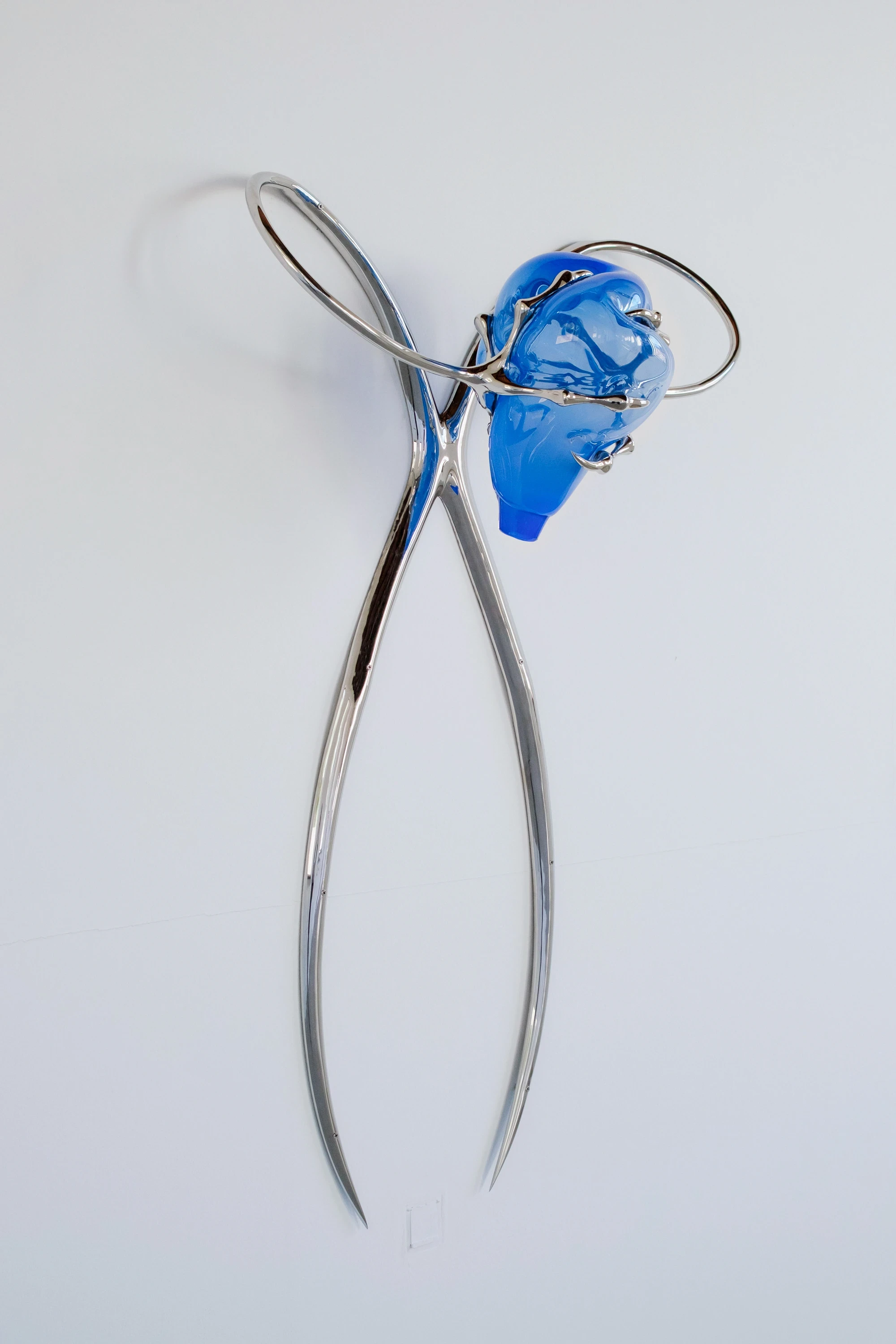
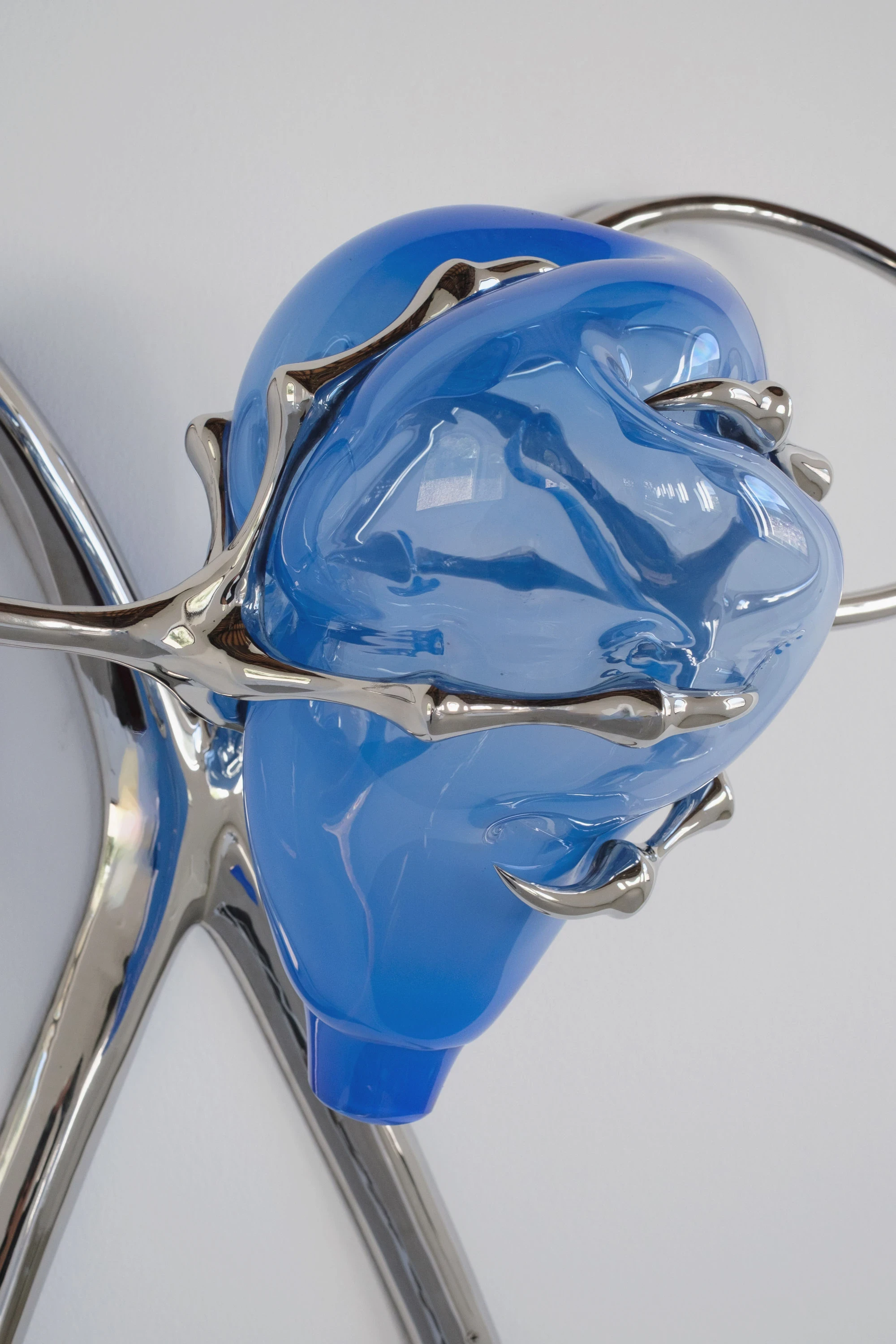
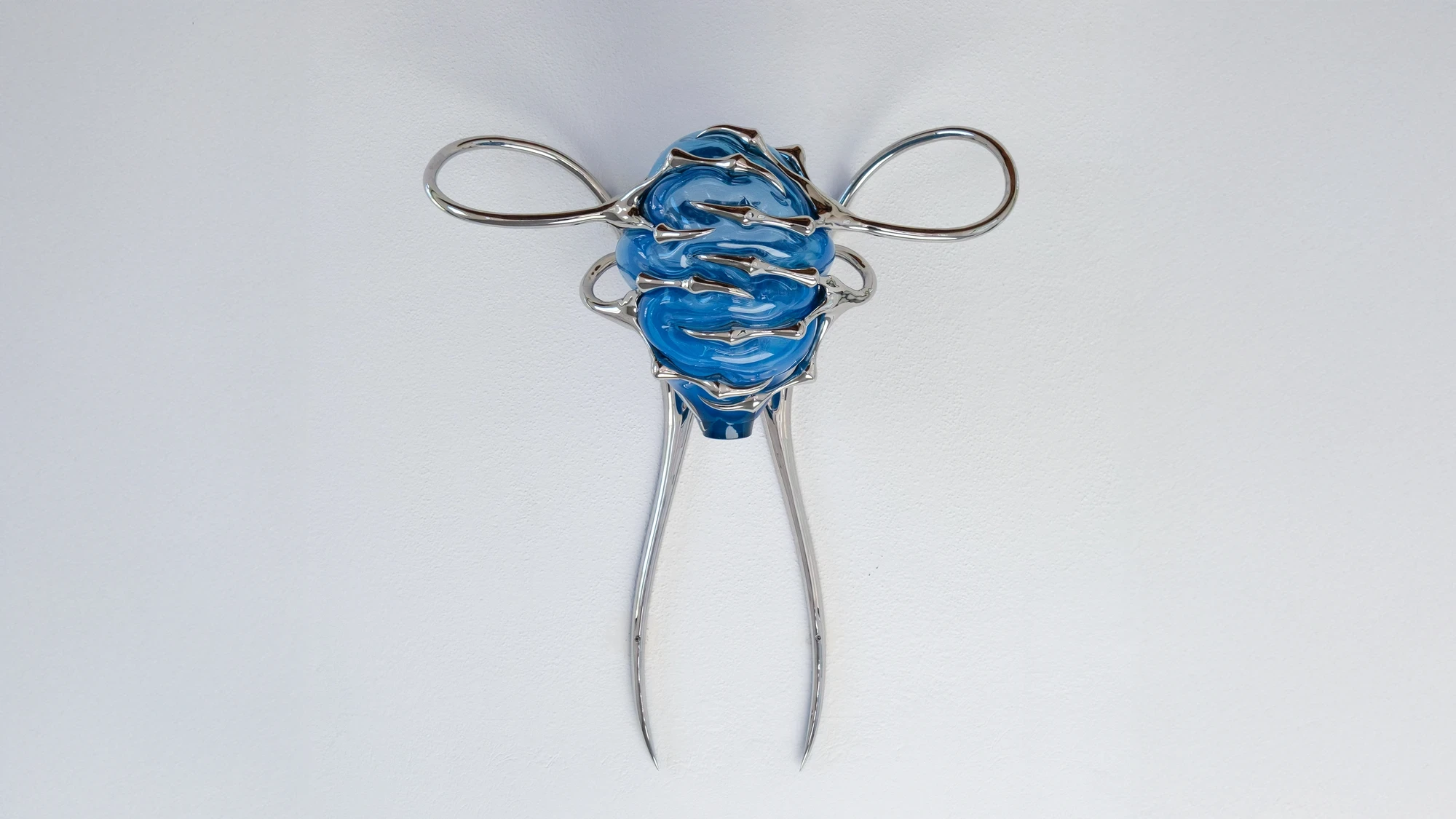
On the floor beside it, blown blue glass sits caught inside steel cages. The glass preserves the instant of its molten collapse against the cold metal, fluid arrested by pressure. A cluster of aluminium shells, cast through the lost-wax process directly from real horseshoe-crab exoskeletons, are piled on a white plinth with their exaggerated tails trailing over the edge. One shell sits overturned, its underbelly filled with cast cobalt glass, an anatomical diagram rendered as offering. On the walls, pincer-like sconces grip misshapen orbs of blown blue glass in what the press release calls a "faintly disquieting sensuality."
Levy, who participated in the 2022 Venice Biennale The Milk of Dreams, positions her practice in a Surrealist-inflected line that includes Meret Oppenheim, Louise Bourgeois and Robert Gober. The industrial finish is never neutral. Polished steel behaves like surgical tooling; silicone behaves like skin. The show's argument is that seduction and unease are the same tool held at different angles.
The siting is the strange part. While researching the show, Levy discovered that Costantino Nivola first experimented with his signature sandcasting technique while playing with his children on the beach at Springs, Long Island, in the late 1940s. That same coastline is where Levy collected the horseshoe-crab specimens at the conceptual root of Blue Blooded. Two bodies of work, two generations apart, anchored to the same tideline. The rectangular clarity of the Orani nave, with its exposed-beam ceiling the curators compare to ribs, offers a counterpoint to the sculptures' pulsing curves.
In the European Union, a synthetic substitute for limulus lysate was approved in 2020. In the United States, the bleeding continues. Blue Blooded — Sangue blu does not argue for a position; it builds a room in which the question of what our survival costs other species can sit, lit sideways by Sardinian sun through arched glass, and refuse to dissolve. Open through 12 July 2026.