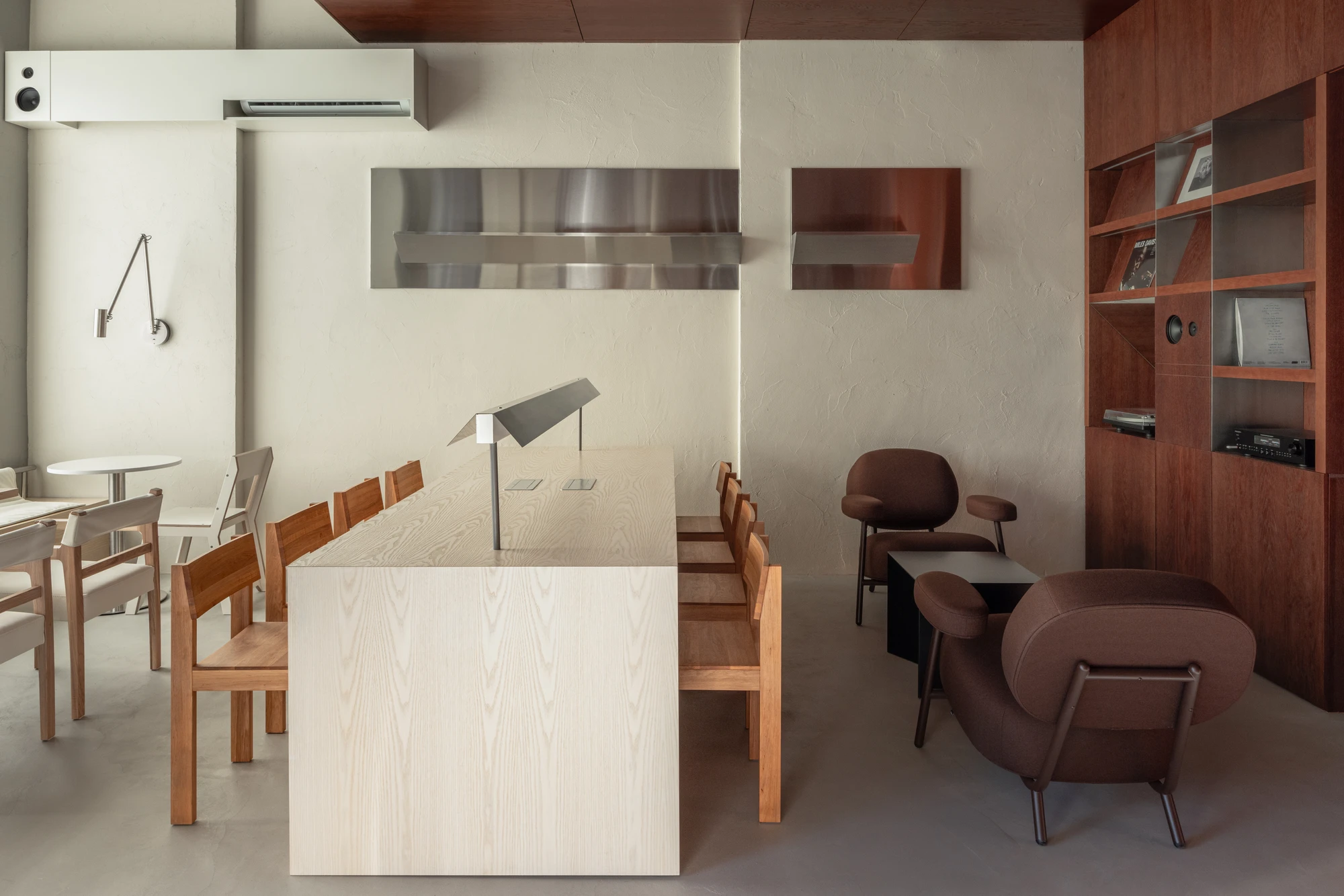
Inside a 66 sq m corner unit, Kidz designs Biblioteka Coffee, a new location for the cafe chain that pairs books, vinyl and espresso under a single material logic of opposites.
Biblioteka Coffee is a chain that has spent years braiding three appetites together: books, vinyl and good coffee. The brief for the new outpost arrived with a clear vision and a thick stack of references, but the client left room for the studio to rewrite the visual language from inside. Kidz took the offer and built the project around a single editorial idea, the meeting of two states the studio calls a duet of opposites.
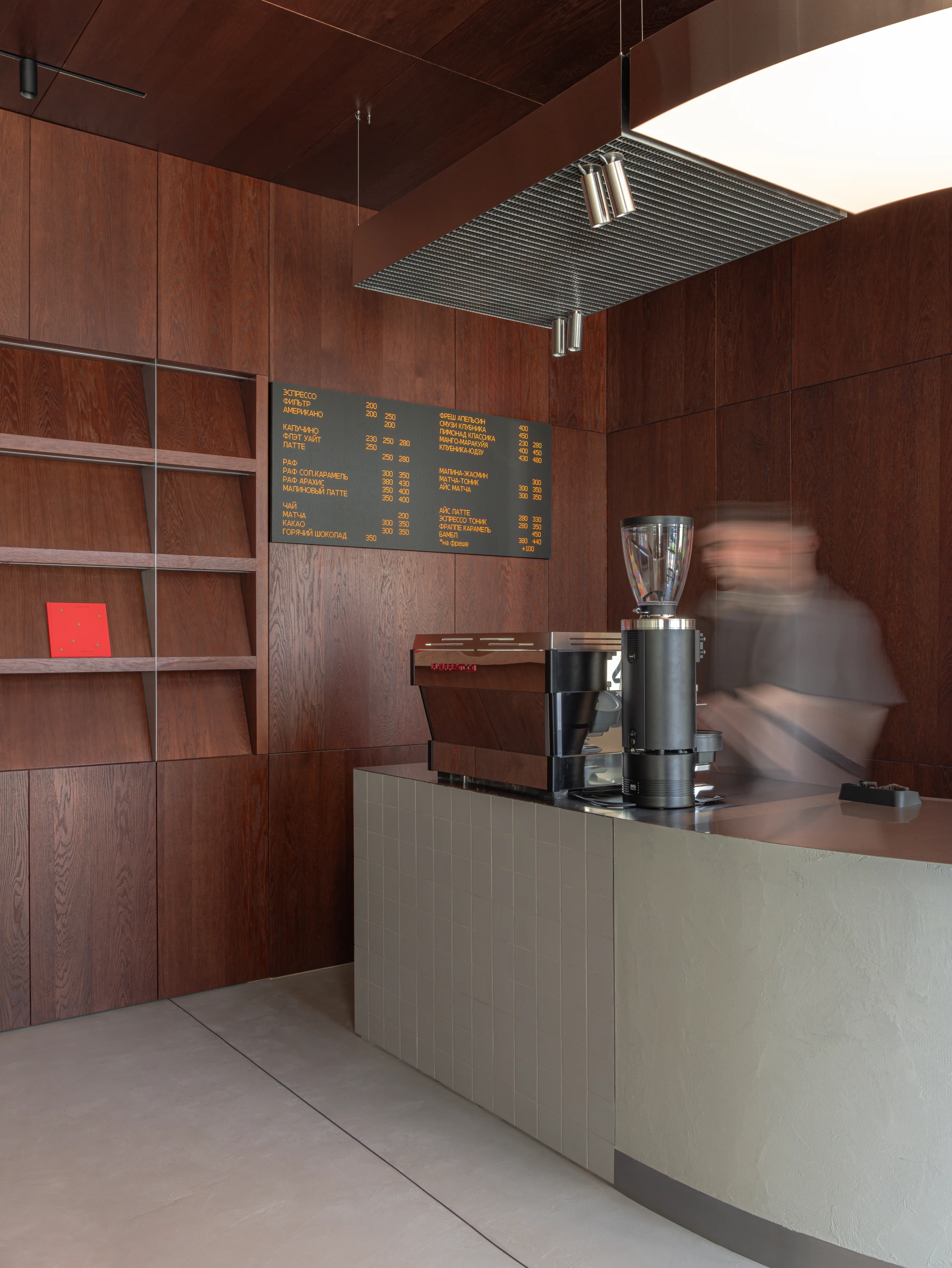
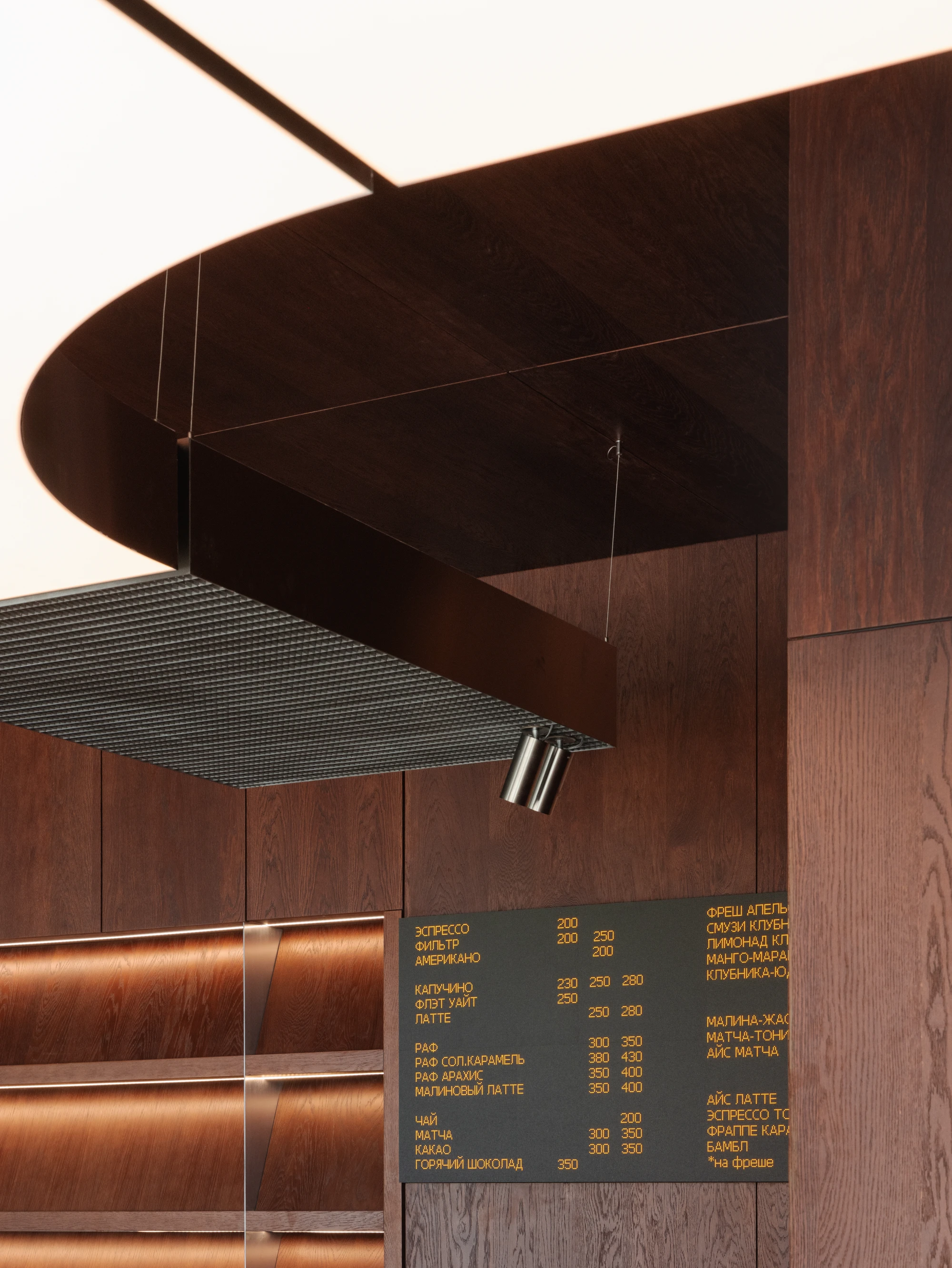
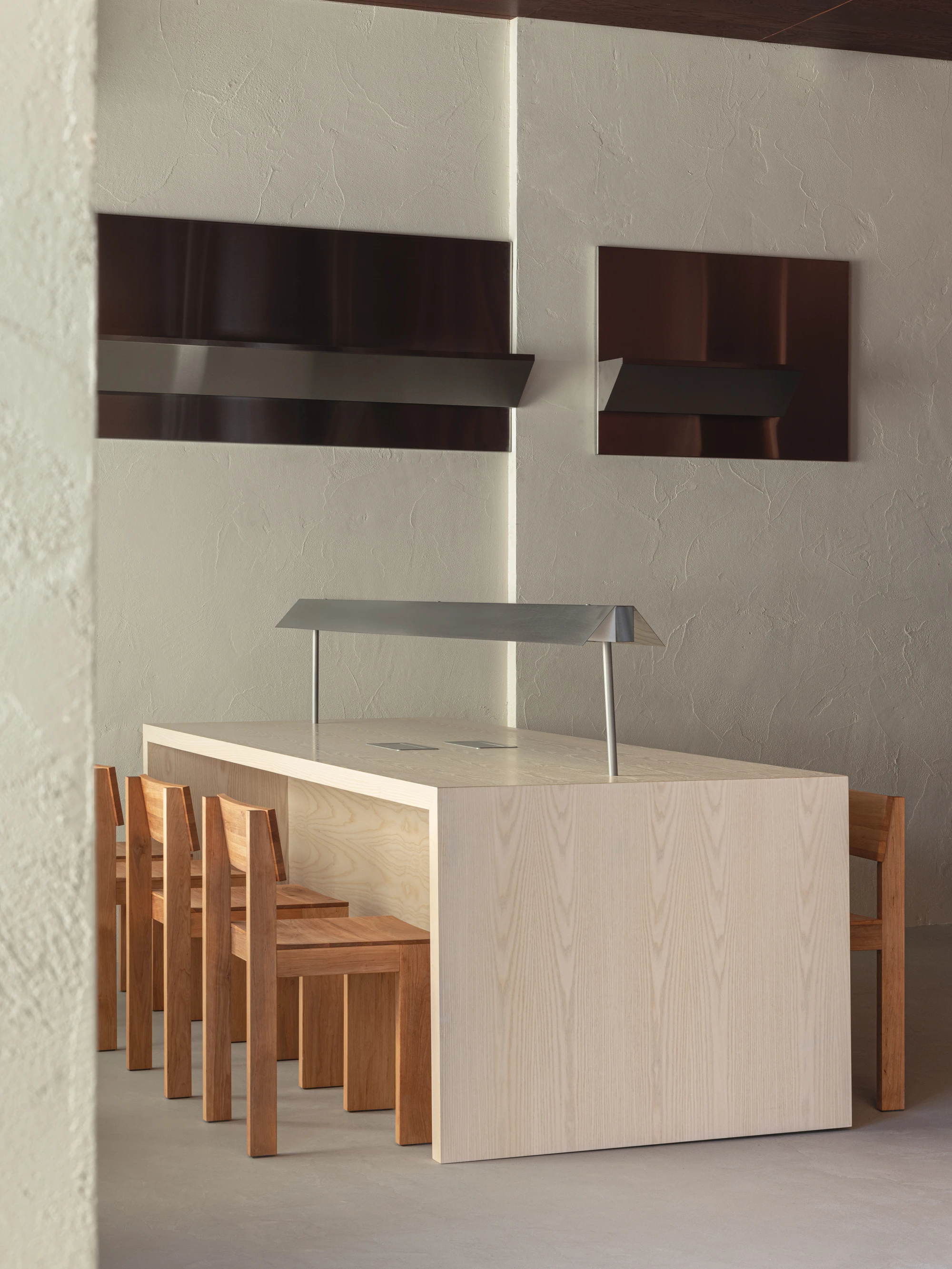
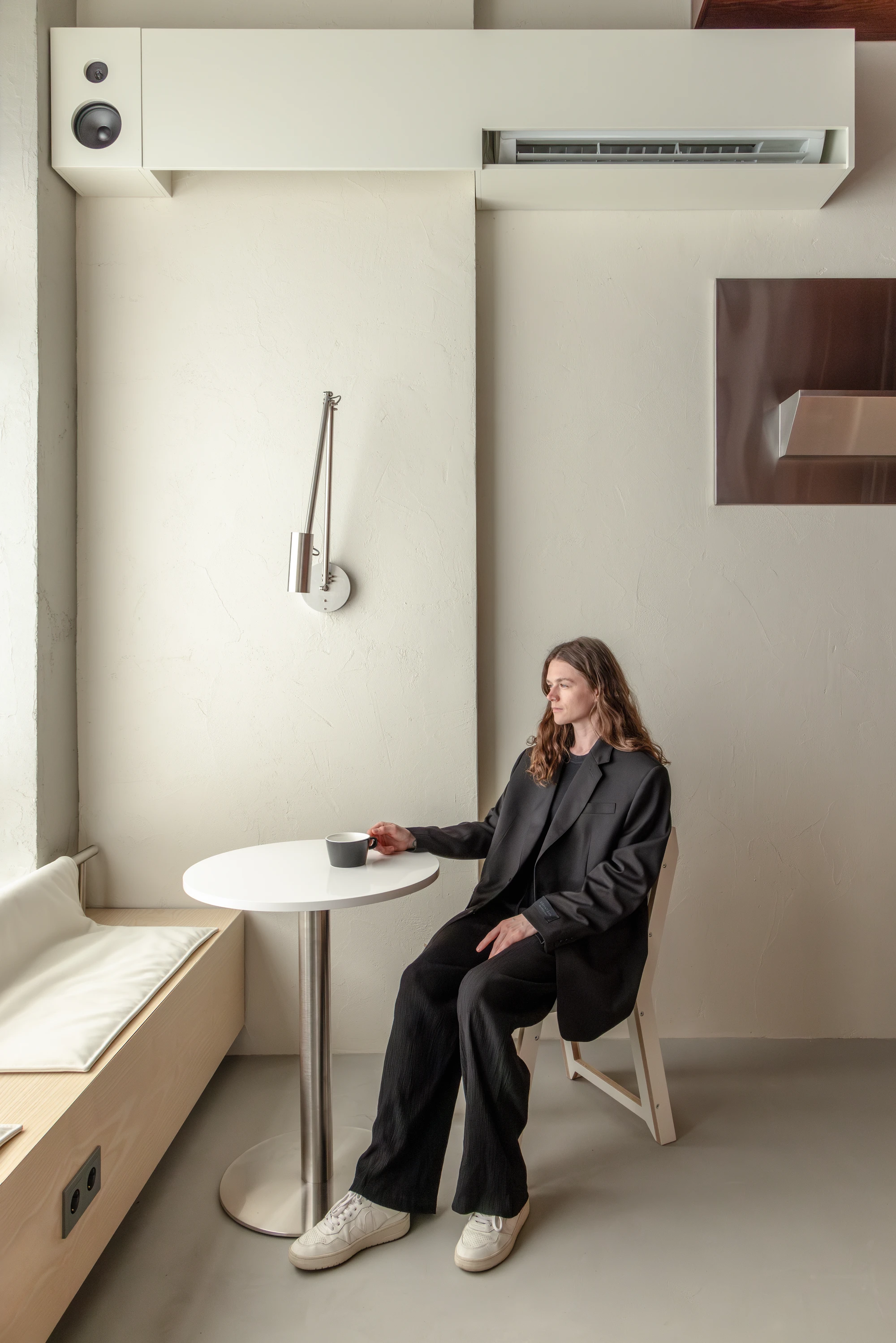
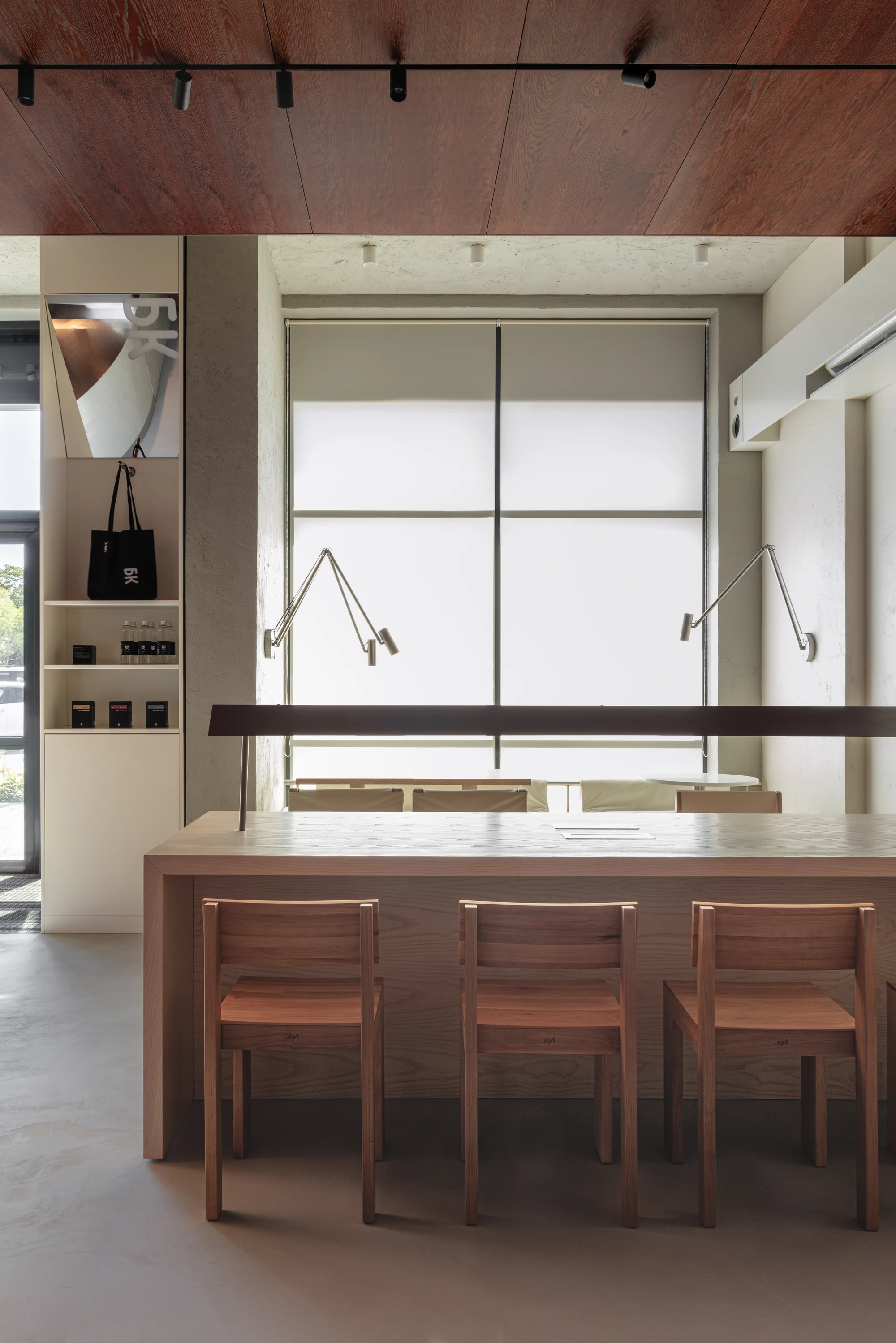
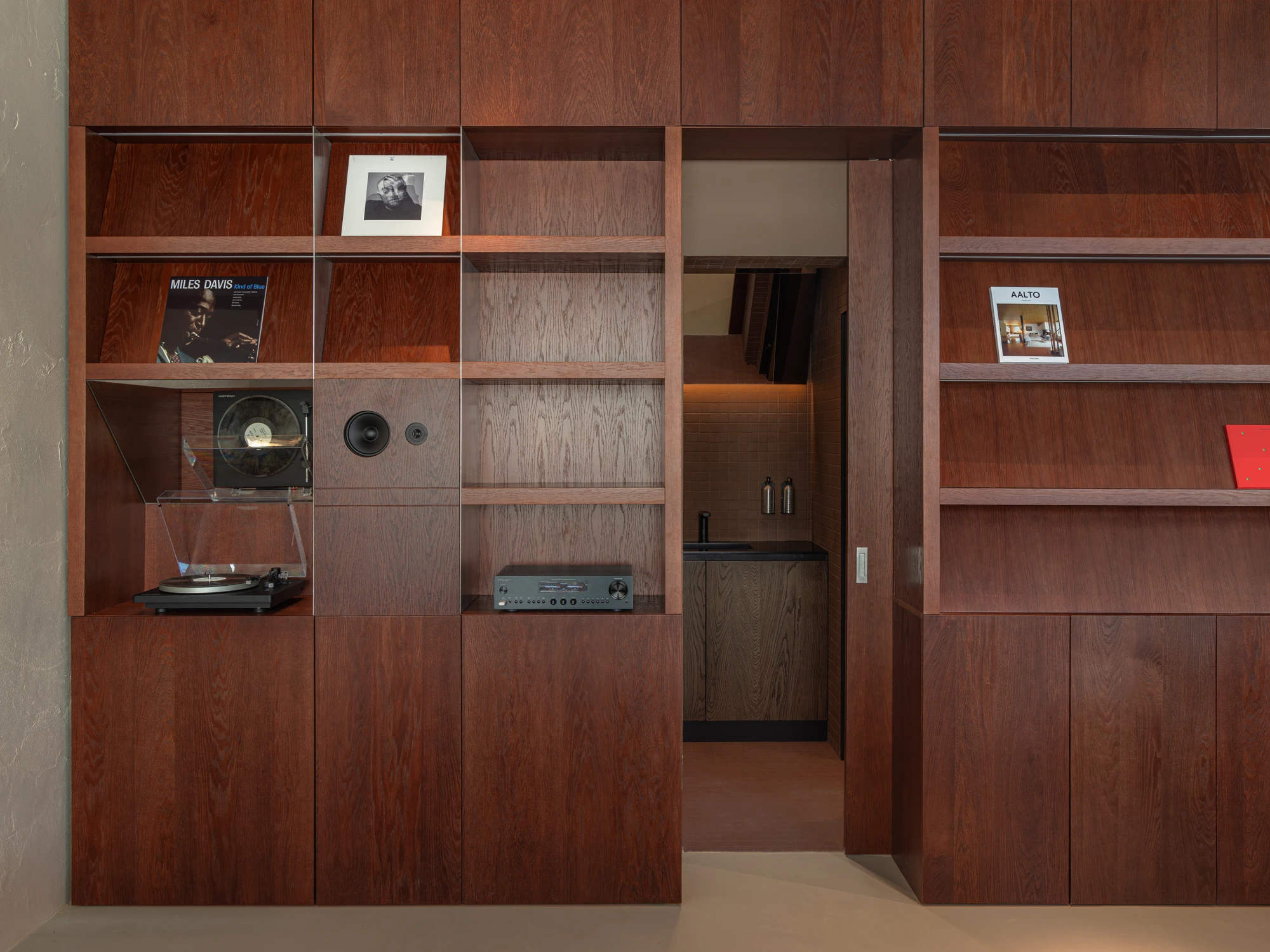
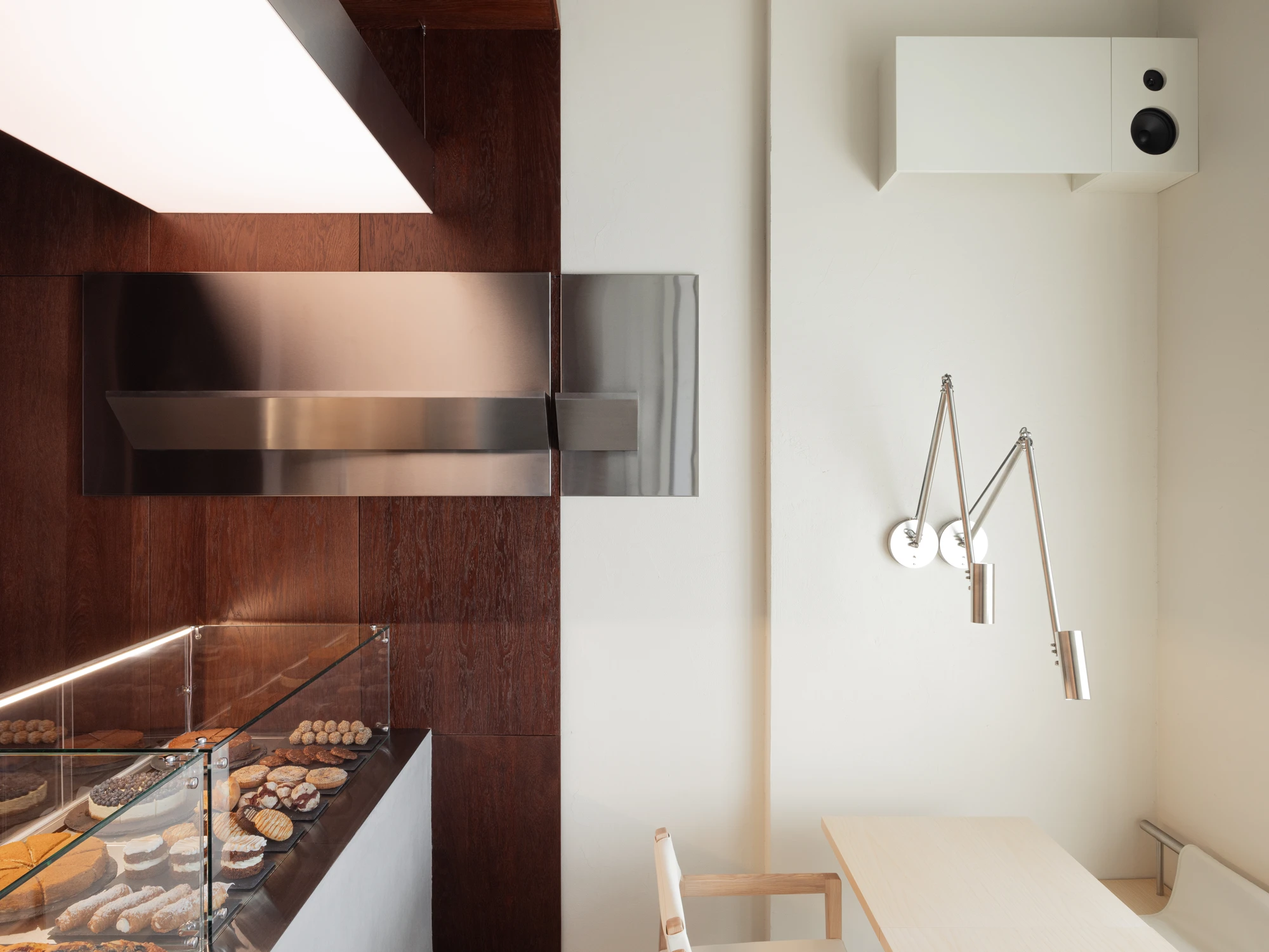
Silence sits on one side, sound on the other. Silence is the pale room: smoothed plaster walls in a warm putty grey, a long table in pale ash with a brushed steel reading lamp mounted at the centre, and four polished steel lightboxes recessed into the wall like small apertures. Sound is the opposite room, panelled top to bottom in dark stained oak veneer that wraps the ceiling and continues across a full-height shelving system loaded with hardback monographs and vinyl. A turntable, an amplifier and a framed Miles Davis sleeve hold one bay; an Aalto title holds another. The hi-fi works.
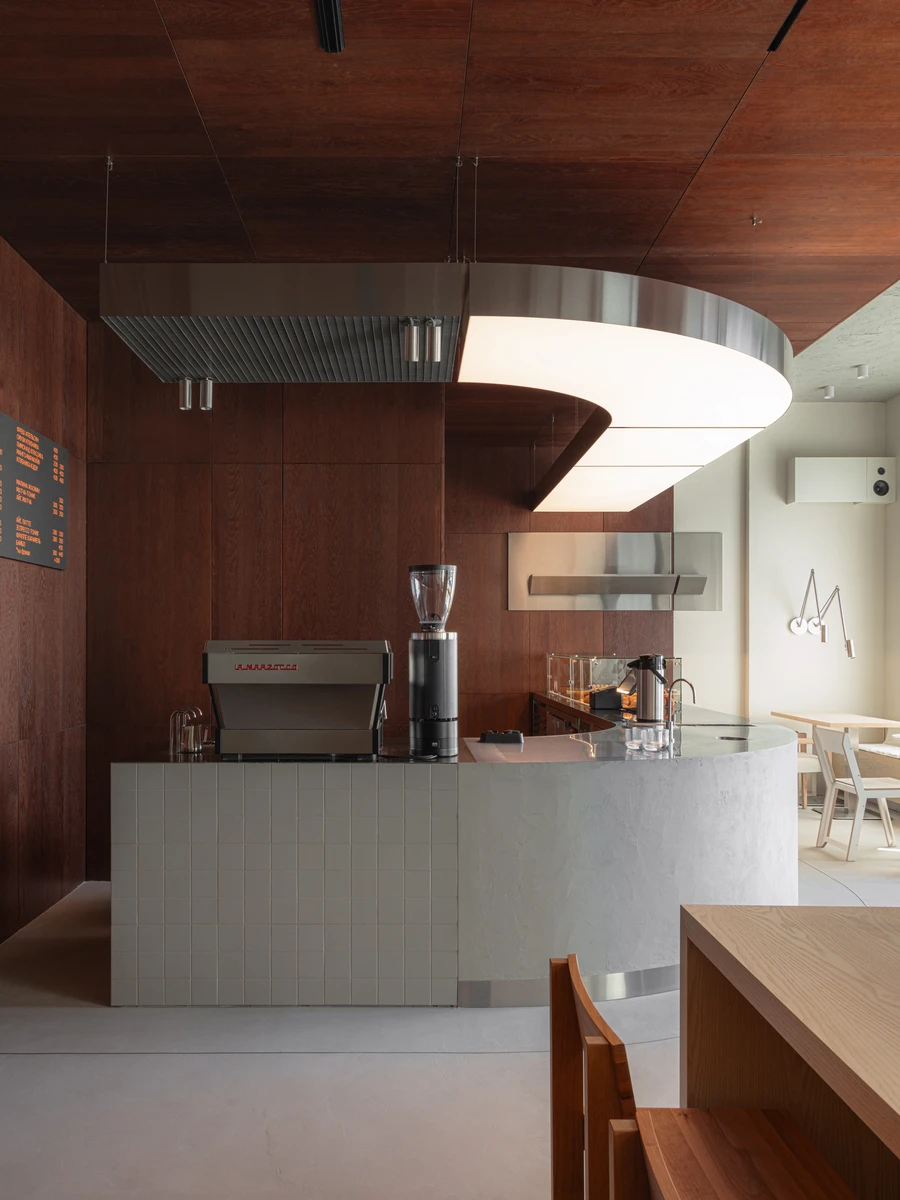
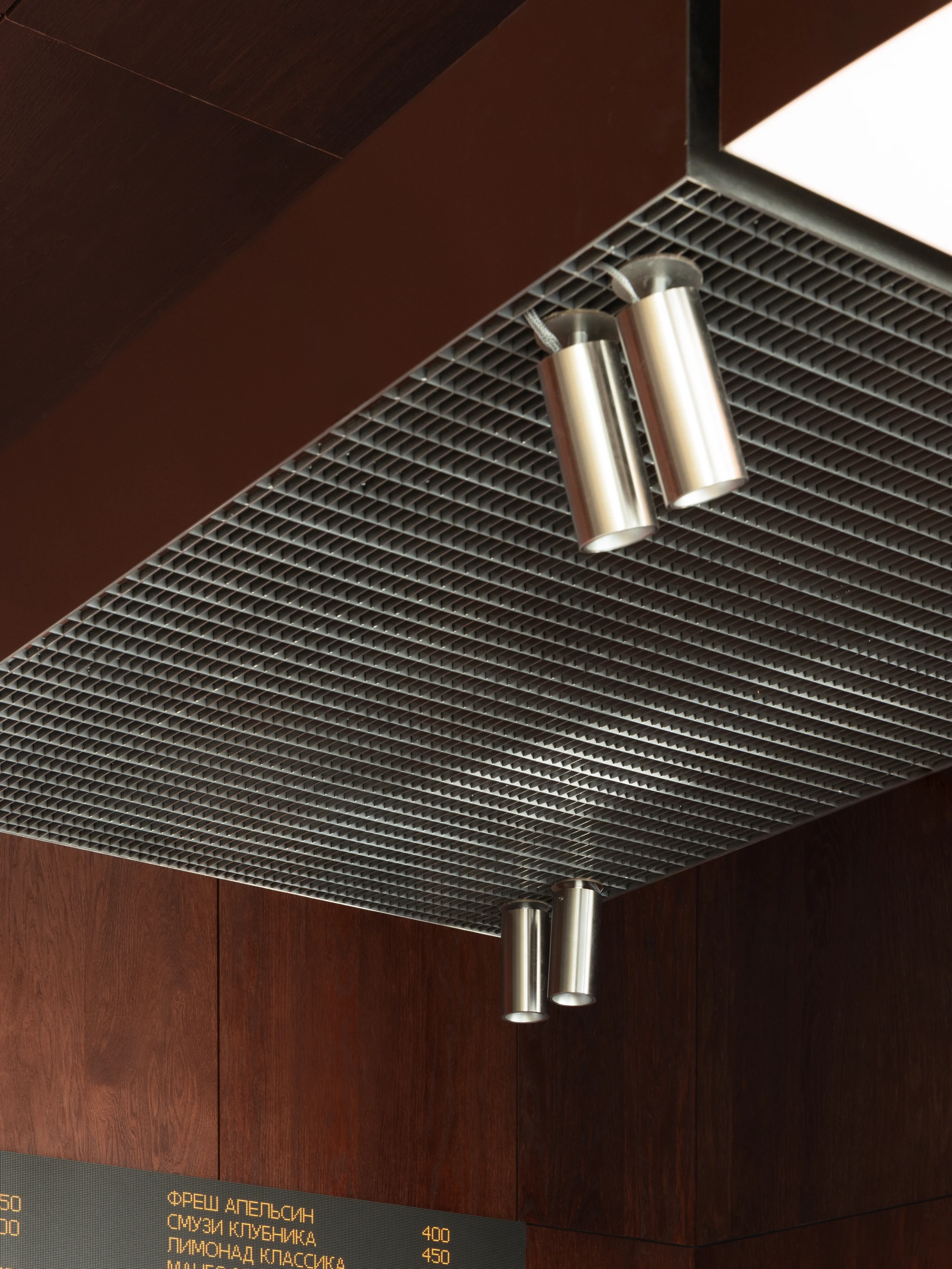
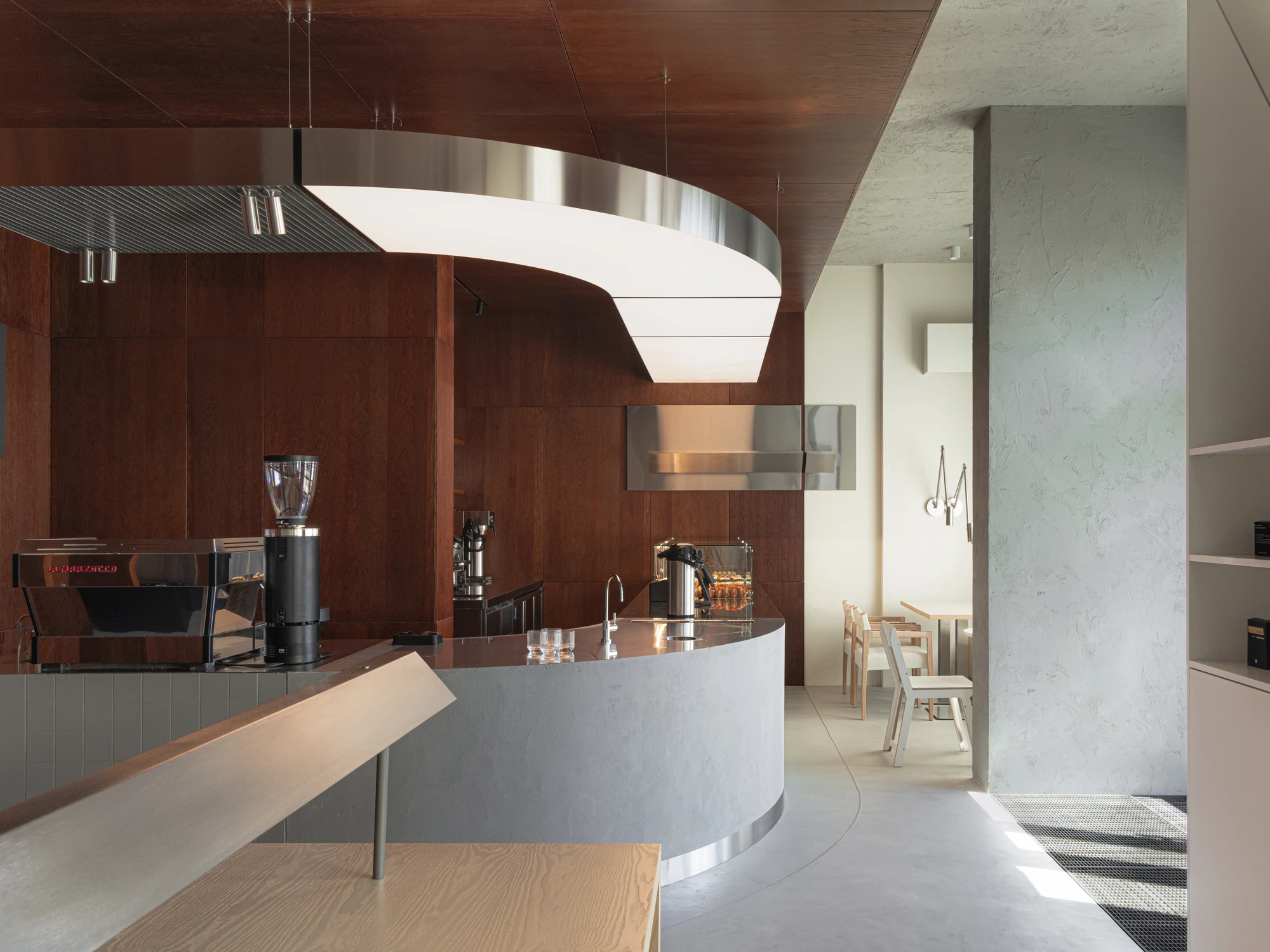
Between the two zones, the project resolves on a single curved counter. Its body is finished in pale microcement, banded at the floor by a thin ring of polished steel, and crowned by a suspended steel hood whose underside is filled with what the studio calls a mud grate, a fine metal grille that softens the downlight and, more importantly, reappears overhead at the espresso machine as a decorative ceiling element. "The trace of a vinyl needle," the studio writes, "runs subtly through the space, tying it together into a single narrative."
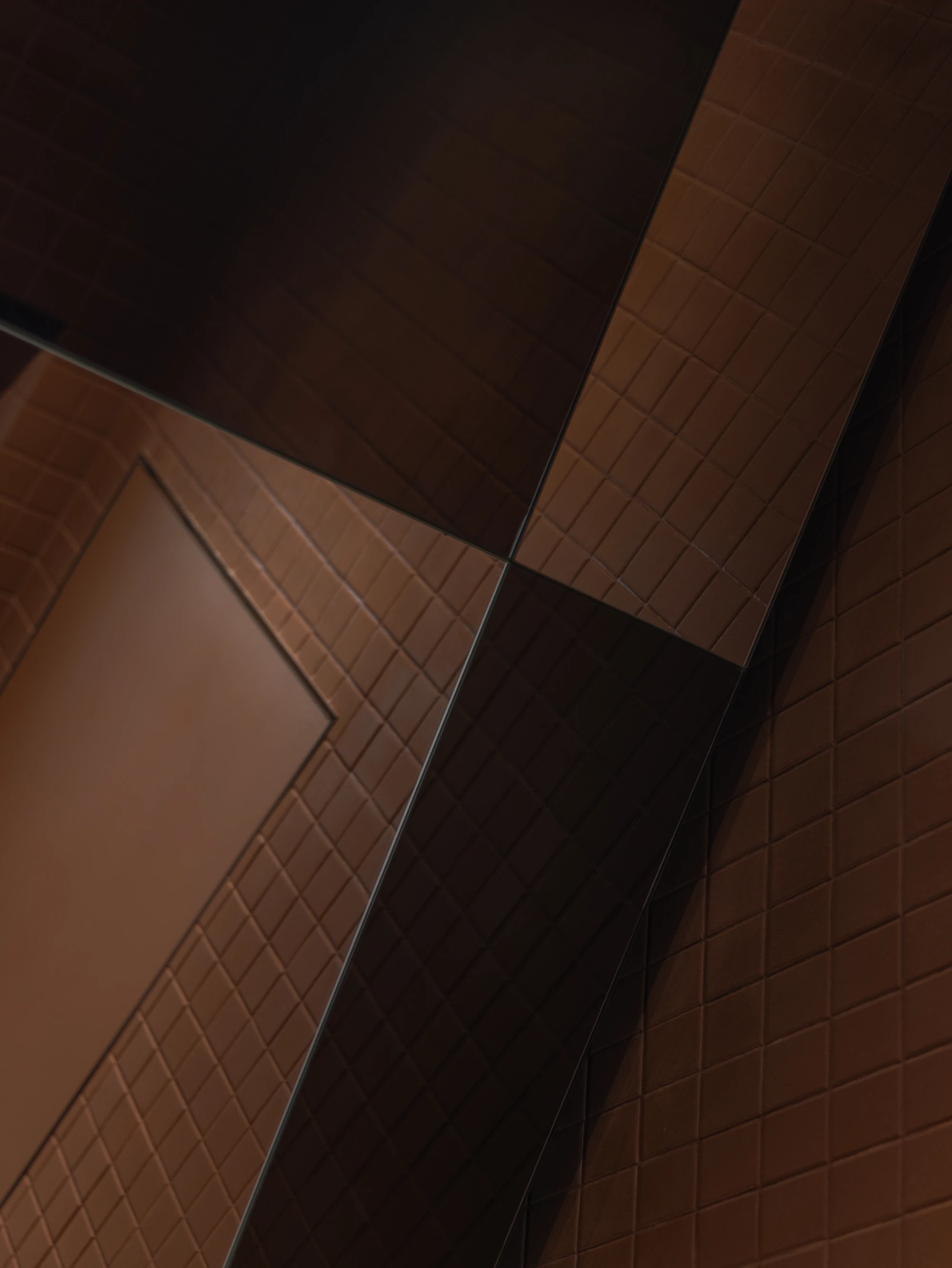
The material logic is built on contrast that is then forced to cohere. The softness of veneer is offset by metal: planters, articulated wall lamps with cylindrical brass shades, a polished steel coat rack at the entrance and a sliding panel of dark oak that conceals the restroom door inside the shelving wall. Push the panel and the room behind it appears, tiled floor to ceiling in small copper-glazed squares with a black inlaid frame around the mirror.
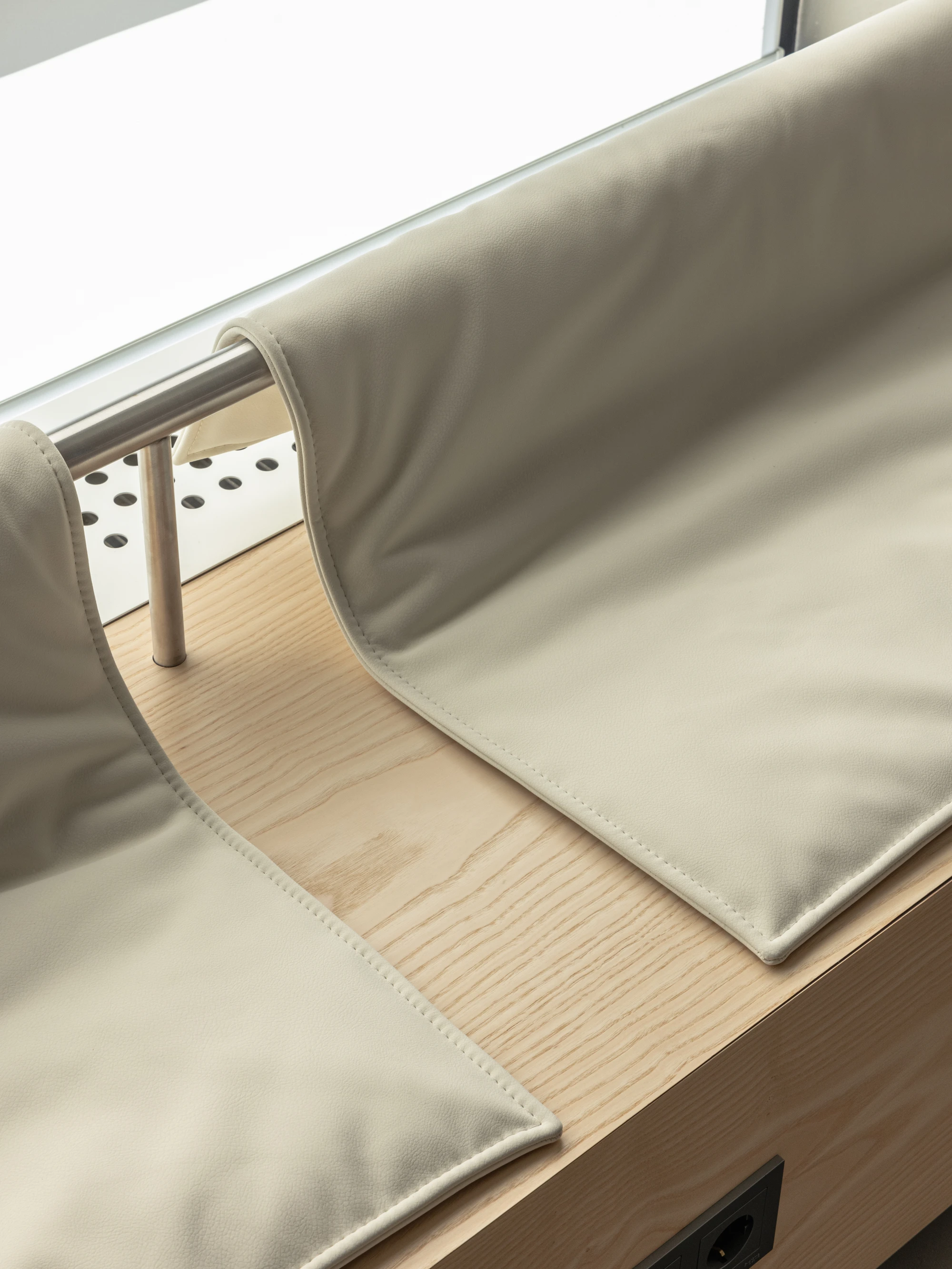
Functionality drove the moves that the eye registers last. A curved bar at the door is unusual for the chain and pulls foot traffic into the room before it has time to leave. Banquette seating along the panoramic window puts guests in profile to the street so the warm glow of the storefront pulls passersby in. The furniture is part Kidz, part sourced from local makers; the lighting was developed in collaboration. None of it announces itself, which is the point.