Thisispaper Community
Join today.
Enter your email address to receive the latest news on emerging art, design, lifestyle and tech from Thisispaper, delivered straight to your inbox.
Oops! Something went wrong while submitting the form.
Instant access to new channels
The top stories curated daily
Weekly roundups of what's important
Original features and deep dives
Exclusive community features
Thisispaper+ Member

Baloise Insurance Company Office Tower by Valerio Olgiati

Dates:
✧ Collect Post
Switzerland Guide
under the patronage of
Baloise Insurance Company Office Tower by Valerio Olgiati
Alexander Zaxarov
May 21, 2026

In Basel, Valerio Olgiati designs the Baloise Insurance Company Office Tower, where pentagonal columns shaped like houses carry horizontal concrete slabs in an exposed shelf structure.

The office tower is a building type that has, since the late nineteenth century, resisted formal invention. Developers want efficiency; tenants want flexibility; cities want density. What remains, typically, is a glass box on a podium. In Basel, Valerio Olgiati takes a different position: the tower becomes a concrete shelf, its structure externalized and given a shape that reads as both primitive and specific.

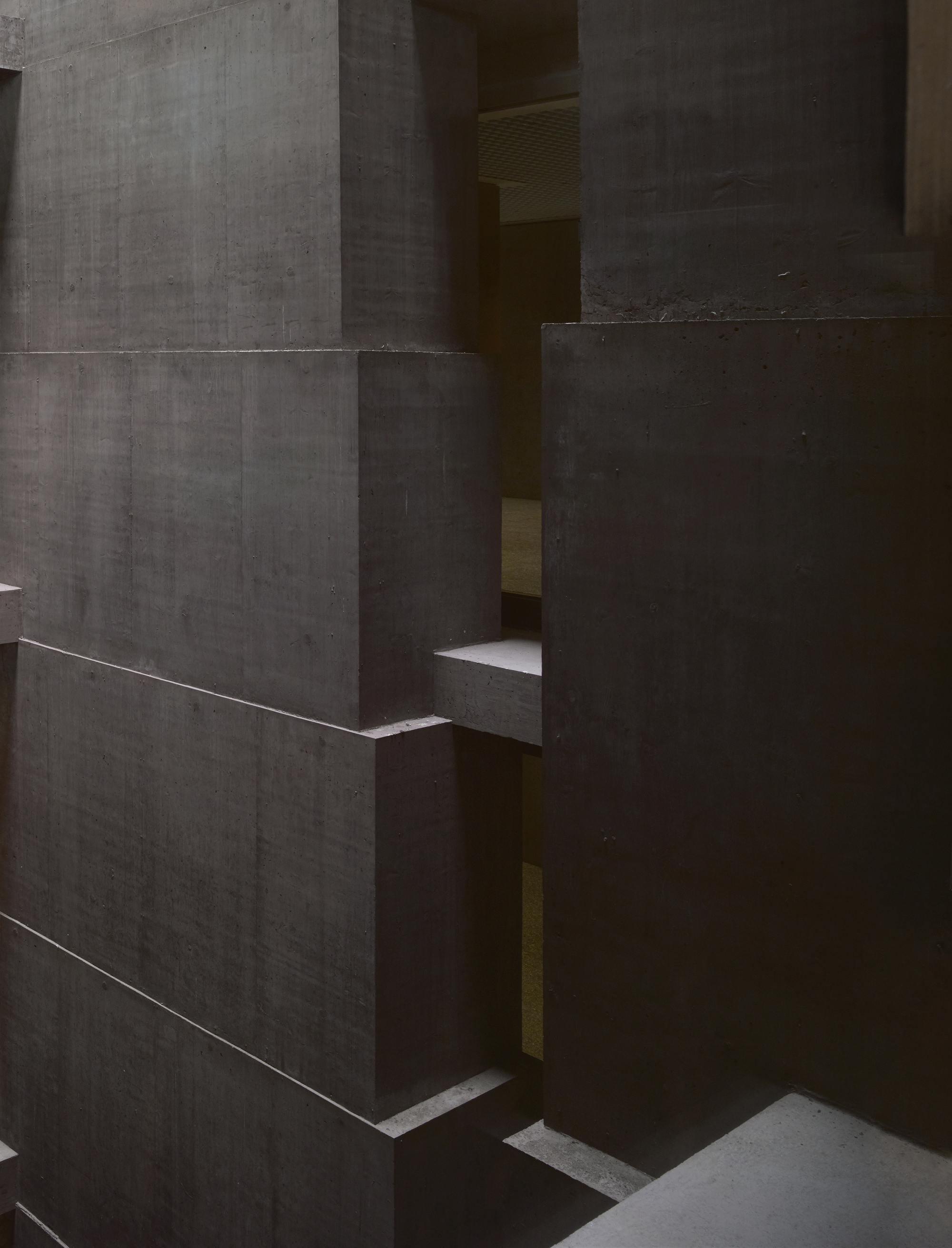
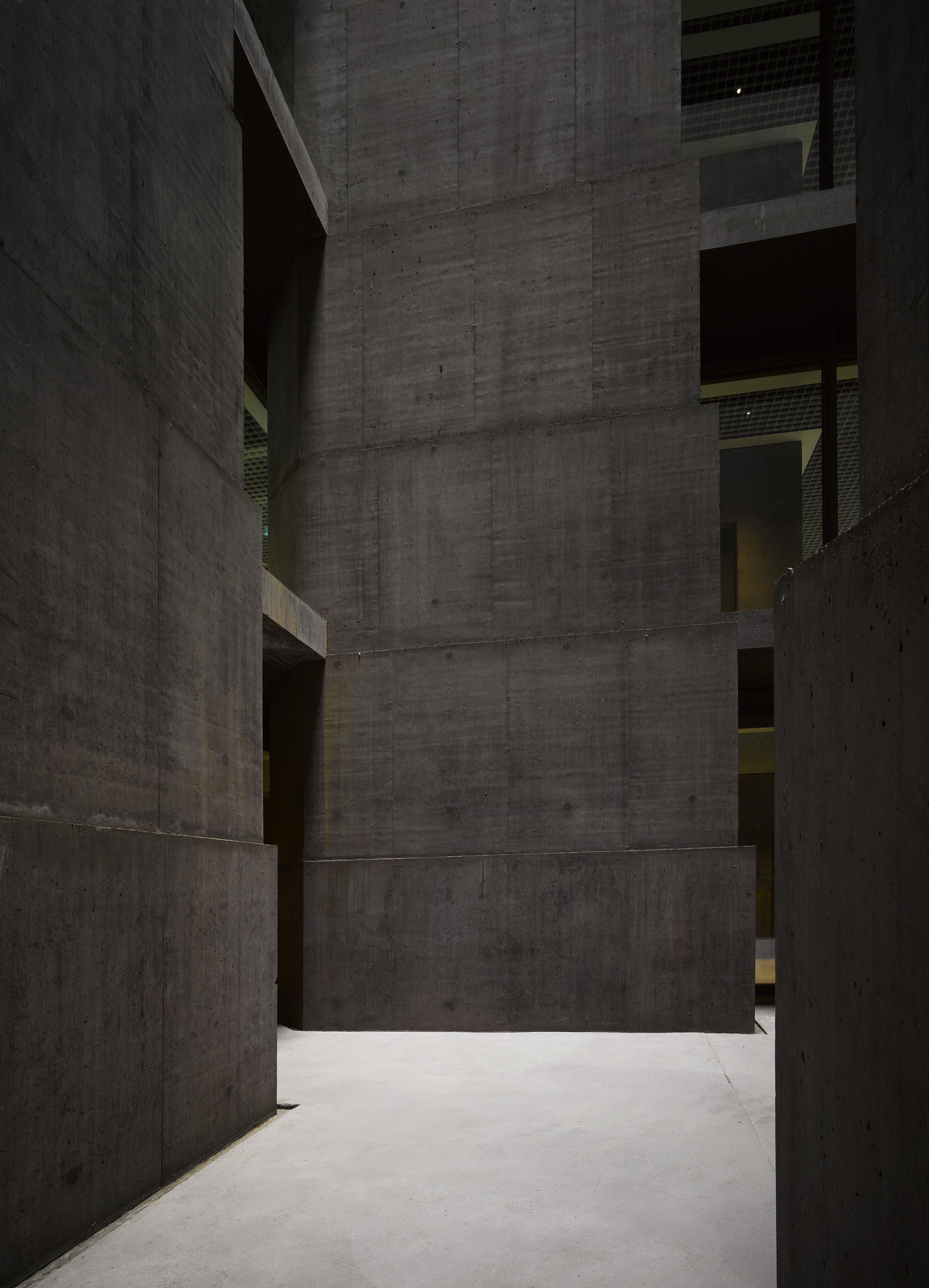
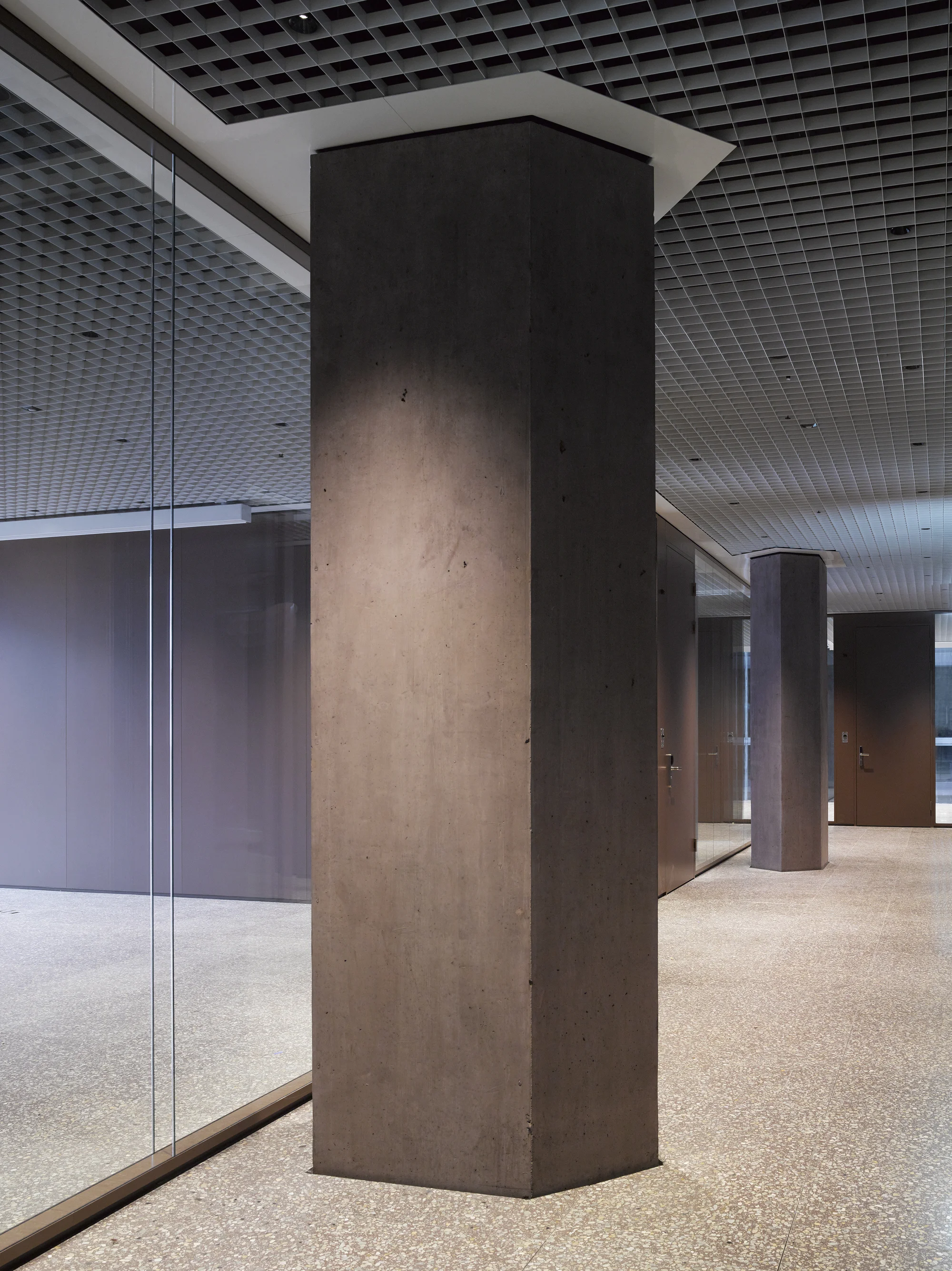
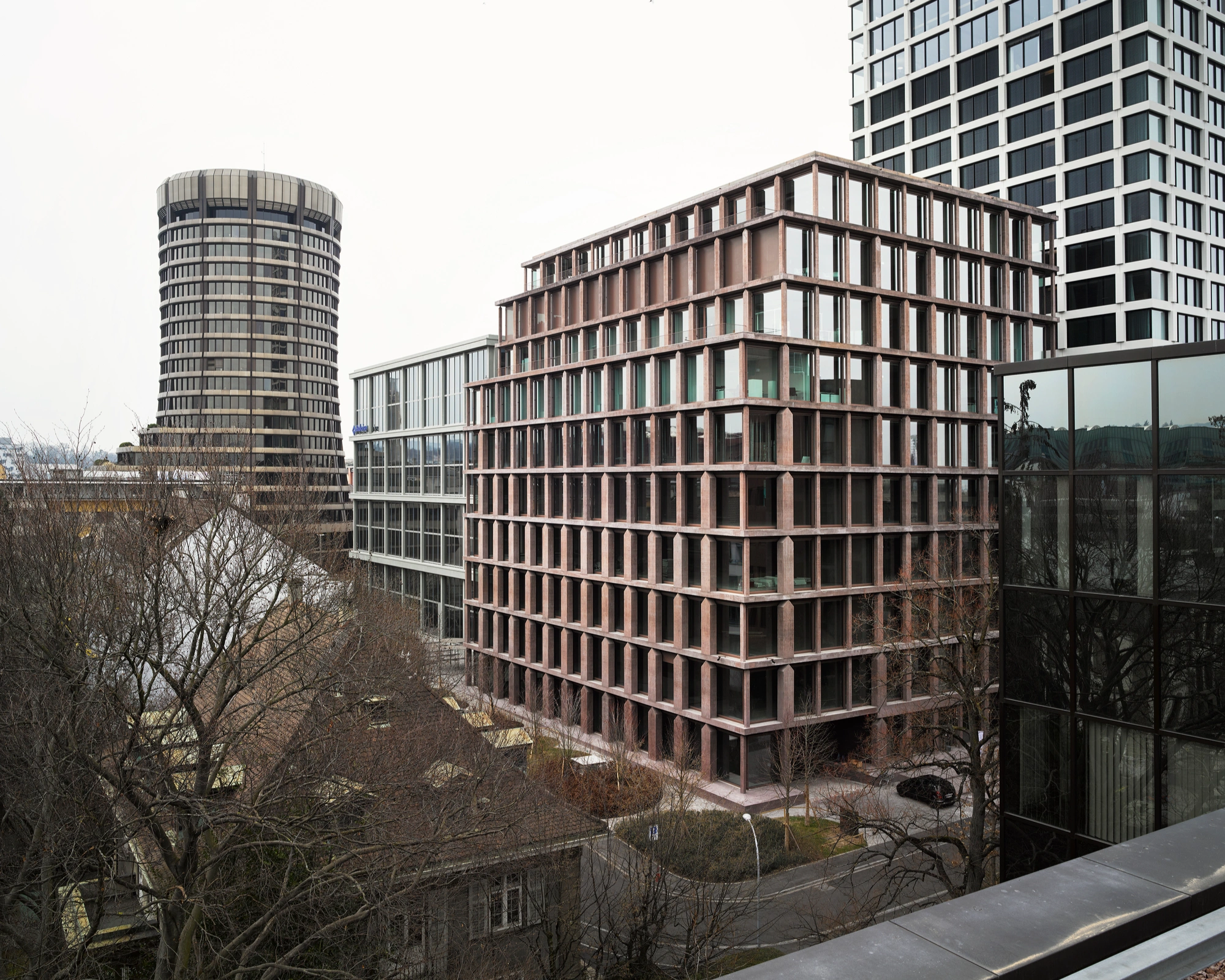
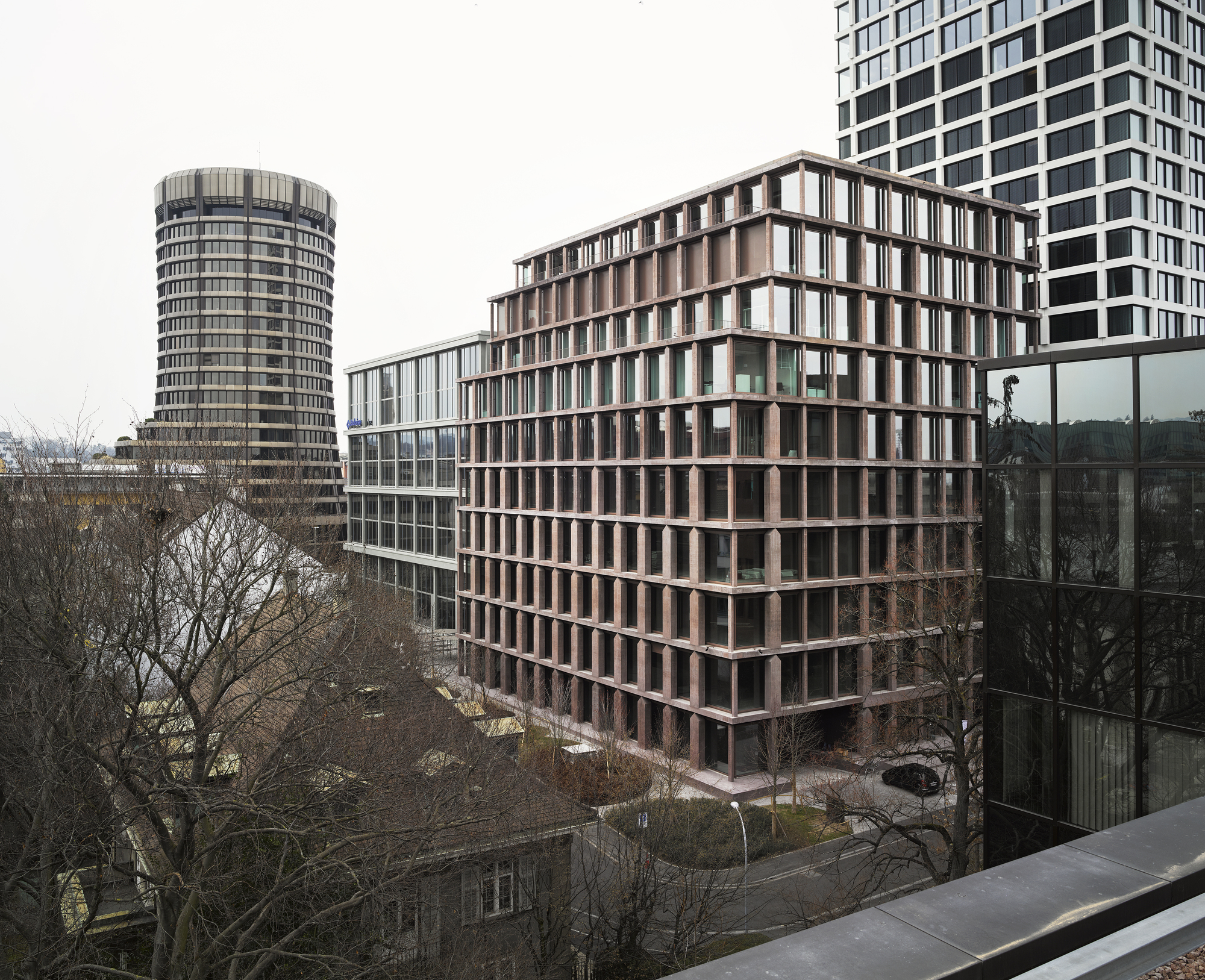
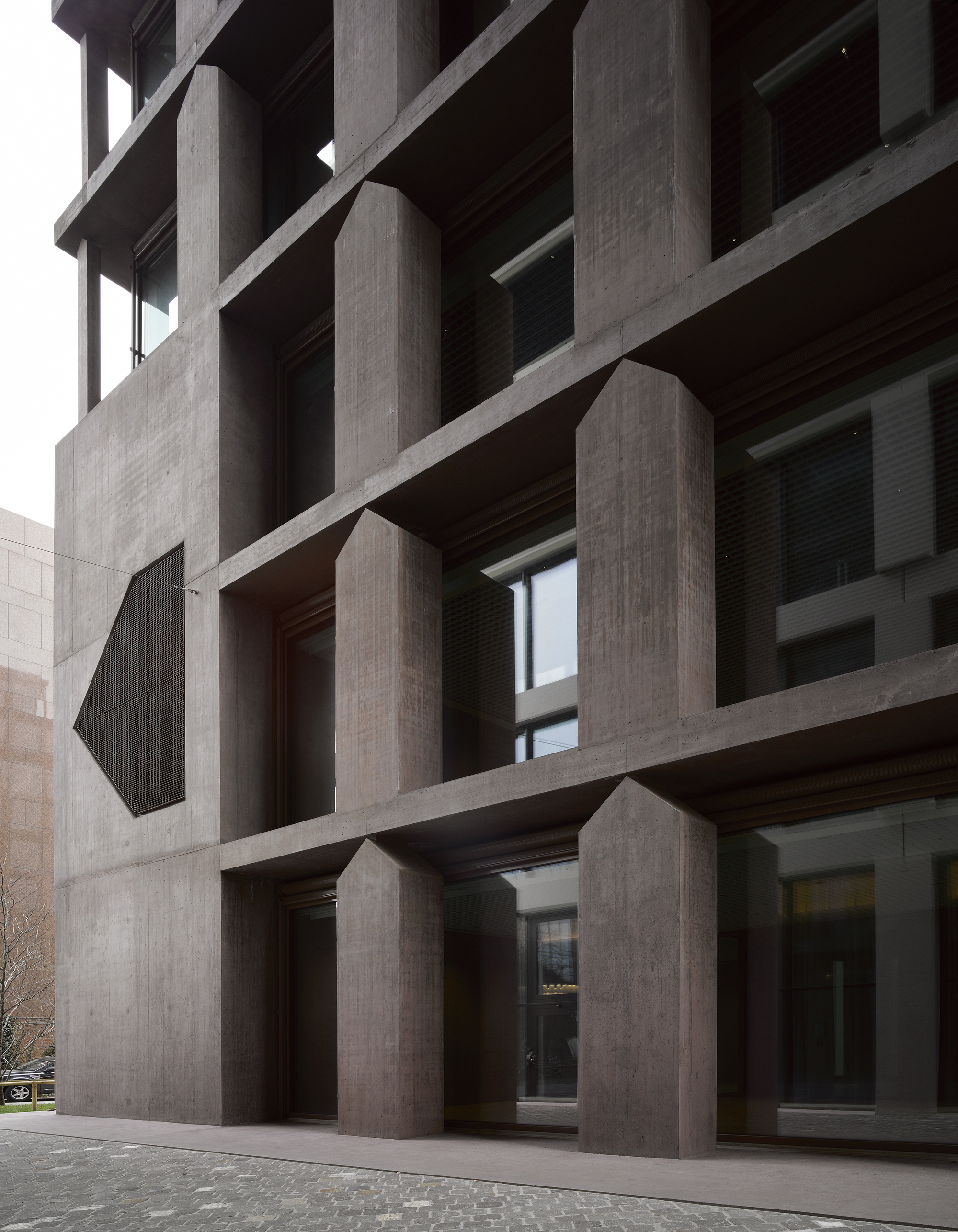
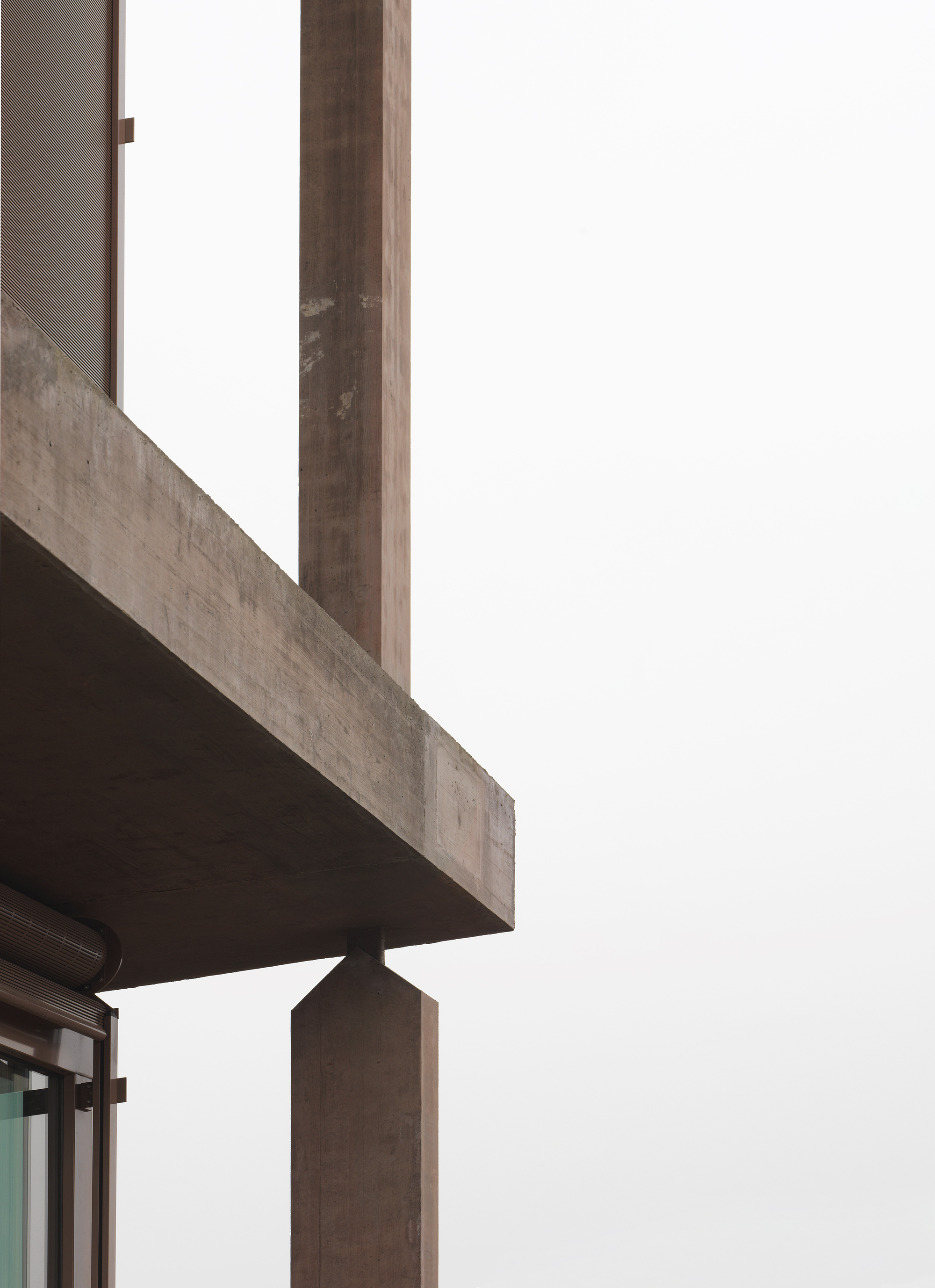
The columns are the move. Each one is cast in pigmented concrete with a pentagonal cross-section, its profile forming the silhouette of a simple house, pitched roof and all. These house-columns carry deep horizontal floor plates that extend outward like shelves, creating a rhythm of mass and void across the facade. Structural engineer Patrick Gartmann worked with Olgiati to make this legible: load paths are visible, forces are expressed.

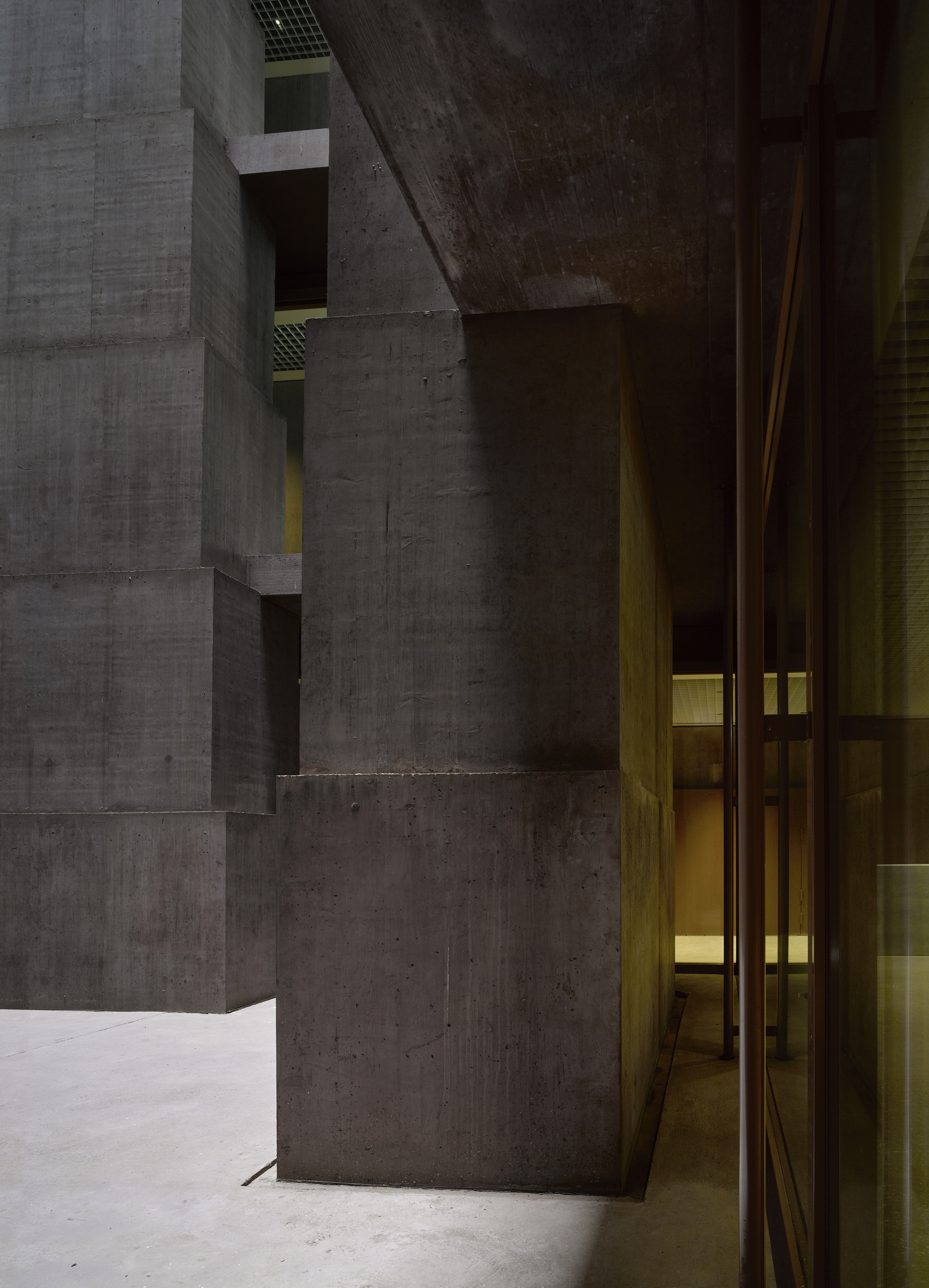
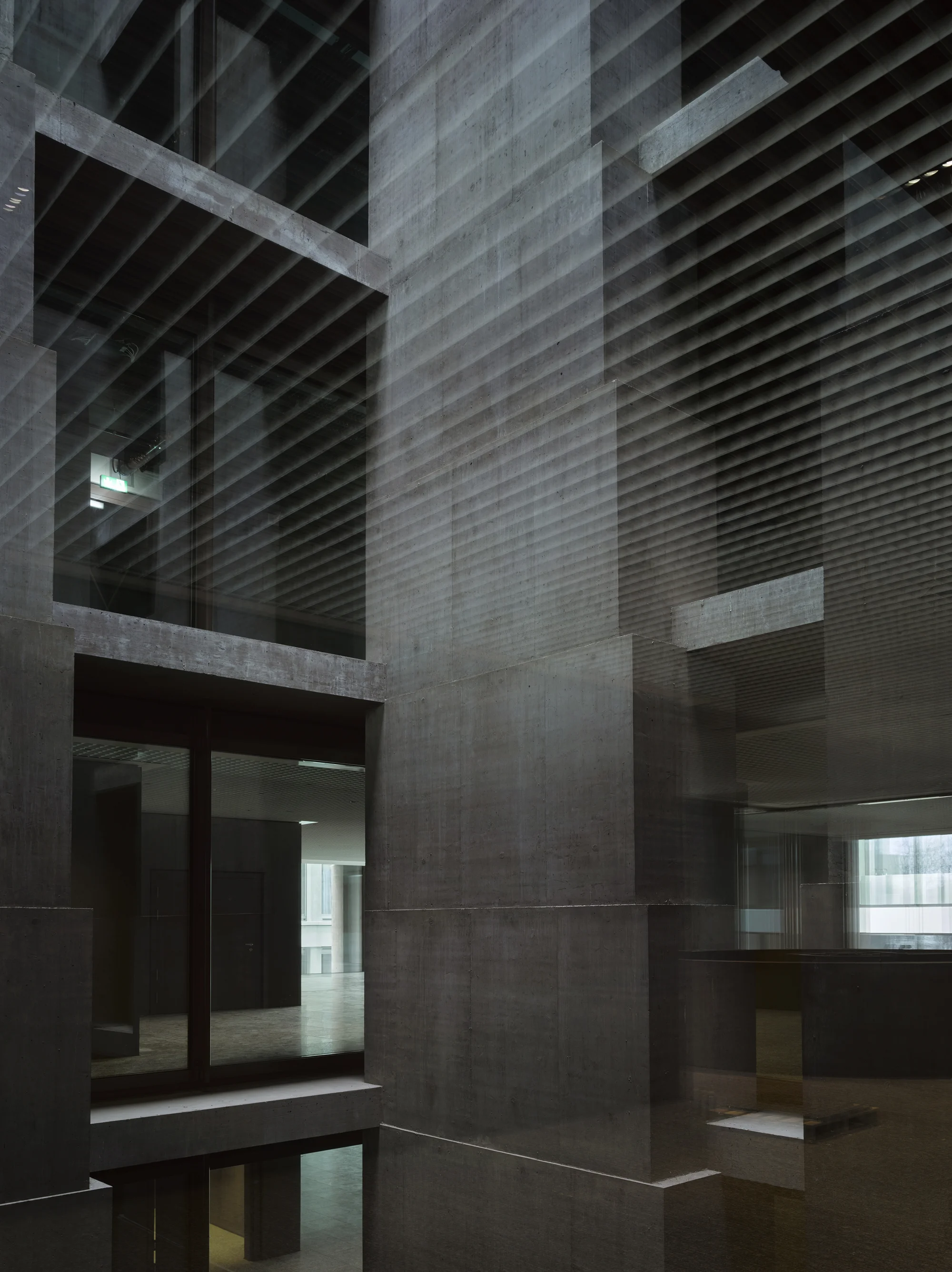
The concrete itself carries a brown-mauve pigment that shifts tone across the day. Exterior surfaces show a smooth formwork finish with subtle board marks, while interior columns reveal a finer texture. At ground level, the building lifts on its columns to create covered passages, a permeable threshold between the street and the glazed lobby. The effect is less corporate plaza than urban cloister.

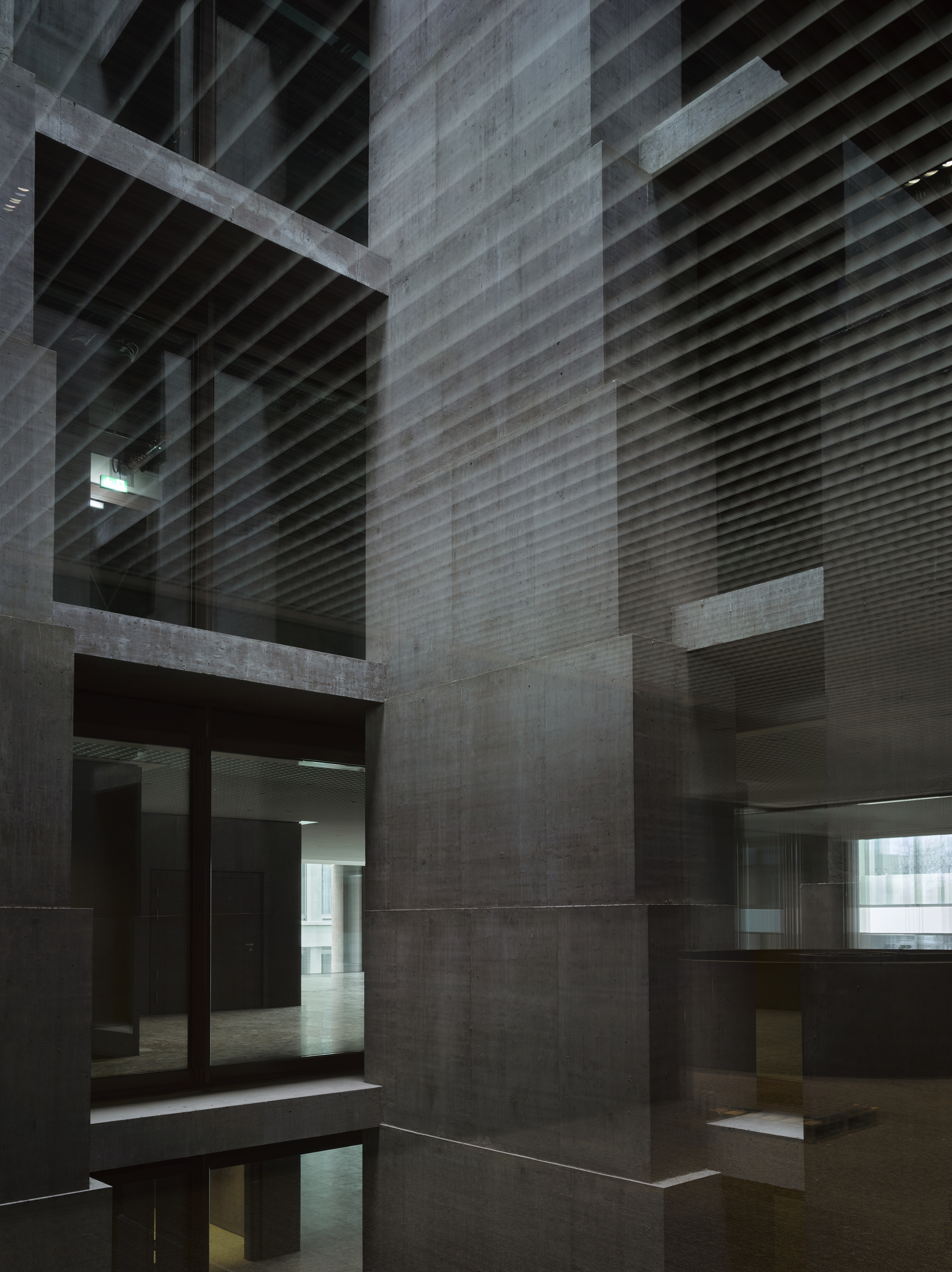
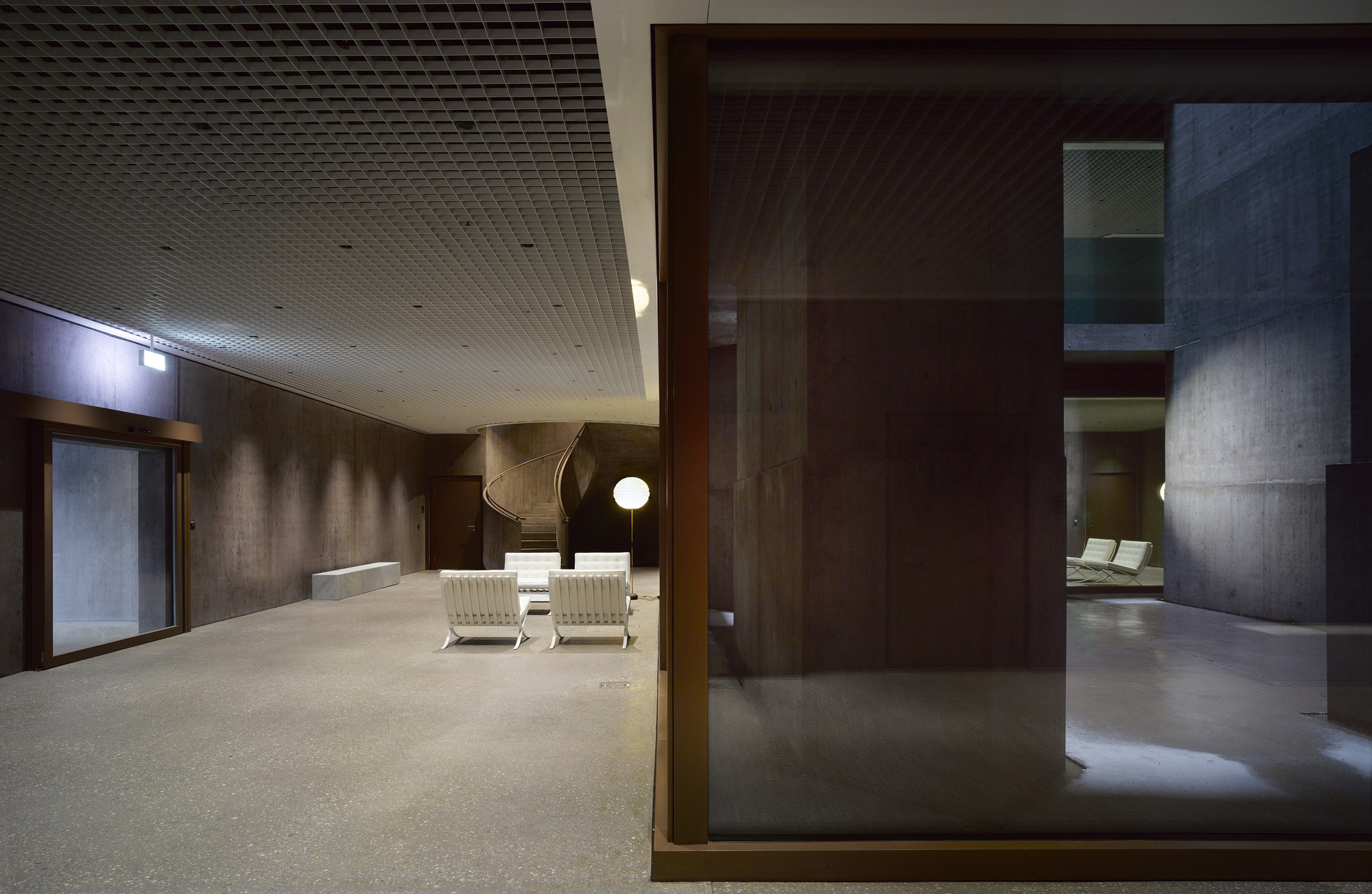
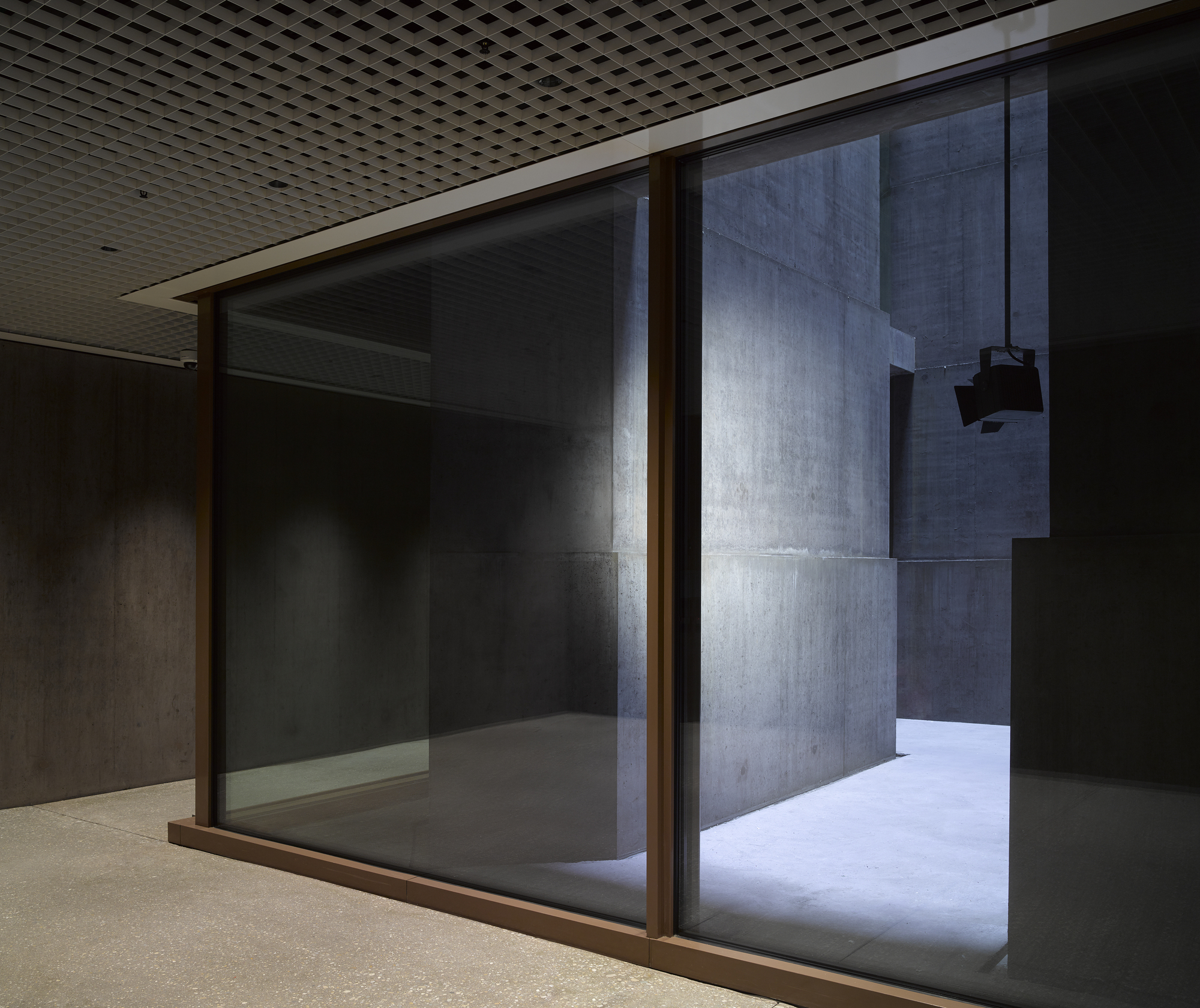
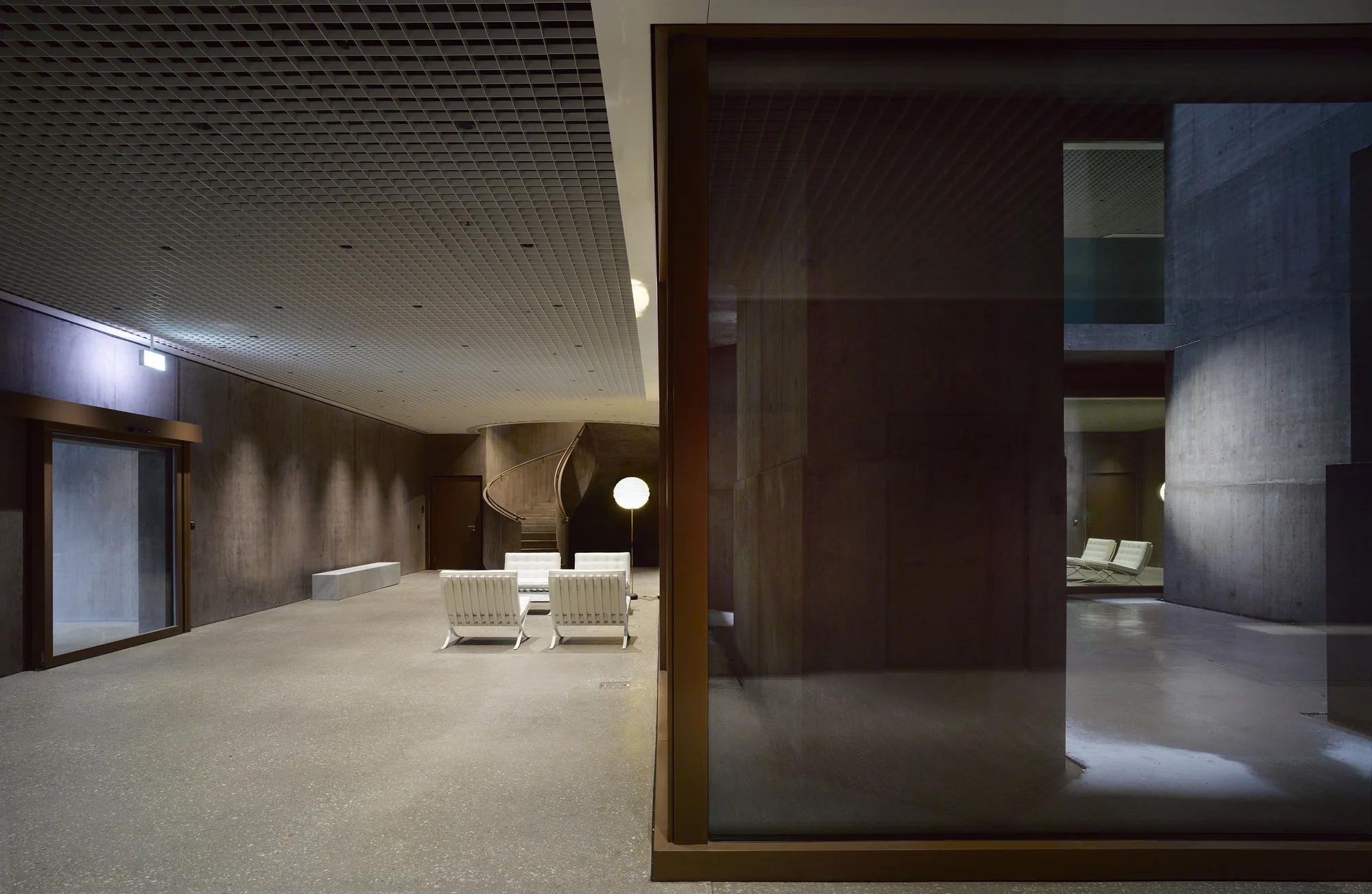
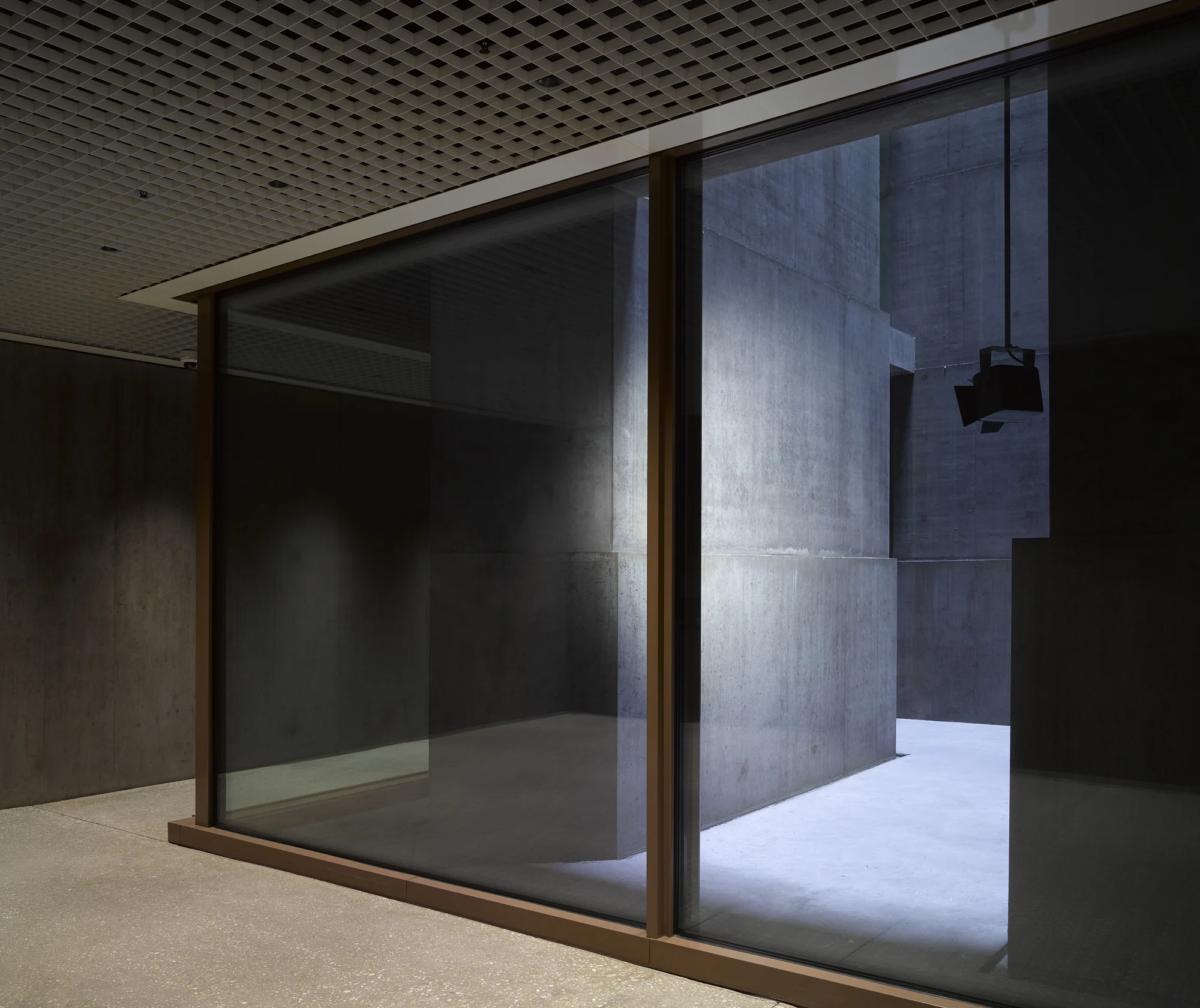
Inside, the ground floor program includes meeting rooms enclosed in bronze-framed glass, their walls independent of the structure that passes through them. Terrazzo floors and egg-crate metal ceilings establish a material discipline that continues the rigor of the exterior. Barcelona chairs in white leather sit against the brown concrete, a deliberate reference to the canon of modern furniture placed against a building that refuses modernism's transparency.

Olgiati has spent decades arguing that buildings should generate new forms rather than repeat existing ones. The Baloise tower is a demonstration of that thesis applied to a program that usually defeats such ambitions: the corporate office. The house-shaped column is not a symbol; it is a structural element that happens to carry symbolic weight. That distinction matters.
Interested in Showcasing Your Work?

If you would like to feature your works on Thisispaper, please visit our Submission page and sign up to Thisispaper+ to submit your work. Once your submission is approved, your work will be showcased to our global audience of 2 million art, architecture, and design professionals and enthusiasts.
No items found.
We love less
but there is more.
Become a Thisispaper+ member today to unlock full access to our magazine, advanced tools, and support our work.
Get two months FREE
with annual subscription
We love less
but there is more.
Become a Thisispaper+ member today to unlock full access to our magazine, advanced tools, and support our work.
Get two months FREE
with annual subscription
No items found.
Alexander Zaxarov
May 21, 2026

In Basel, Valerio Olgiati designs the Baloise Insurance Company Office Tower, where pentagonal columns shaped like houses carry horizontal concrete slabs in an exposed shelf structure.

The office tower is a building type that has, since the late nineteenth century, resisted formal invention. Developers want efficiency; tenants want flexibility; cities want density. What remains, typically, is a glass box on a podium. In Basel, Valerio Olgiati takes a different position: the tower becomes a concrete shelf, its structure externalized and given a shape that reads as both primitive and specific.

The columns are the move. Each one is cast in pigmented concrete with a pentagonal cross-section, its profile forming the silhouette of a simple house, pitched roof and all. These house-columns carry deep horizontal floor plates that extend outward like shelves, creating a rhythm of mass and void across the facade. Structural engineer Patrick Gartmann worked with Olgiati to make this legible: load paths are visible, forces are expressed.

The concrete itself carries a brown-mauve pigment that shifts tone across the day. Exterior surfaces show a smooth formwork finish with subtle board marks, while interior columns reveal a finer texture. At ground level, the building lifts on its columns to create covered passages, a permeable threshold between the street and the glazed lobby. The effect is less corporate plaza than urban cloister.

Inside, the ground floor program includes meeting rooms enclosed in bronze-framed glass, their walls independent of the structure that passes through them. Terrazzo floors and egg-crate metal ceilings establish a material discipline that continues the rigor of the exterior. Barcelona chairs in white leather sit against the brown concrete, a deliberate reference to the canon of modern furniture placed against a building that refuses modernism's transparency.

Olgiati has spent decades arguing that buildings should generate new forms rather than repeat existing ones. The Baloise tower is a demonstration of that thesis applied to a program that usually defeats such ambitions: the corporate office. The house-shaped column is not a symbol; it is a structural element that happens to carry symbolic weight. That distinction matters.
Interested in Showcasing Your Work?

If you would like to feature your works on Thisispaper, please visit our Submission page and subscribe to Thisispaper+. Once your submission is approved, your work will be showcased to our global audience of 2 million art, architecture, and design professionals and enthusiasts.
Thisispaper+
Switzerland Guide
30+ Locations
Web Access
Link to Maps
Architecture in Switzerland — Peter Zumthor's thermal baths, Valerio Olgiati's concrete forms, Herzog & de Meuron's cultural landmarks, and the work of emerging studios in Zurich, Basel, and the Engadin. A country where precision is the starting point and architecture is measured by what it leaves out.
Explore
Switzerland Guide

Join Thisispaper+
Unlock access to 2500 stories, curated guides + editions, and share your work with a global network of architects, artists, writers and designers who are shaping the future.
Get two months FREE
with annual subscription
Travel Guides
Immerse yourself in timeless destinations, hidden gems, and creative spaces—curated by humans, not algorithms.
Explore All Guides +
Submission Module
Submit your project and gain the chance to showcase your work to our worldwide audience of over 2M architects, designers, artists, and curious minds.
Learn More+
Curated Editions
Dive deeper into carefully curated editions, designed to feed your curiosity and foster exploration.
Off-the-Grid
Jutaku
Sacral Journey
minimum
The New Chair
Explore All Editions +
Atlas
A new and interactive way to explore the most inspiring places around the world.
Interactive map
Linked to articles
300+ curated locations
Google + Apple directions
Smart filters
Subscribe to Explore+
Become a Thisispaper+ member today to unlock full access to our magazine, submit your project and support our work.
Join Thisispaper+Join Thisispaper+
€ 9 EUR
/month
Cancel anytime
Get two months FREE
with annual subscription