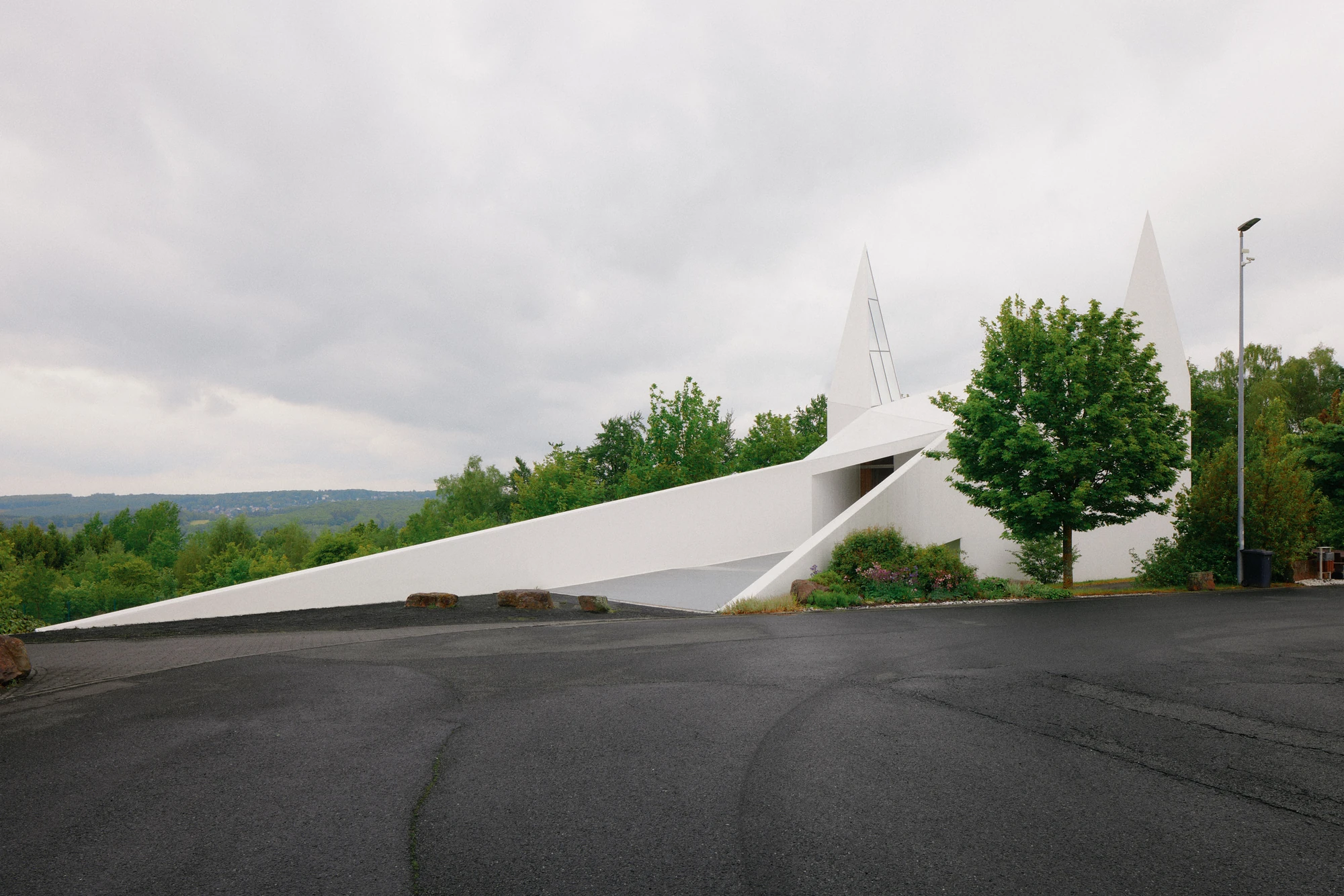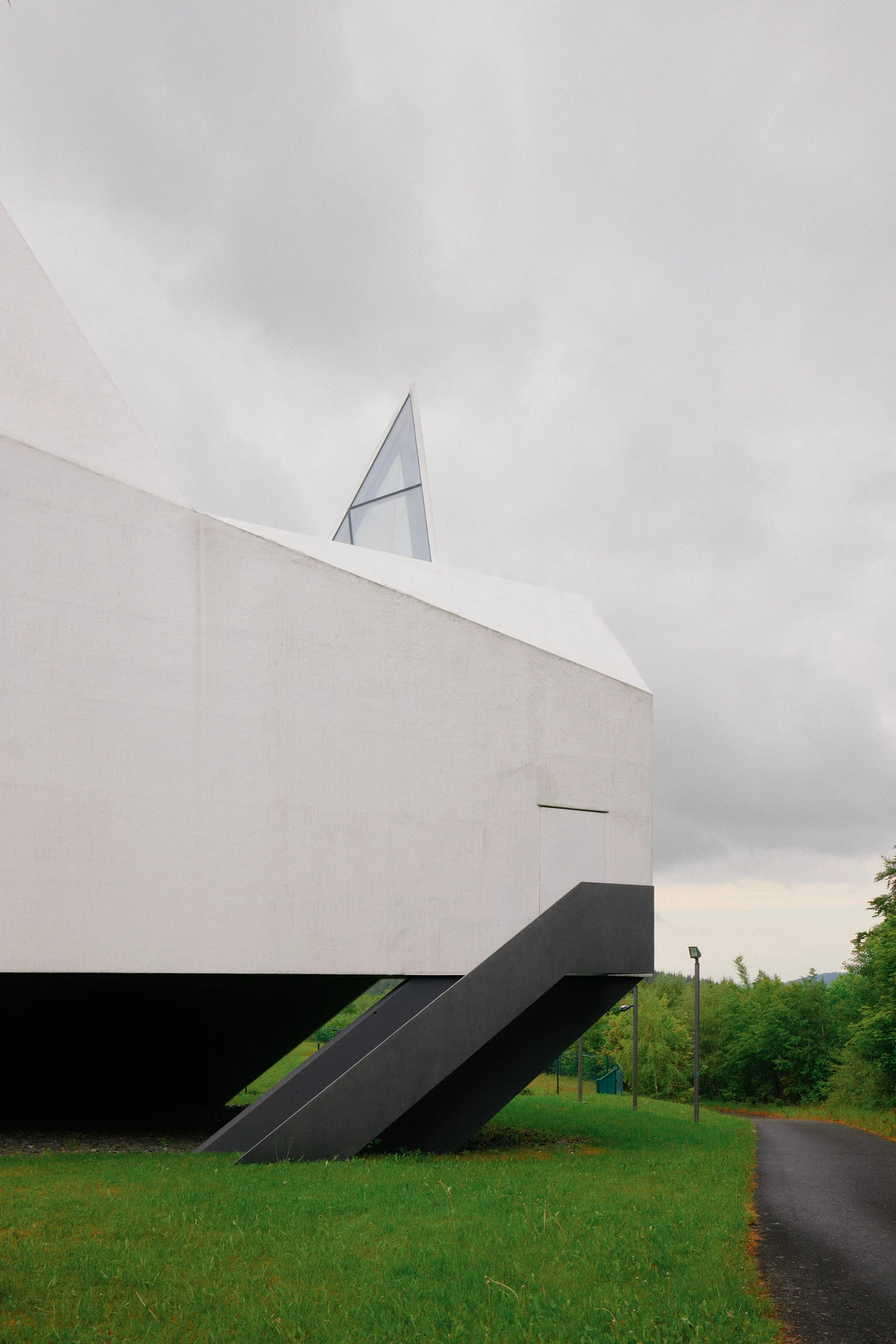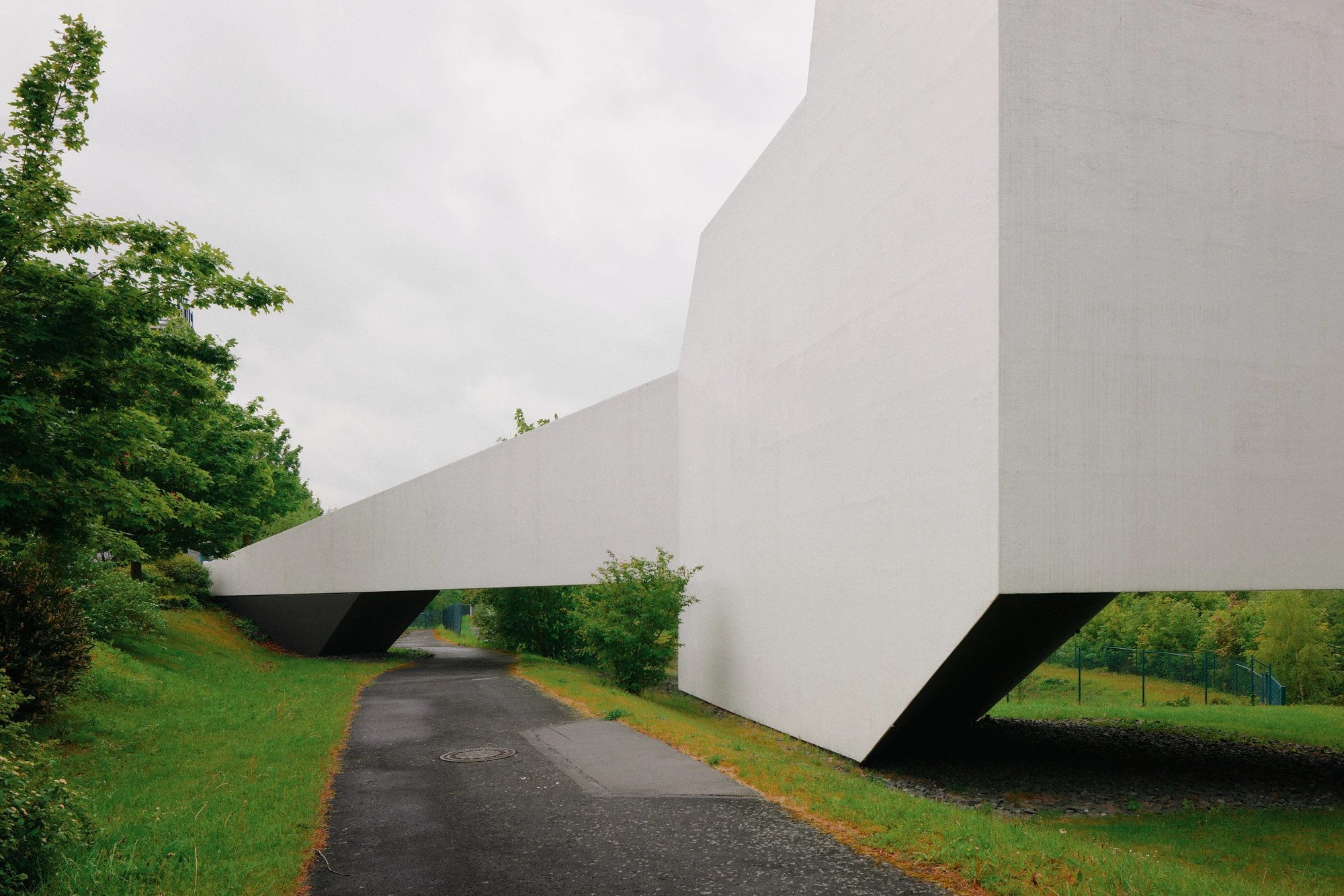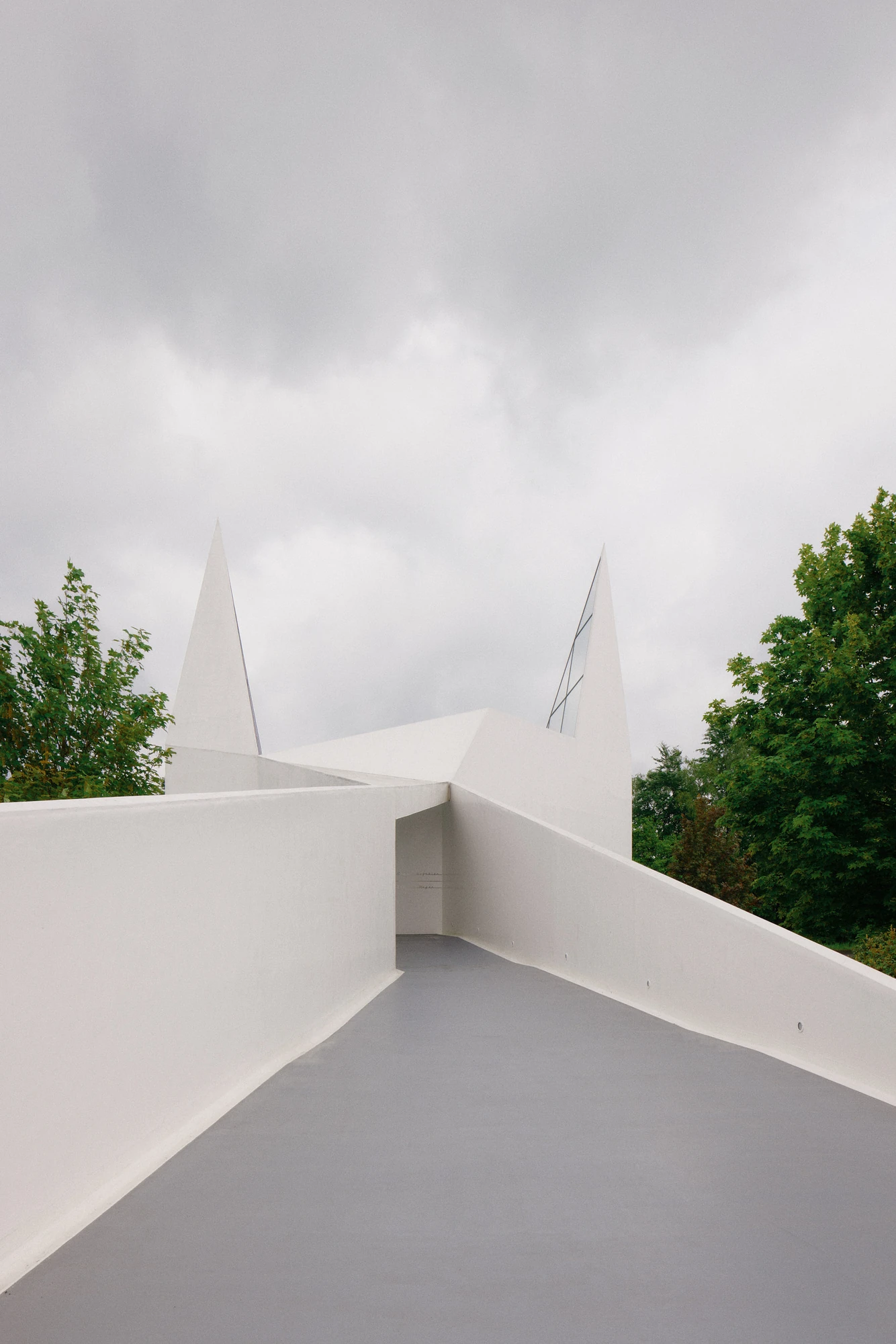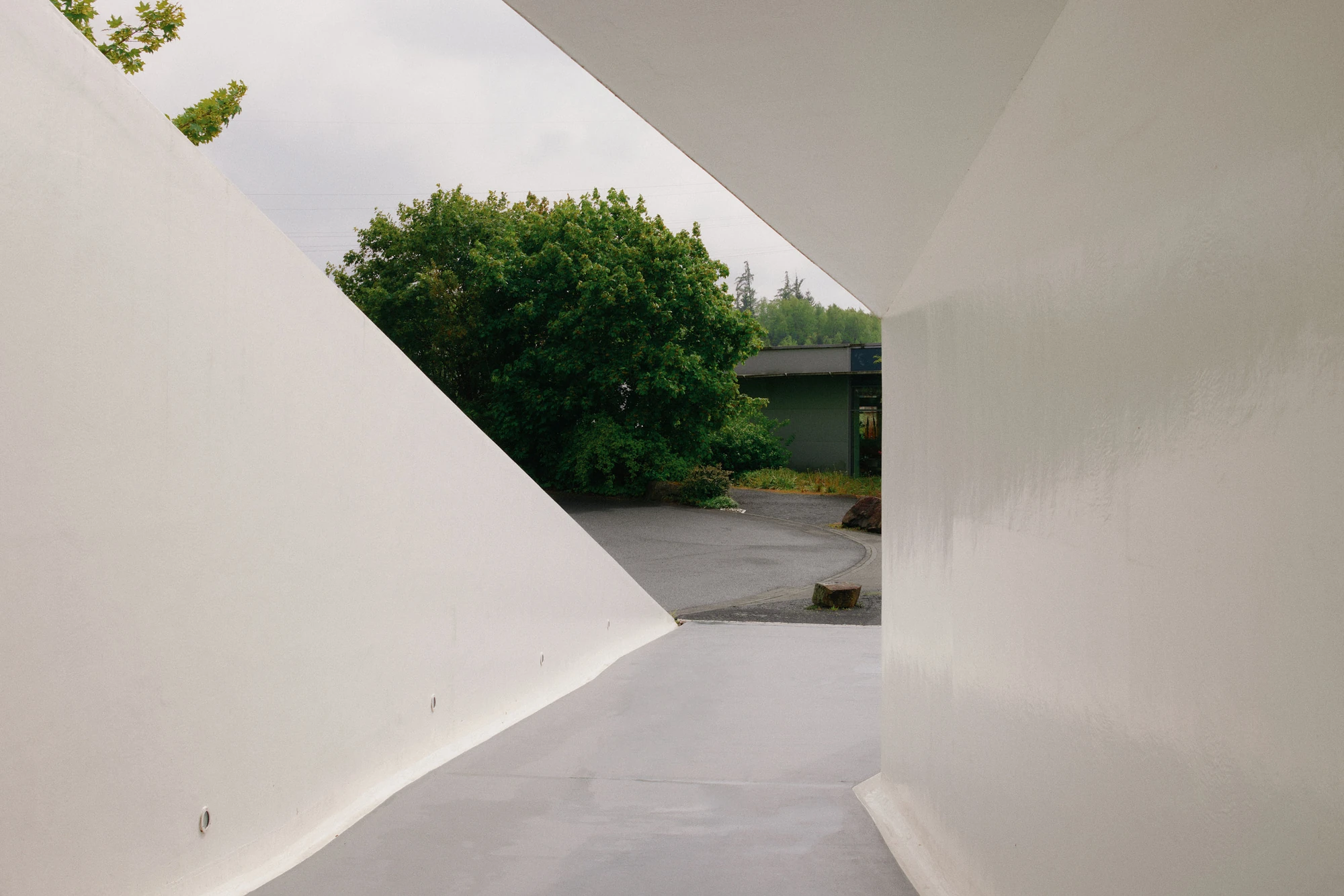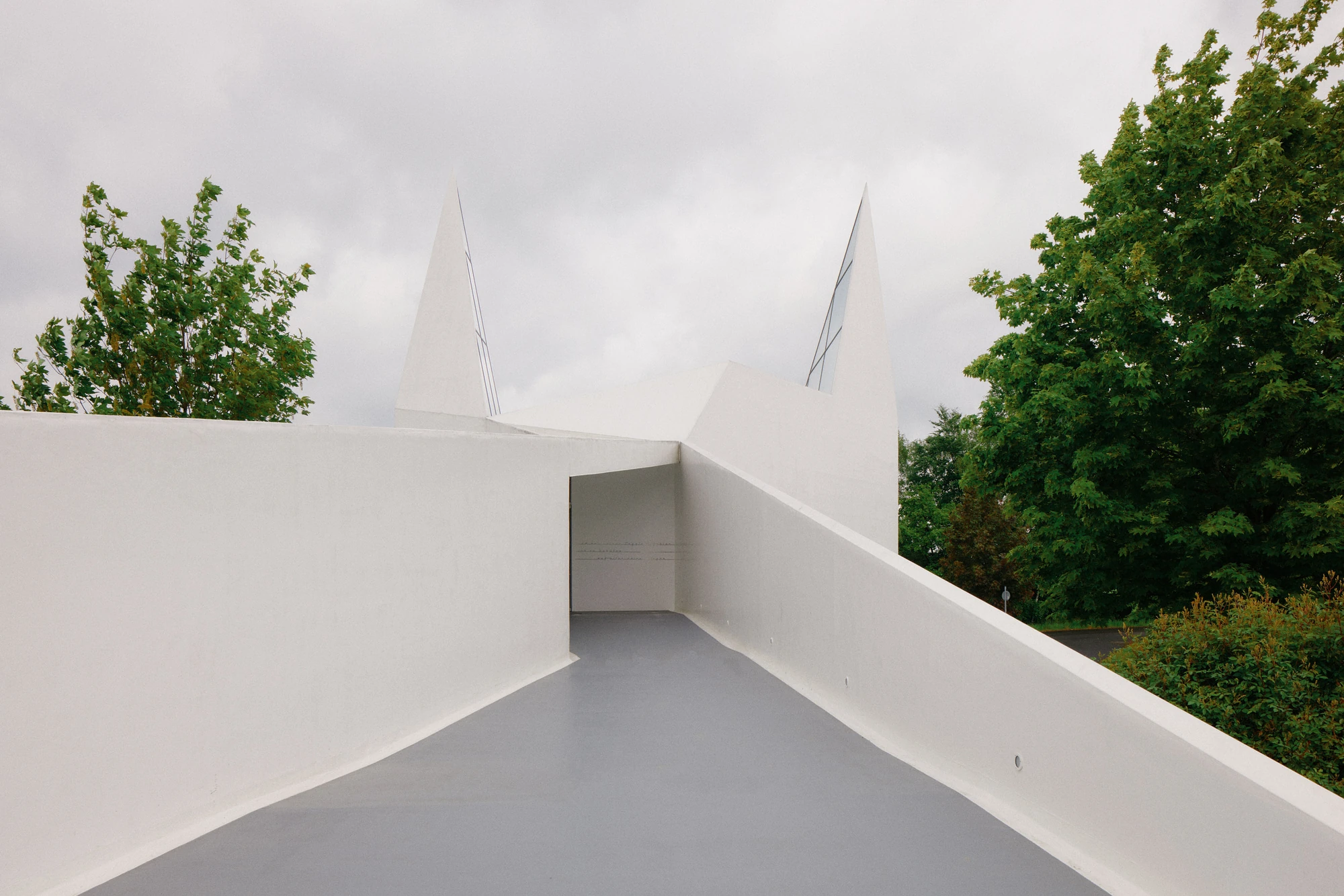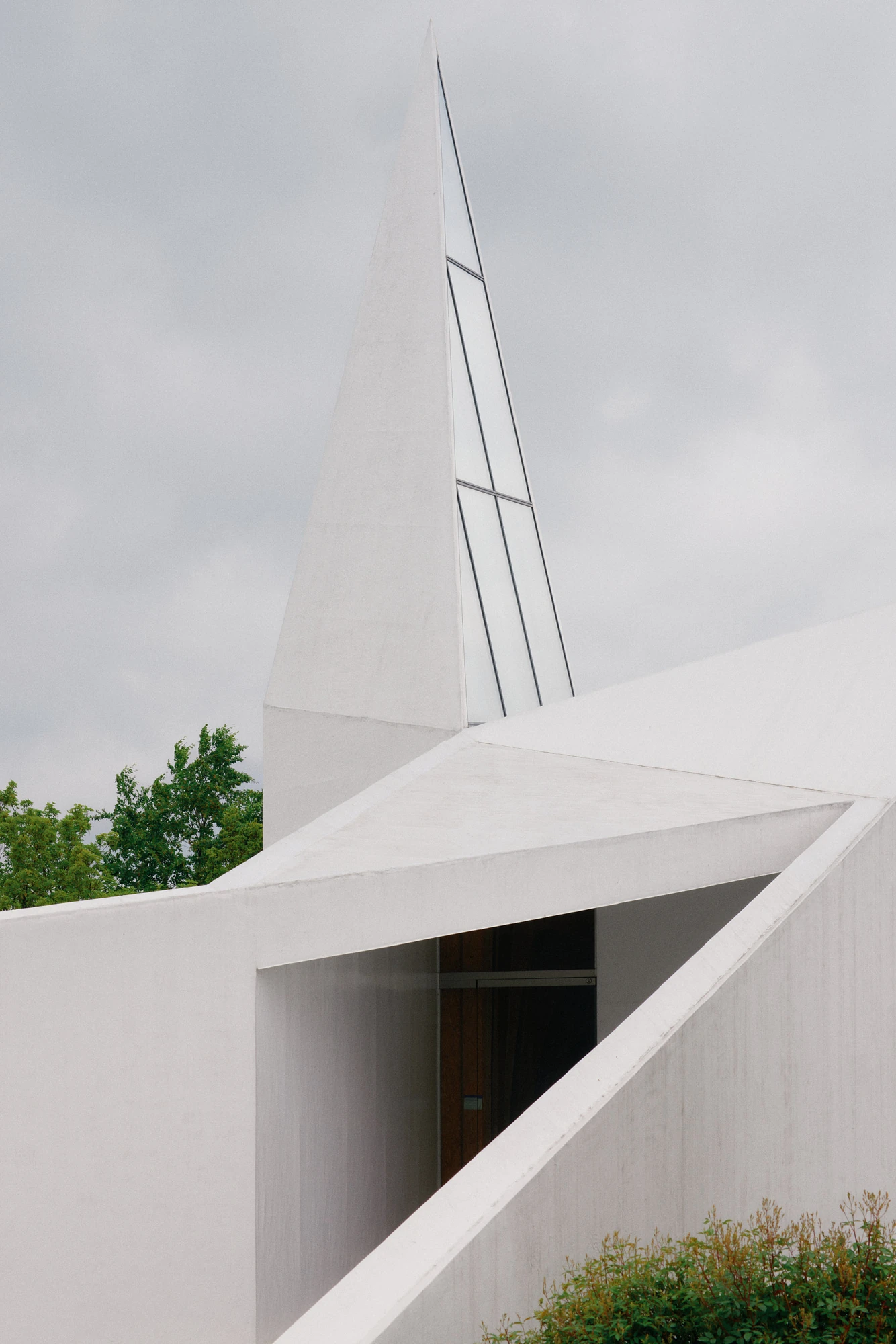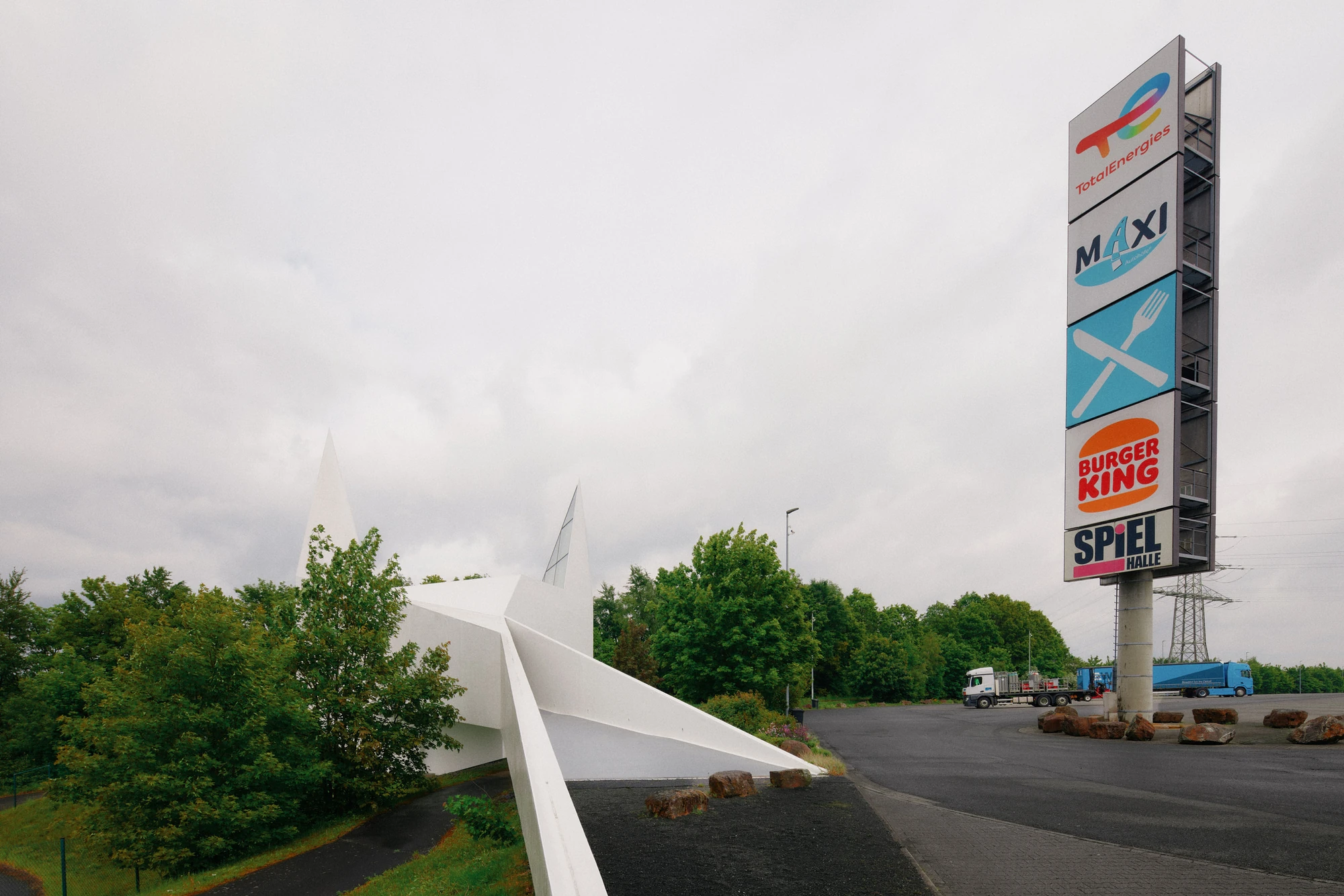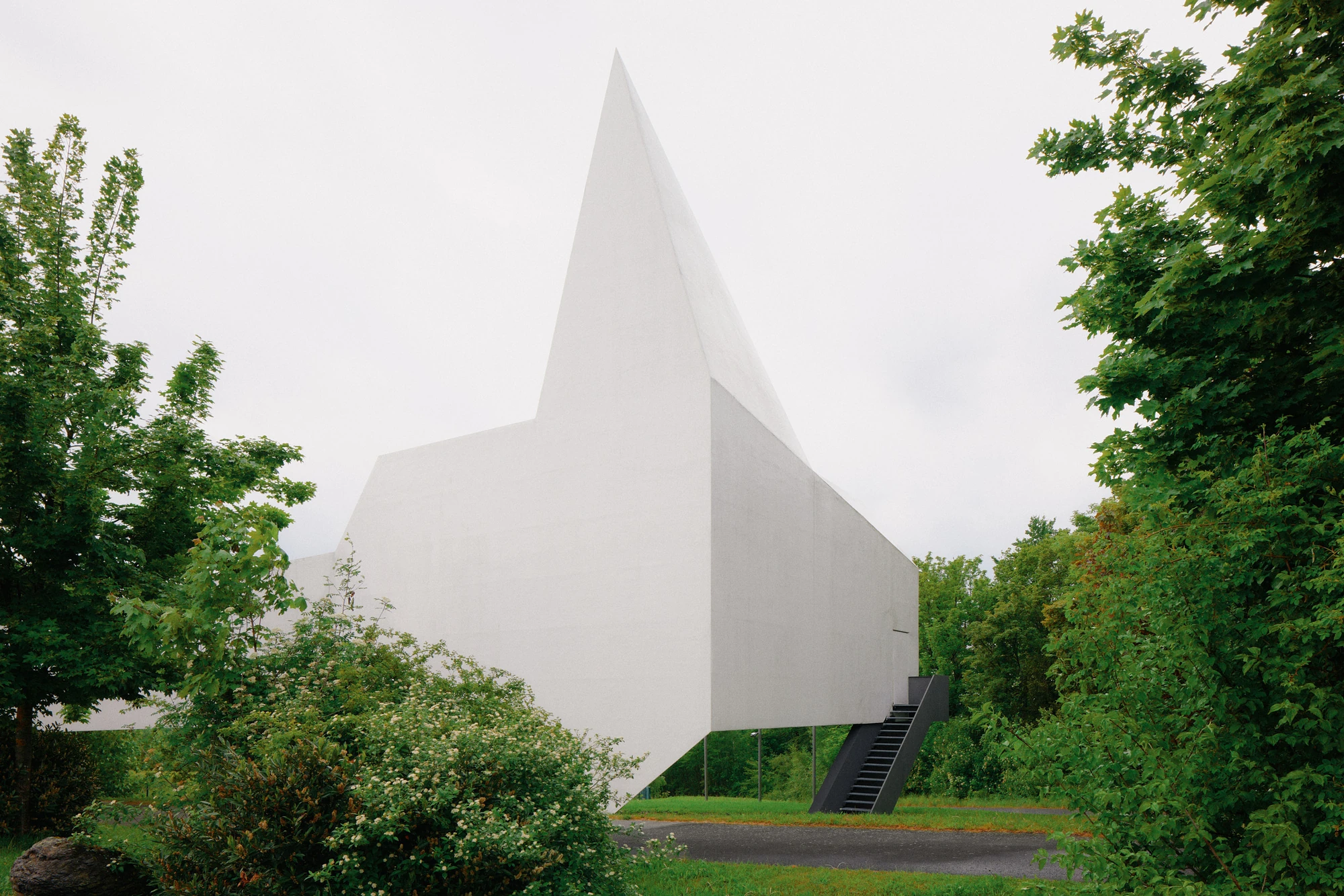
The road sign for a church, built at full scale: beside the A45 near Wilnsdorf, Germany, schneider+schumacher raised Autobahnkirche Siegerland as a white silhouette with two pointed spires.
The nearest motorway churches to the A45 stood near Münster and near Wiesbaden, nowhere close to the busy Sauerlandlinie through Siegerland. Hanneliese and Hartmut Hering noticed the gap after visiting one in southern Germany, and set things in motion. A Förderverein formed for the single purpose of running a competition, which schneider+schumacher won in March 2009.
Michael Schumacher took the road's own logic as the brief. “Motorway service areas are places with an unmistakably direct message,” he says. As he put it, they point to filling up, eating, sleeping and maybe a gaming hall, little cities without the subtler layers. His response was to build the sign itself, a three-dimensional reading of the church pictogram: a stylised white silhouette of a village church with two pointed spires, legible from both the motorway and the service station. “For a building to make an impact in such surroundings, it needs to talk the same unmistakably direct language,” Schumacher says.
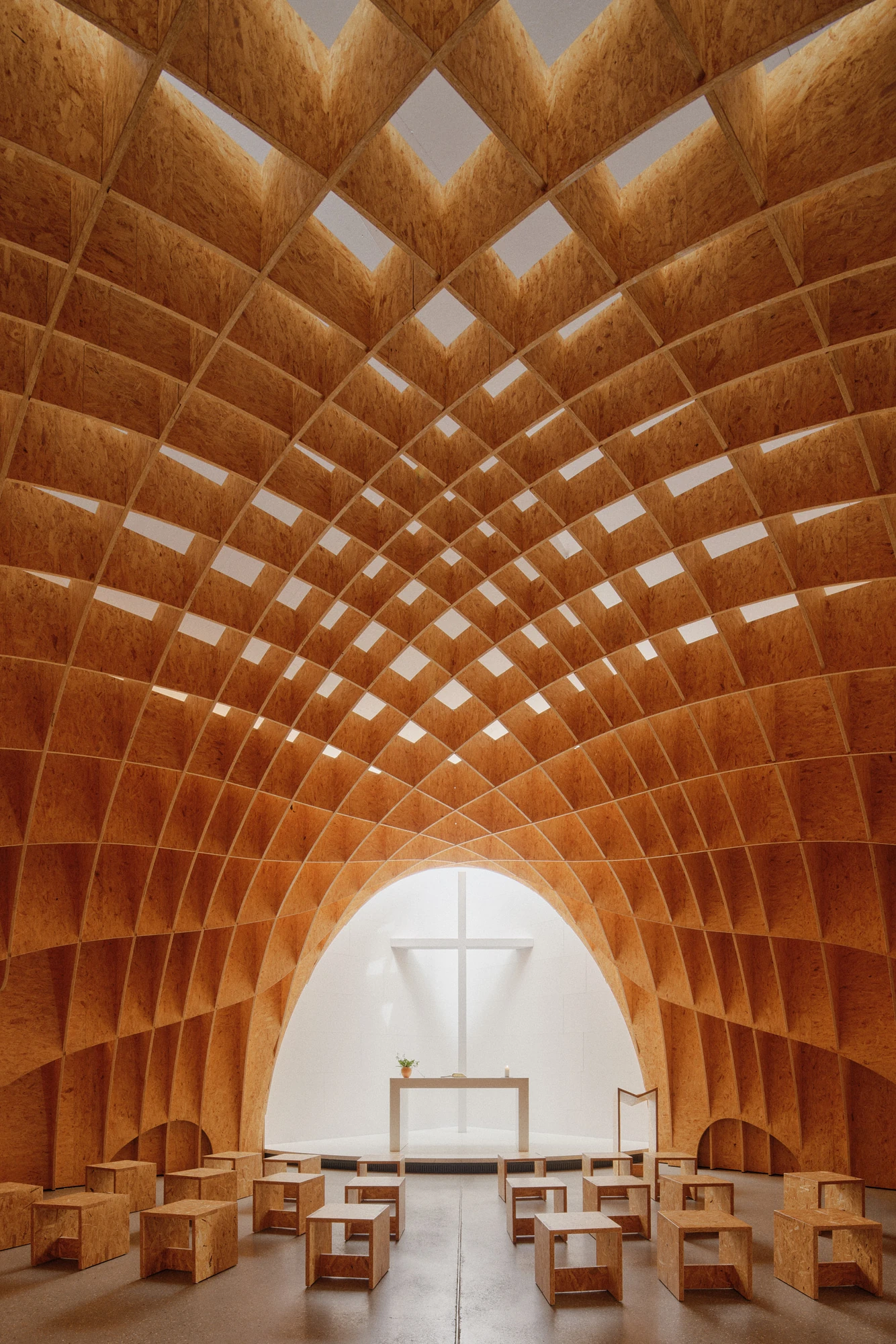
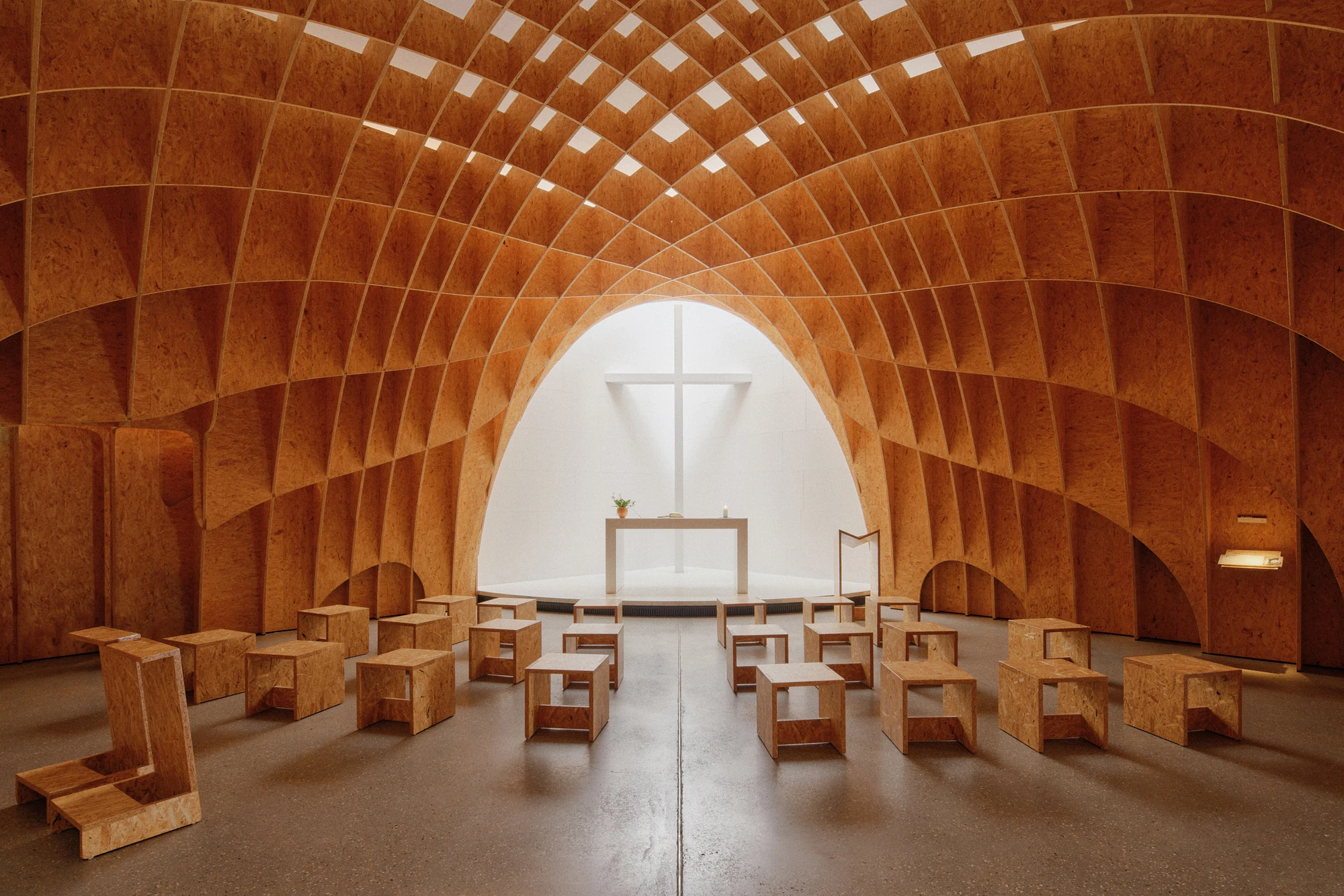
The nave is a square of roughly 14 by 14 metres, met by an access bridge at its south-west corner. The whole sits on an archaic concrete foundation slab, sculptural in its own right, which carries the timber structure above. Work began there in March 2011, and the gross floor area comes to about 240 square metres. Bollinger + Grohmann engineered the structure, and Holzbau Amann built the timber.
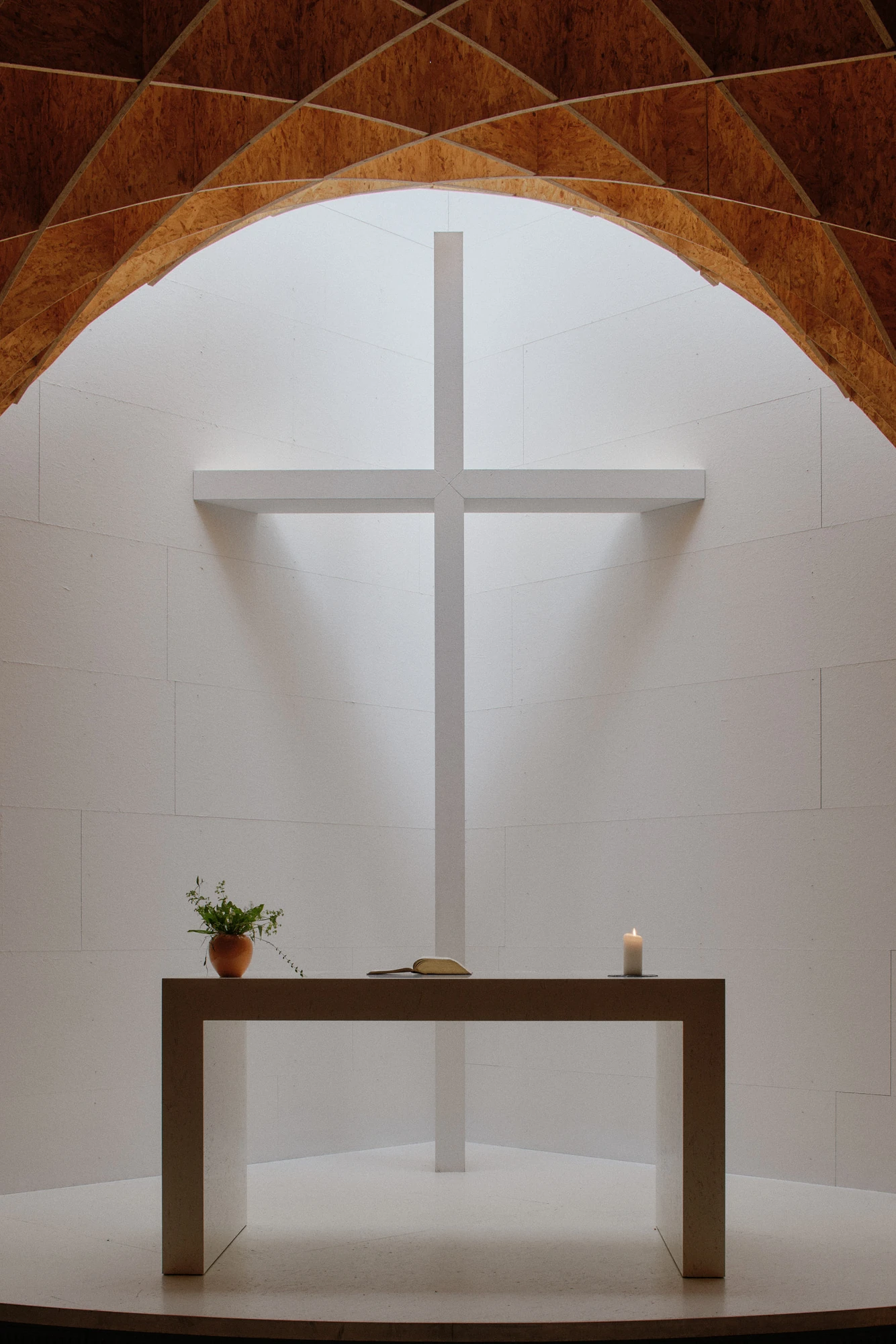
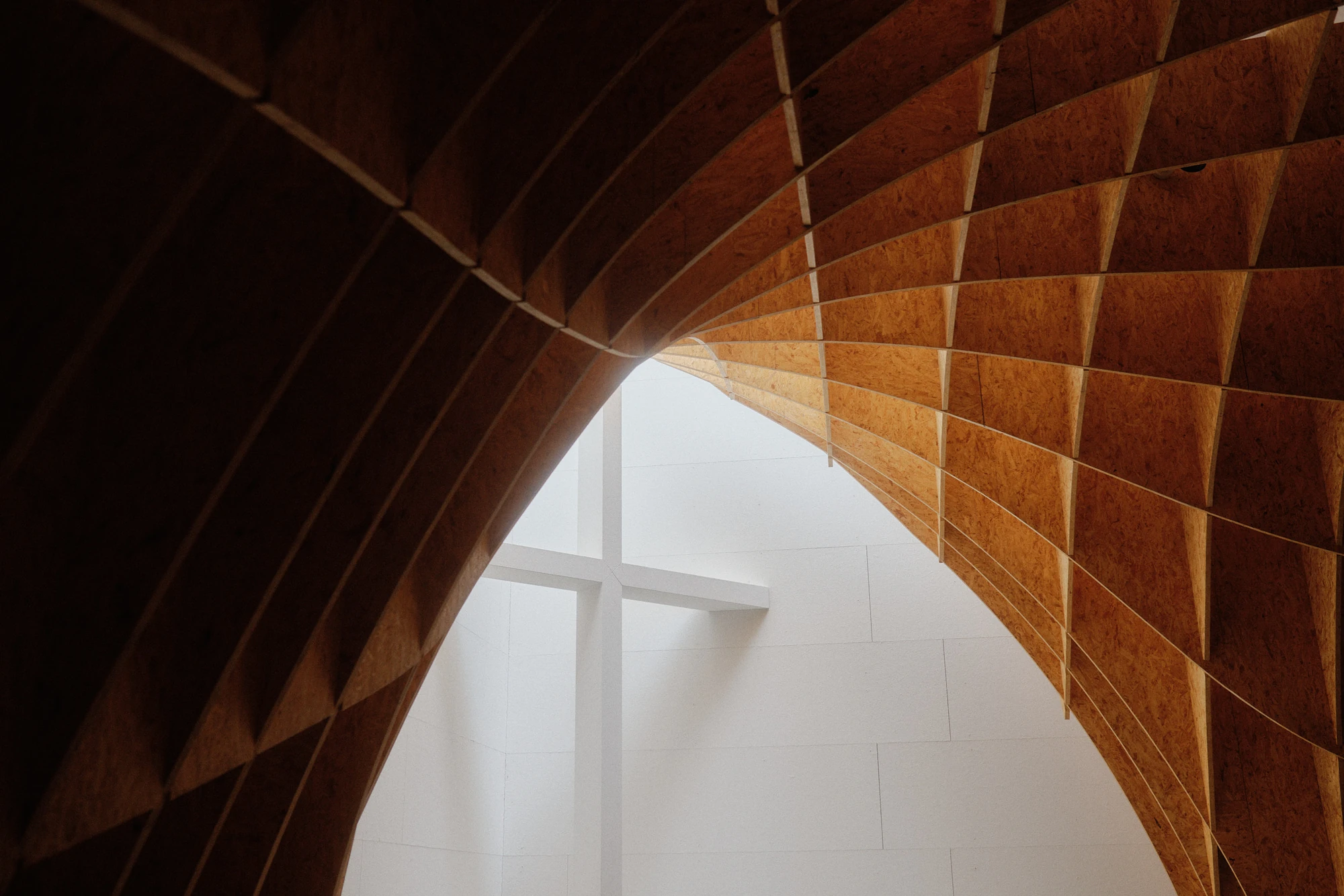
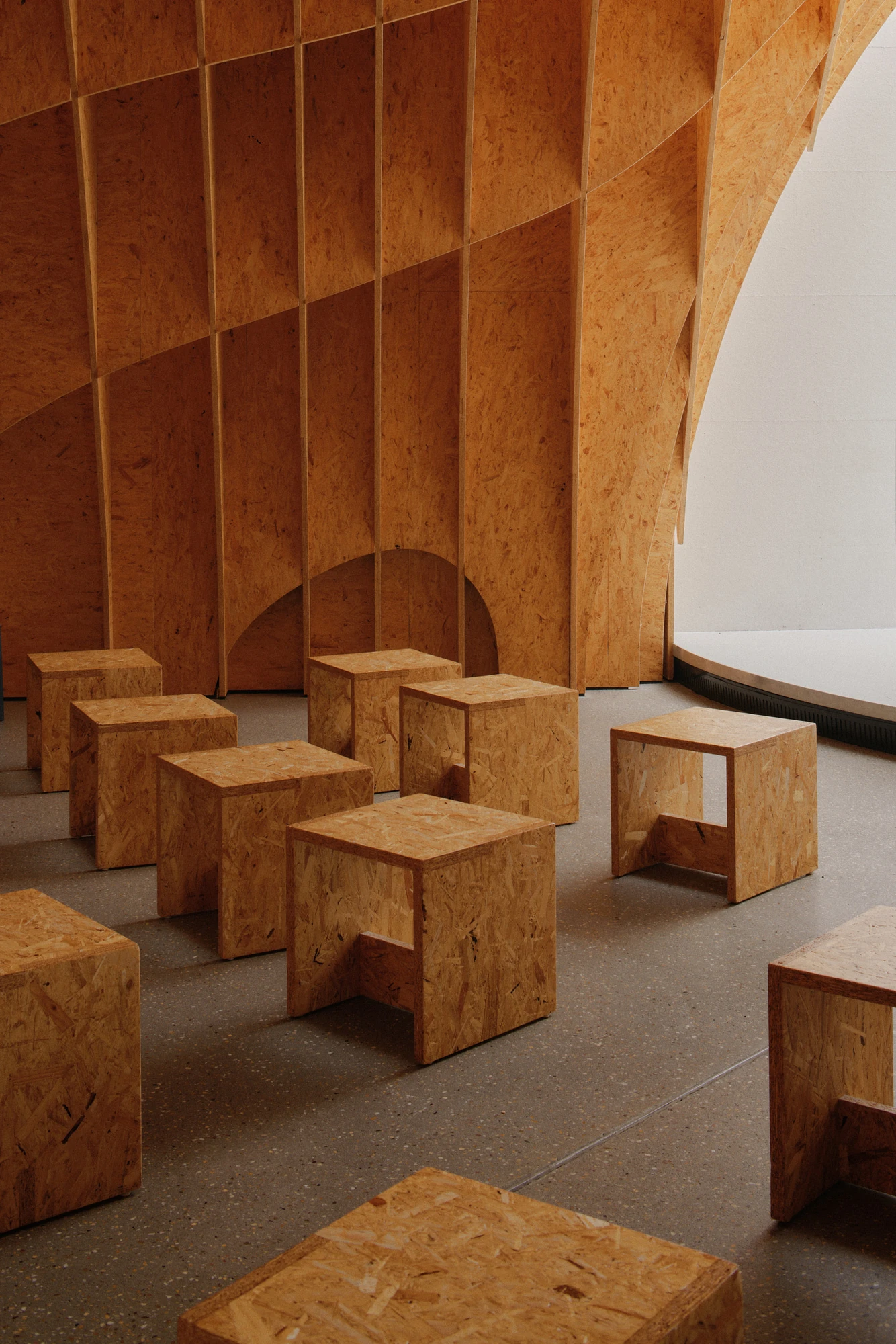
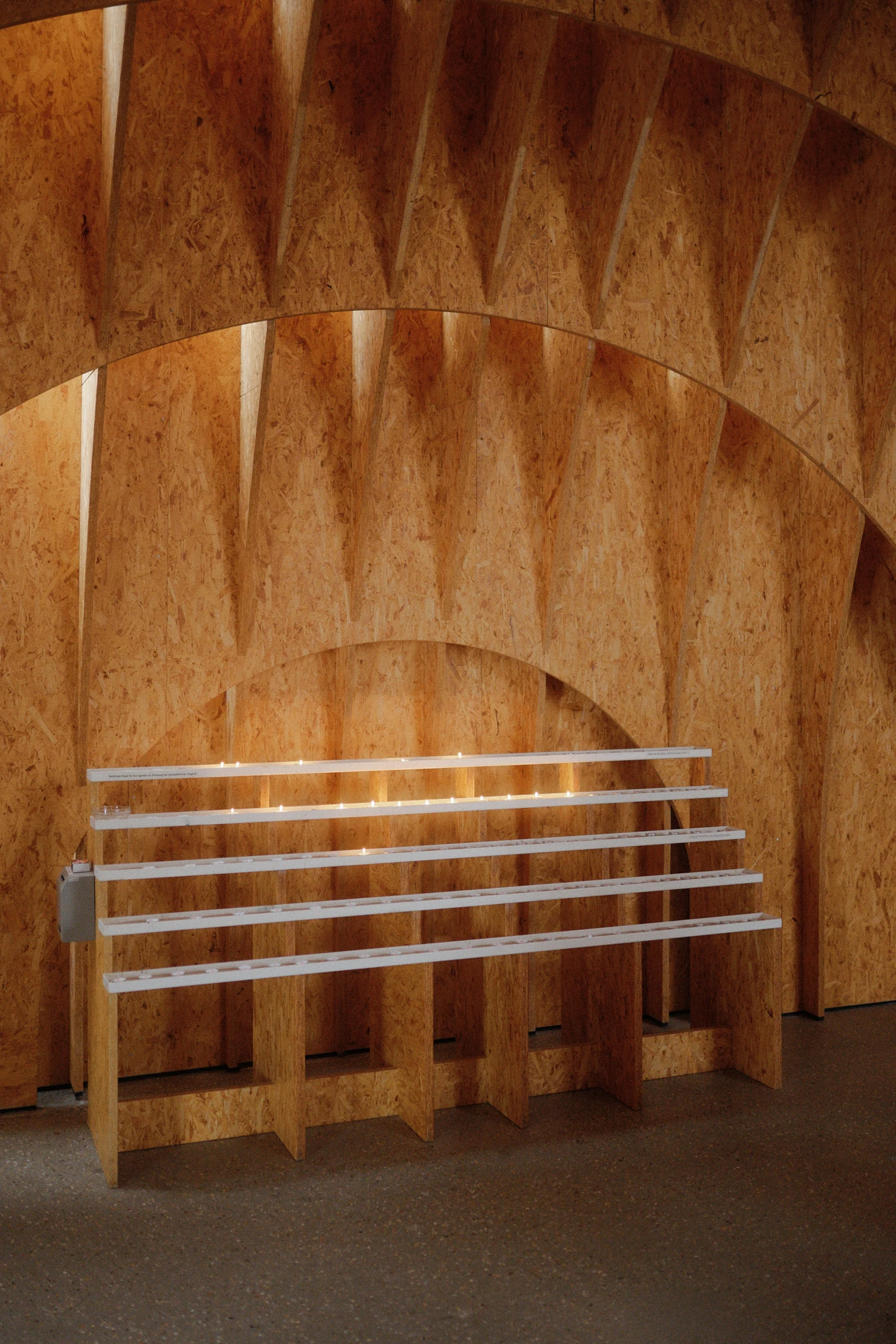
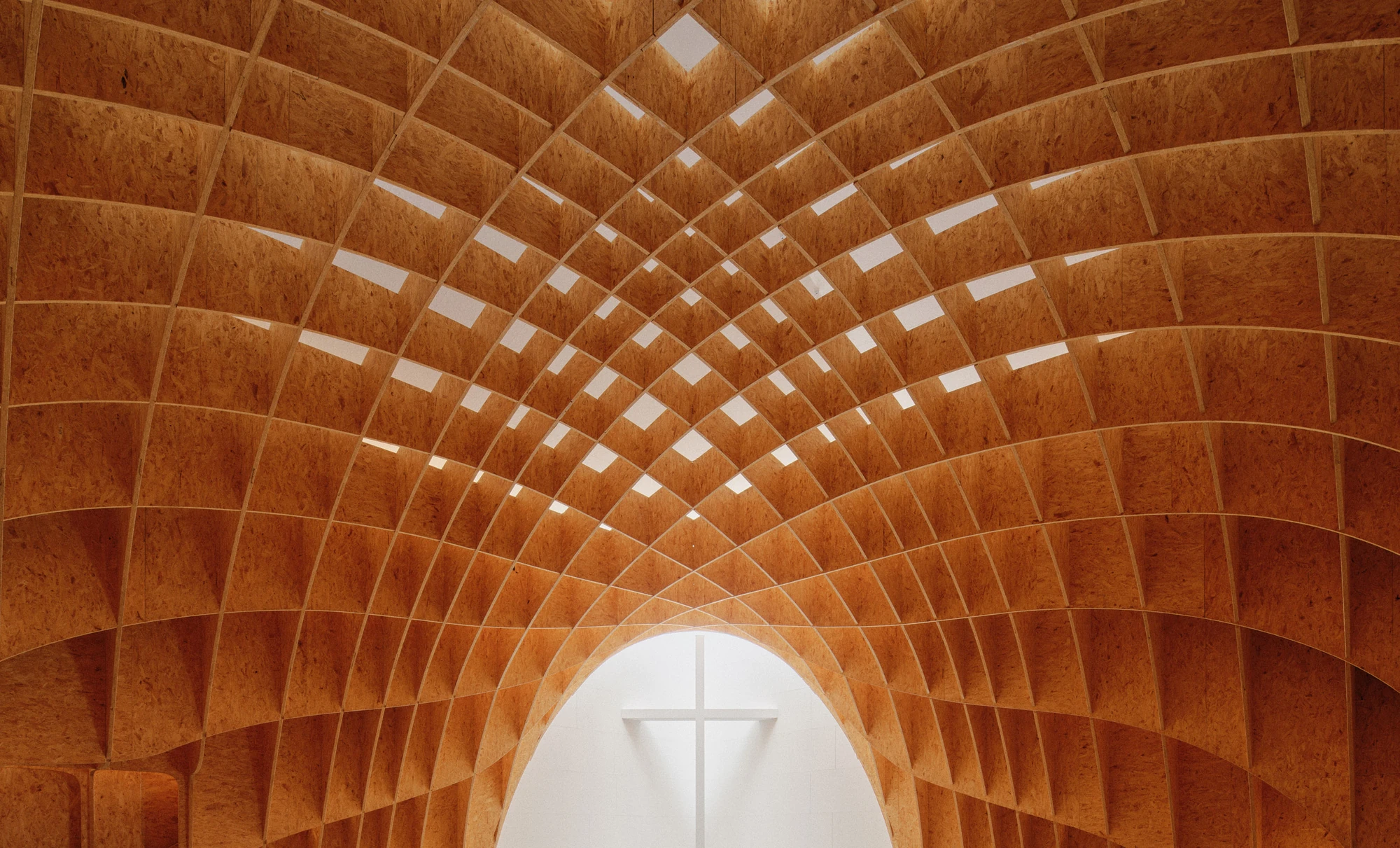
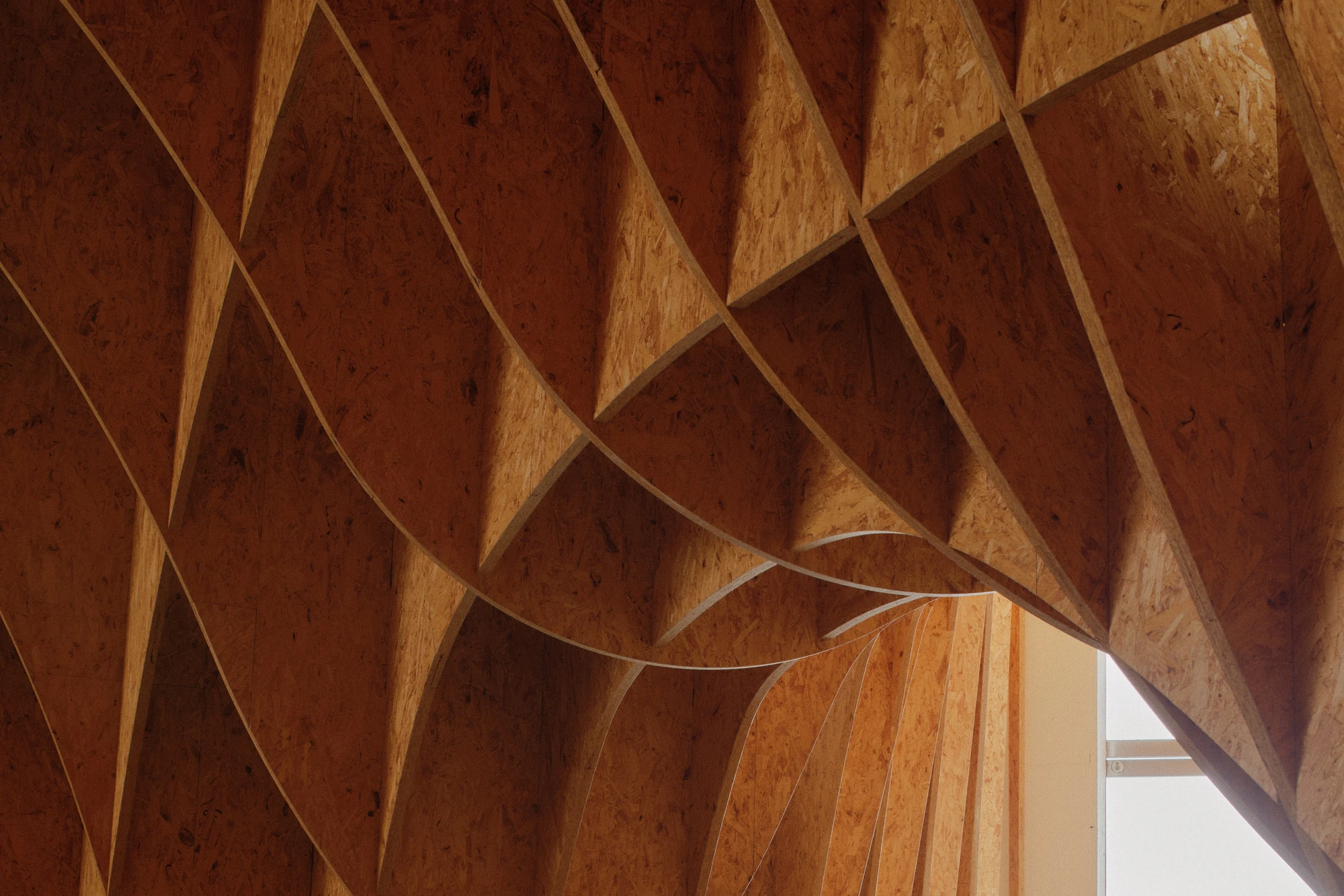
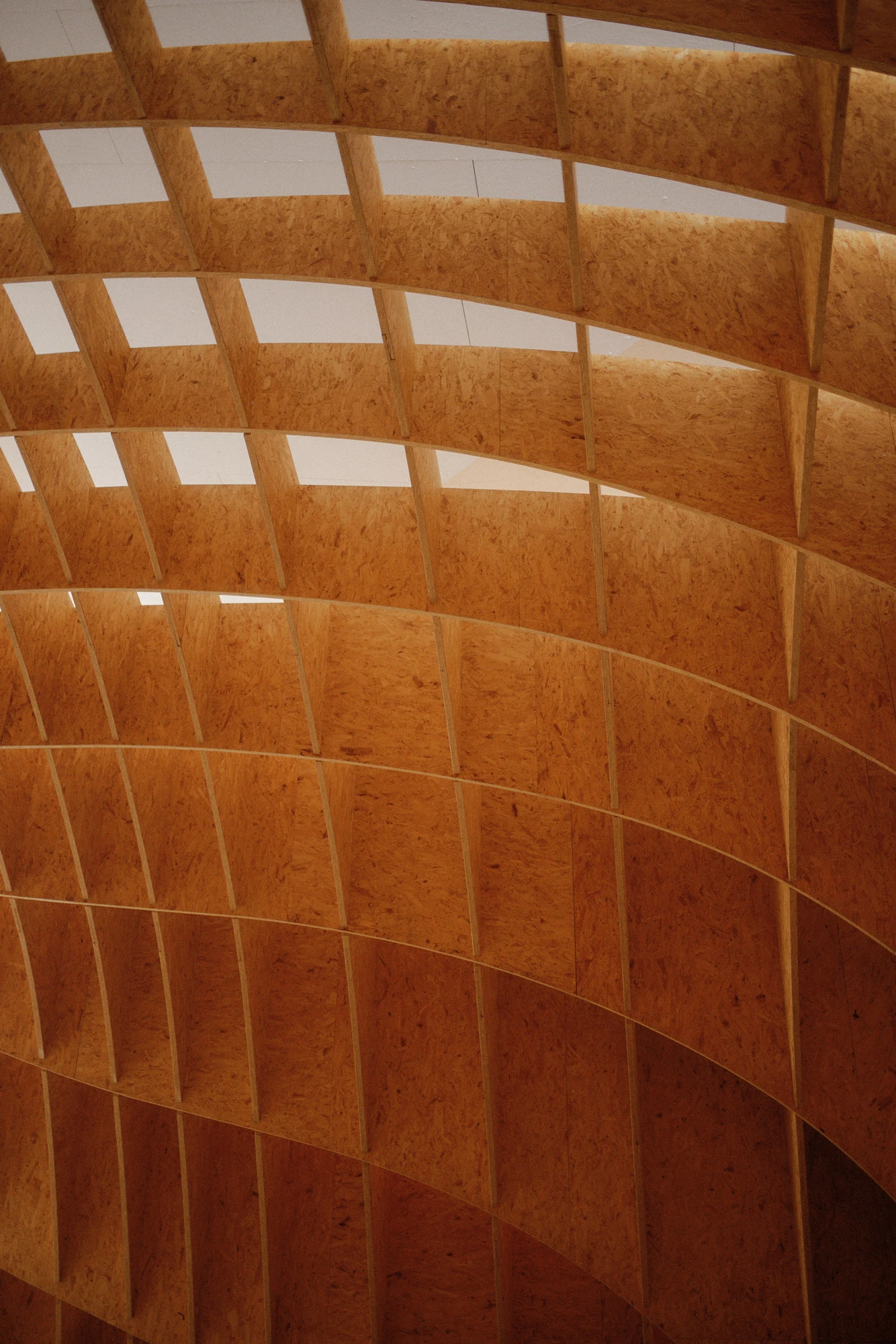
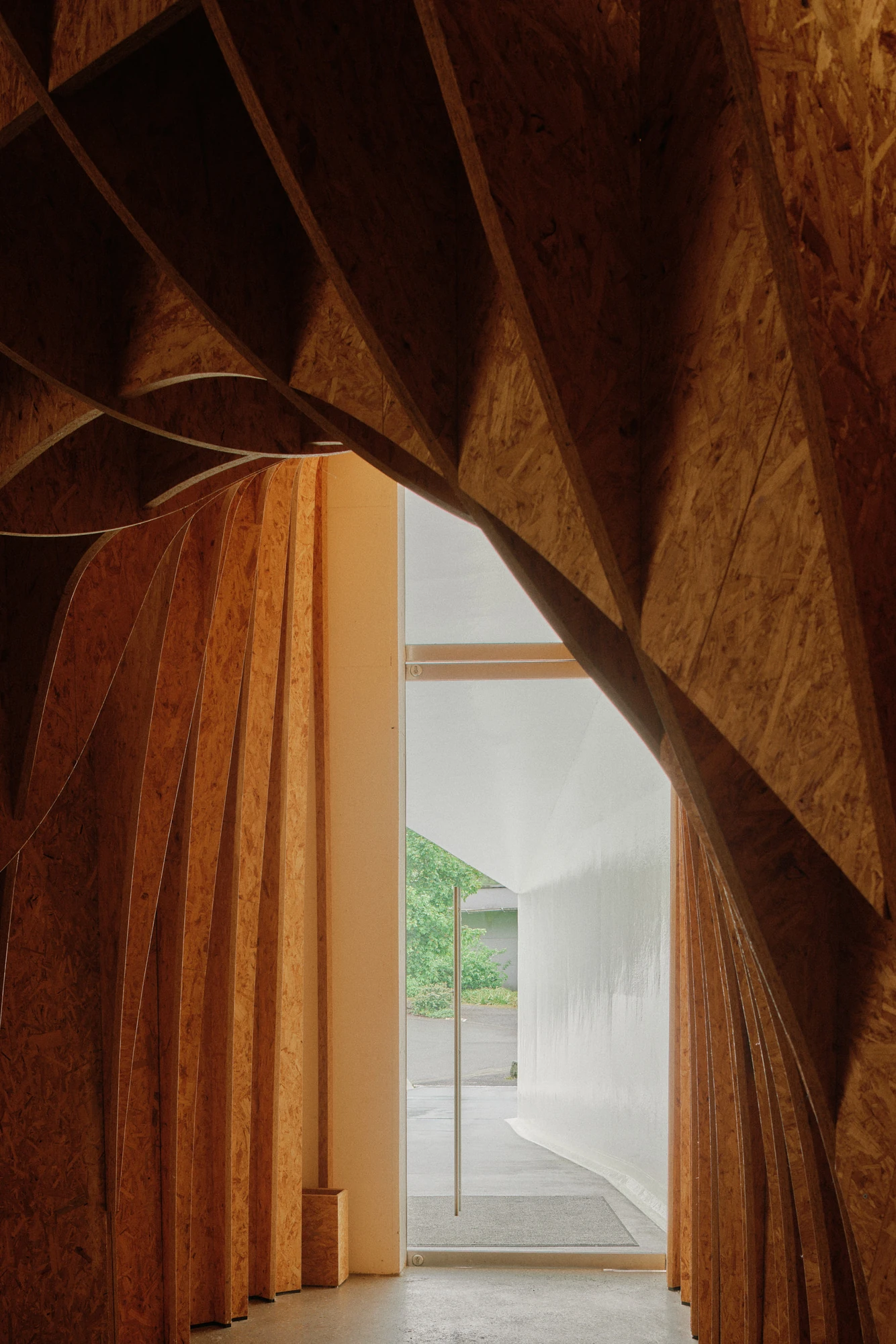
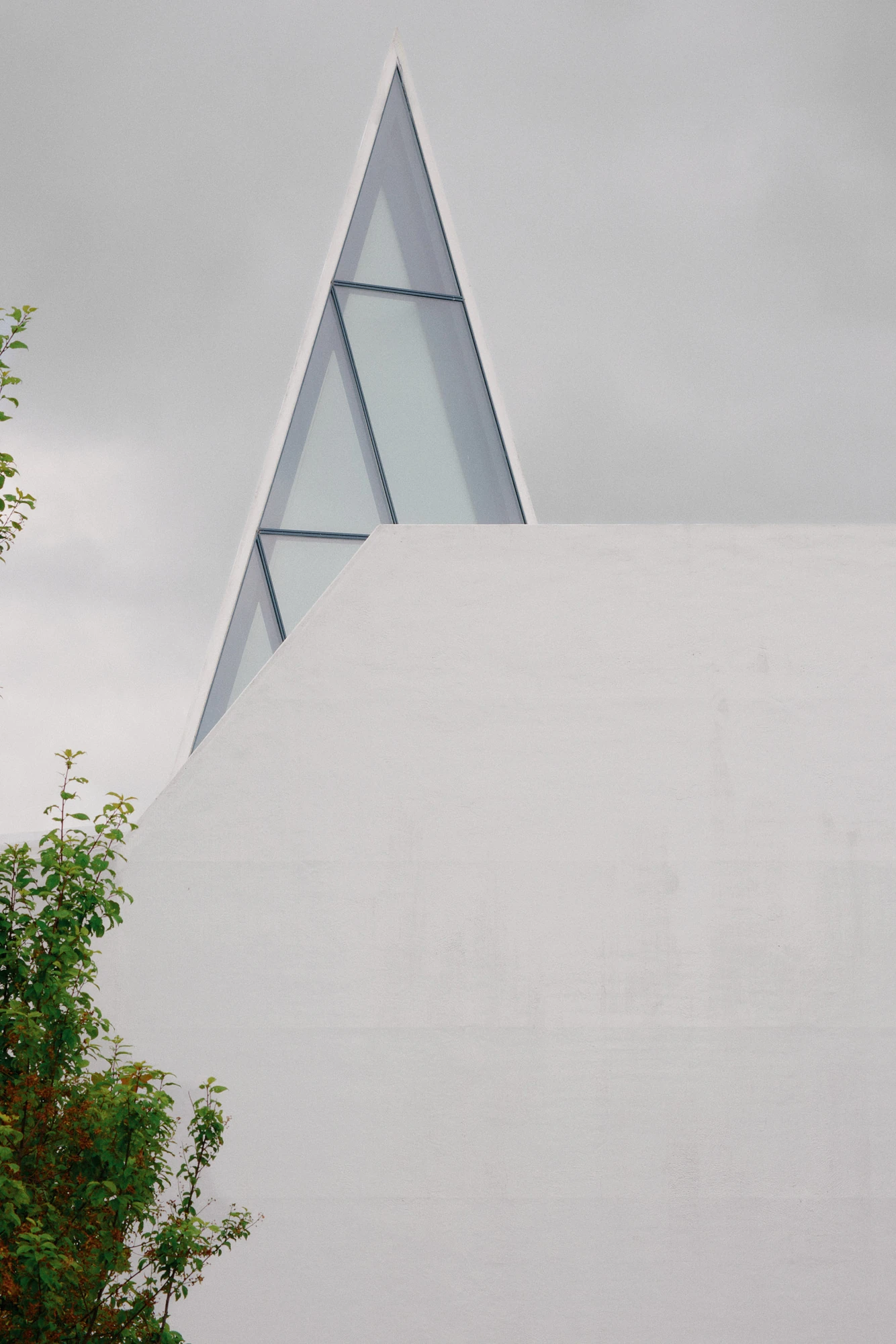
A vault of 66 engineered lumber profiles, cut from oriented strand board, slots together into a rigid, self-supporting gridshell. Parametric software generated the geometry and drew the construction documents for 650 individual parts. The studio likens the result to “a delicate cross-ribbed structure.” Daylight reaches the altar only from above, falling through skylights in the two spires.
The church photographed by David Altrath was consecrated at the end of May 2013. Its case rests on the direct language Schumacher wanted: a building that speaks the blunt grammar of the road on the outside, then offers, under the vault, what the service area cannot.