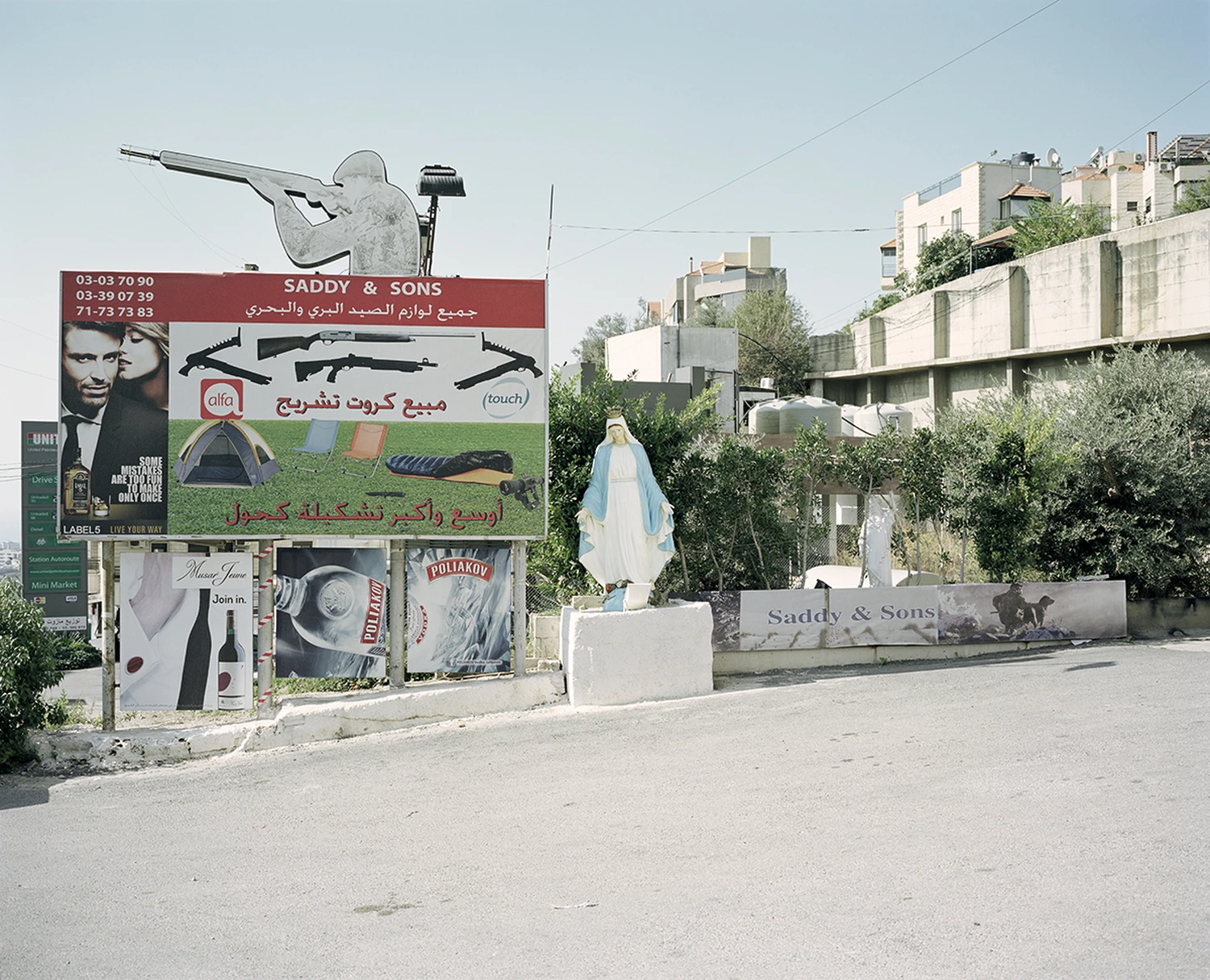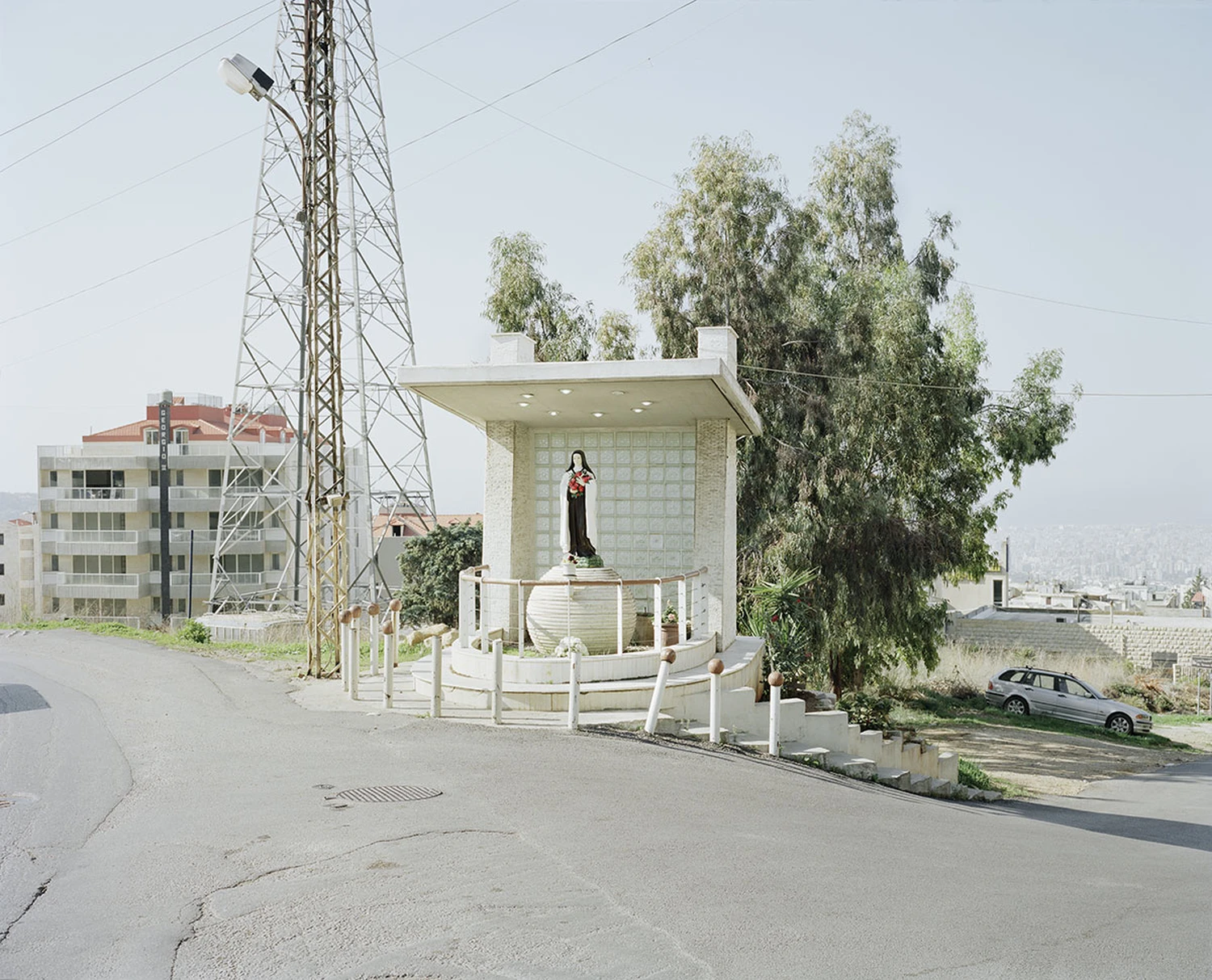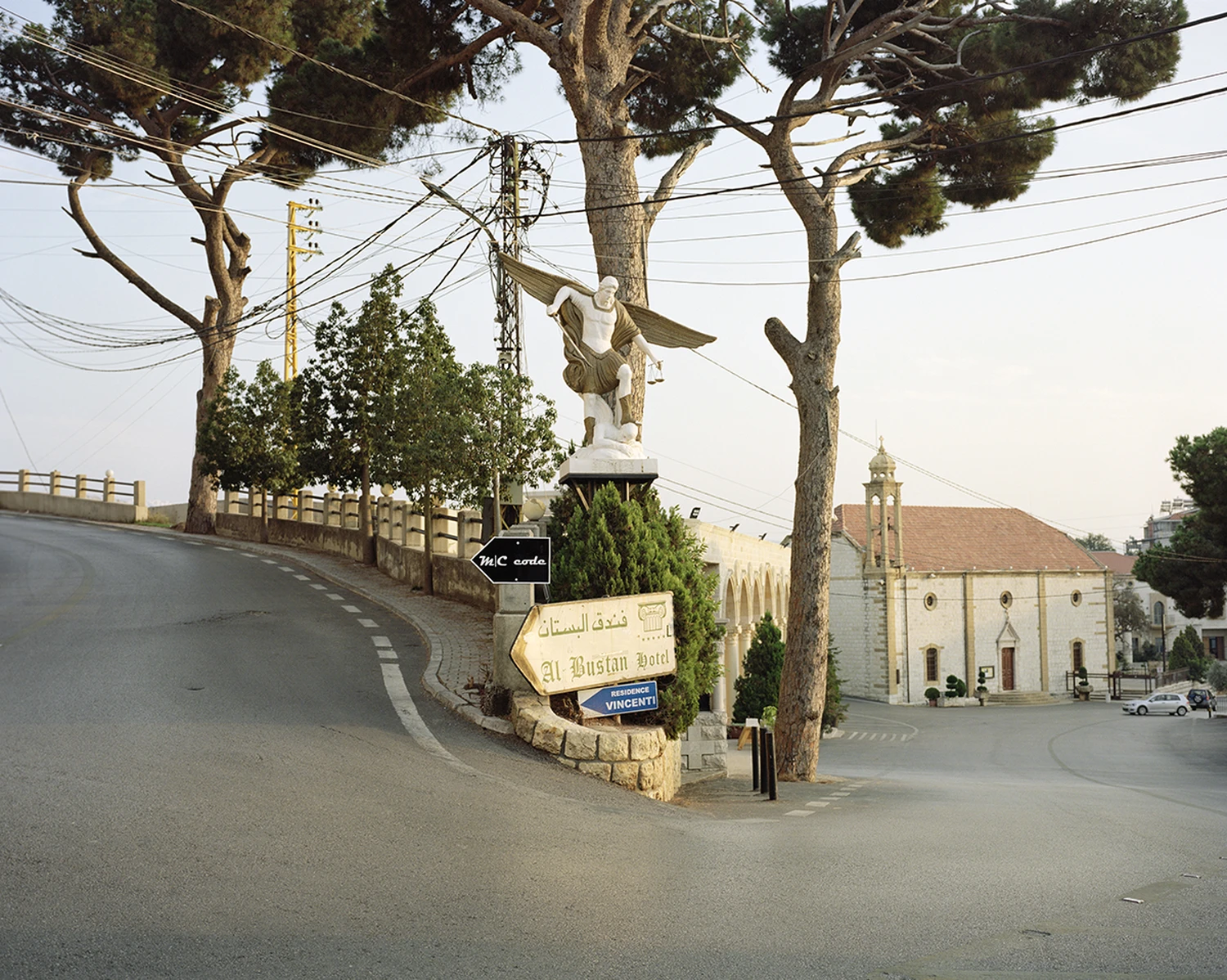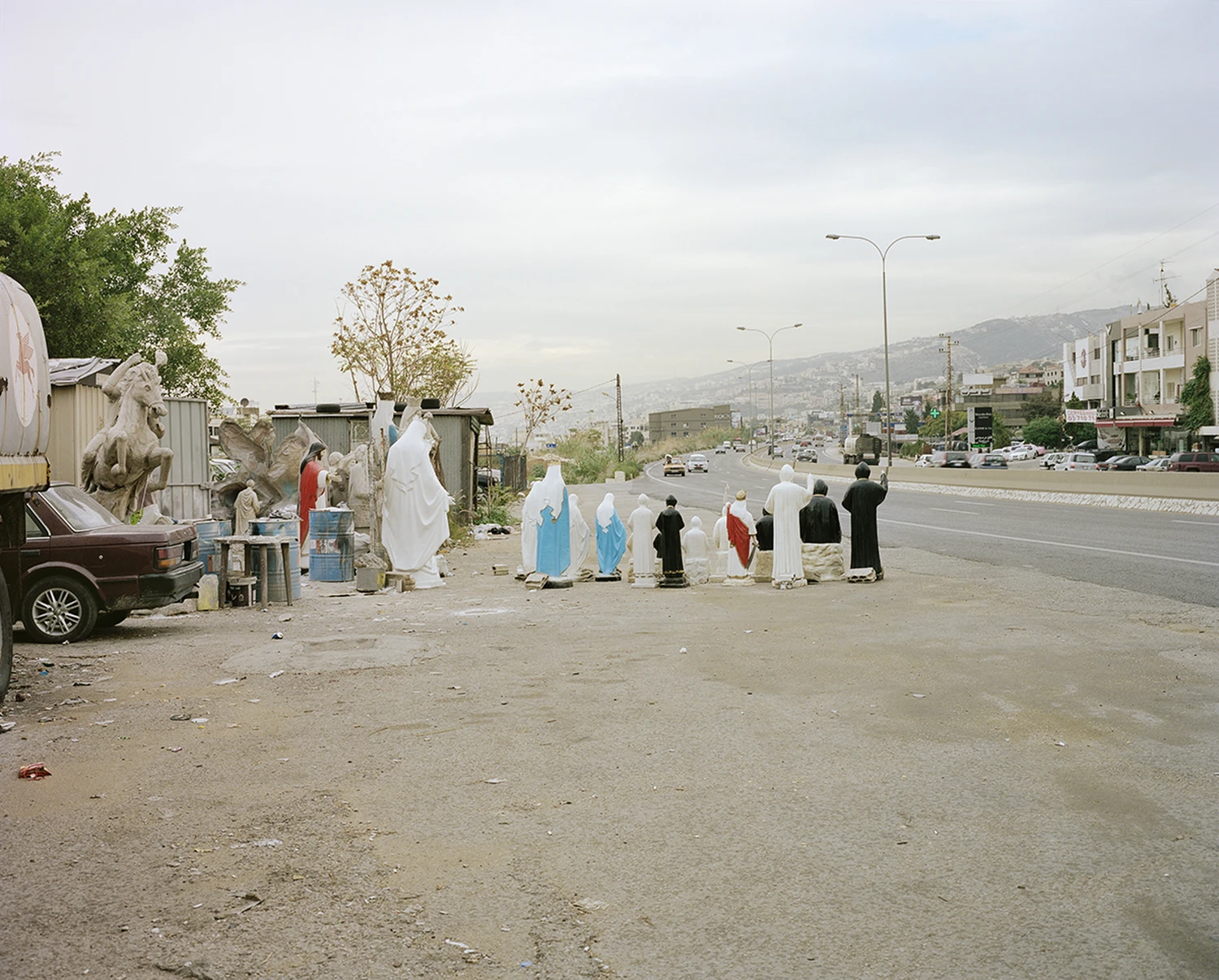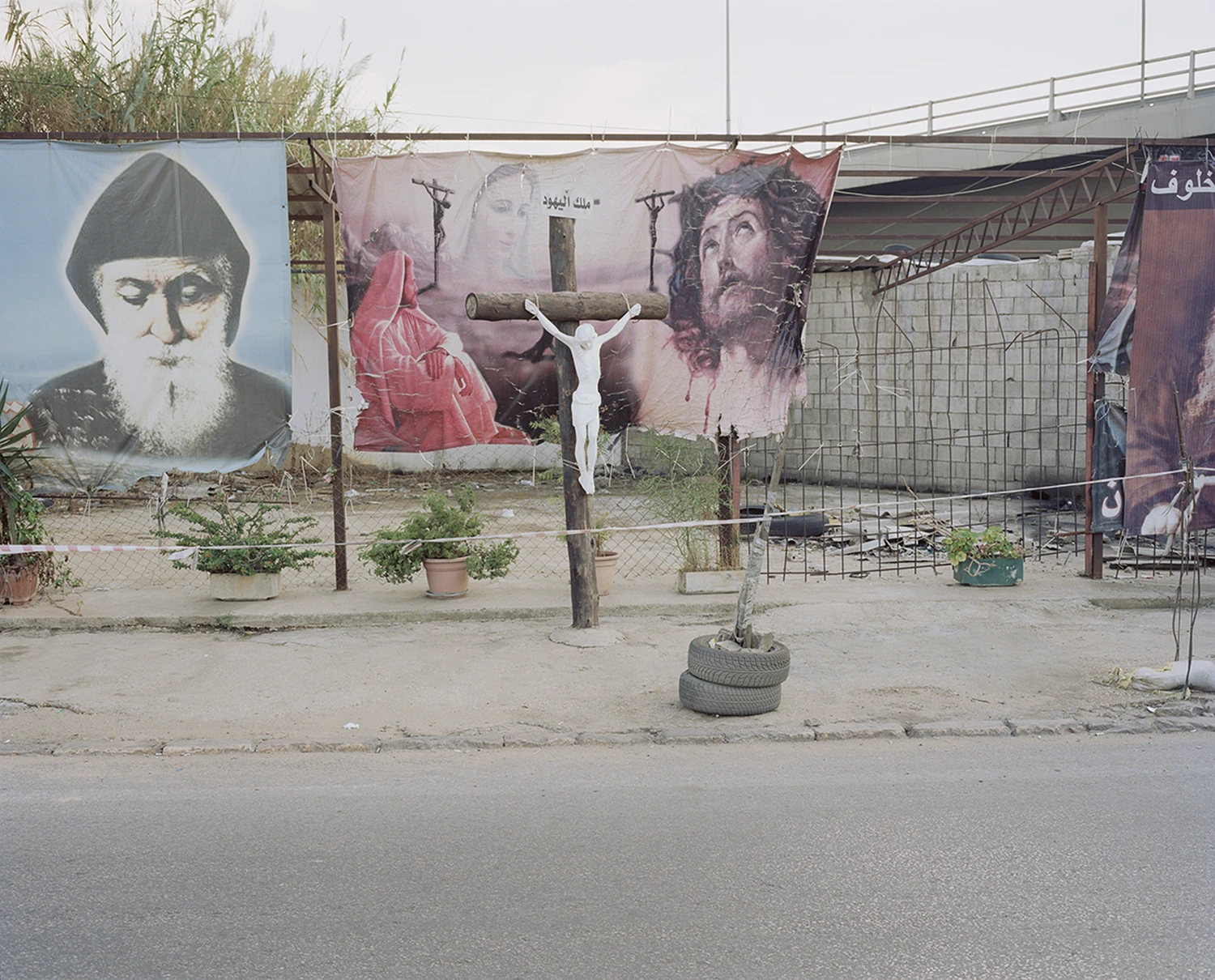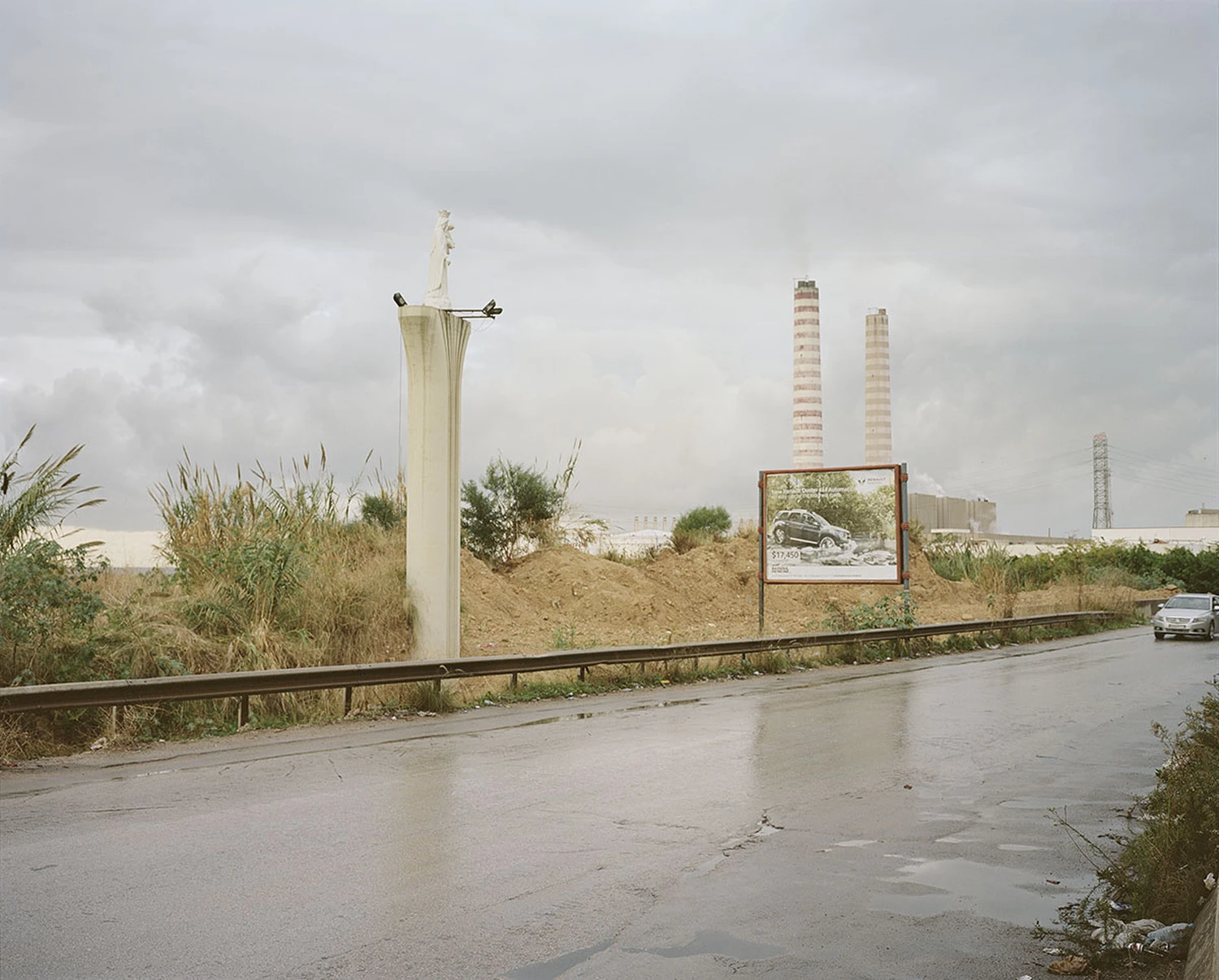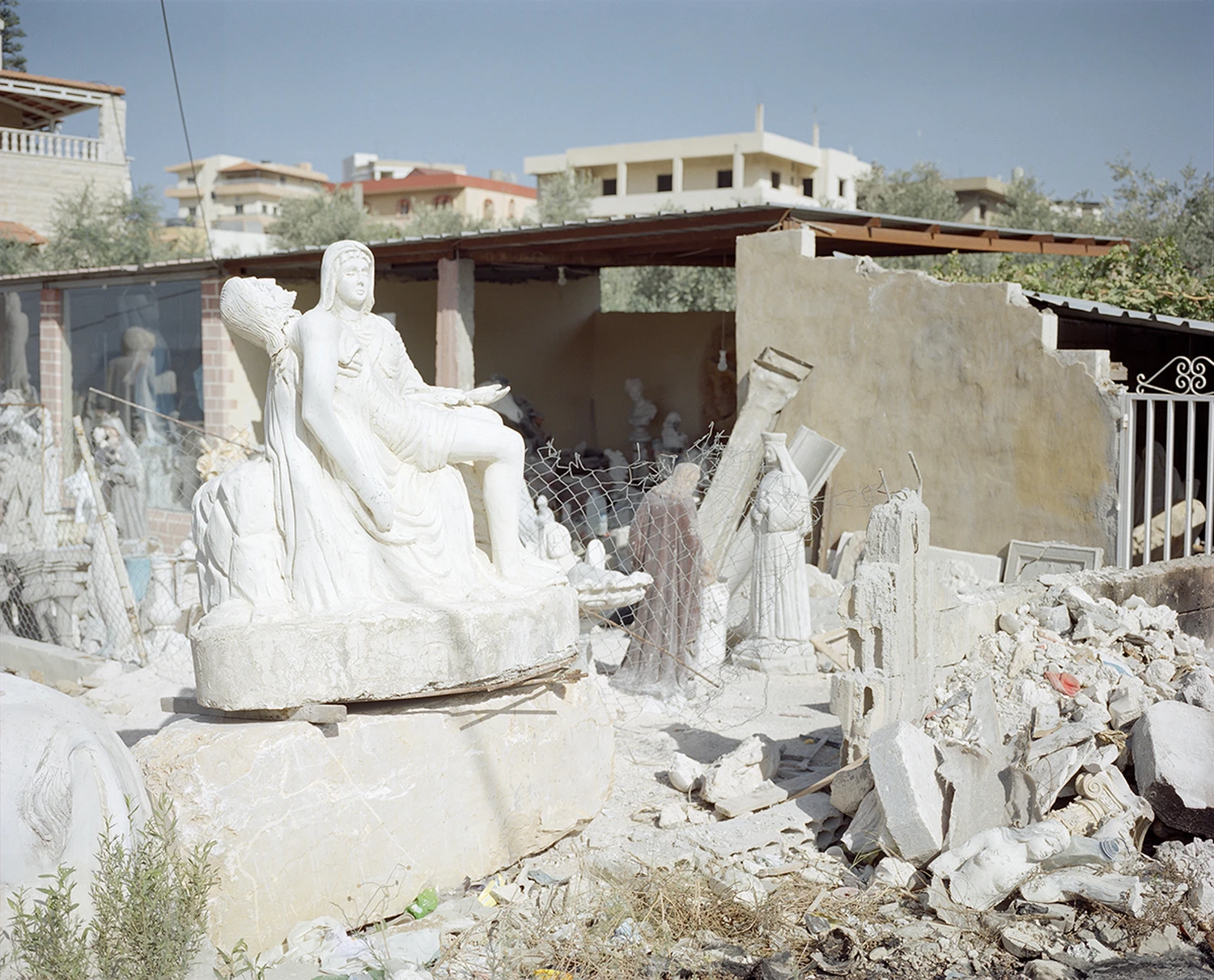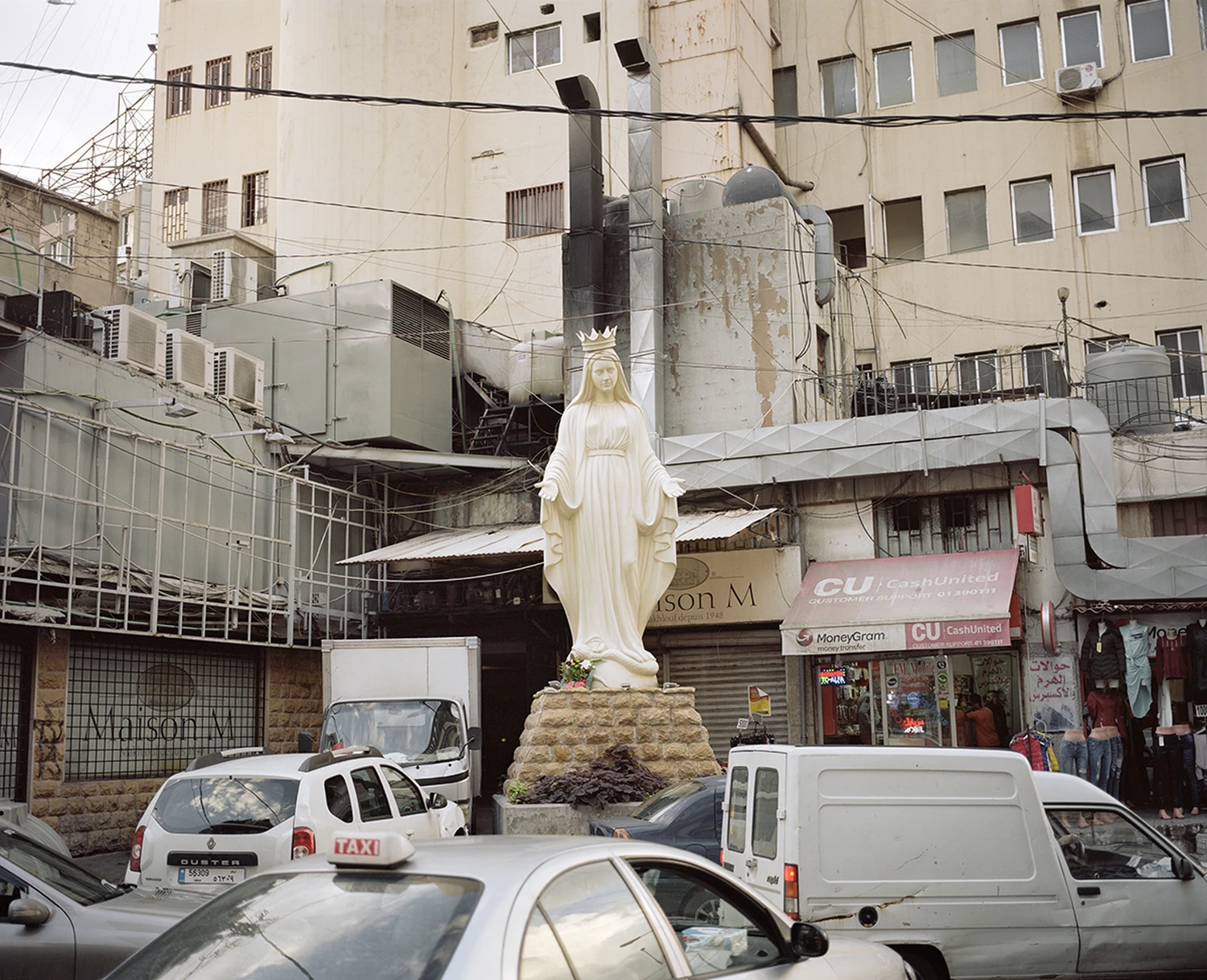
ASNAM by Georges Salameh documents the sixteen-year monumentalization of religious statuary across Lebanon’s public spaces — a patient photographic inquiry into faith, territory, and the politics of visibility.
Something shifted in Lebanon after the civil war. Not all at once, and not loudly, but in the form of enormous figures appearing along roads, atop hills, at the edges of towns where they had never stood before. Christ. The Virgin Mary. Saints and angels rendered in stone and concrete, suddenly occupying the open air. When Georges Salameh first returned to photograph them in 2009 — two decades after leaving the country — the accumulation had already begun. Over seven short visits spanning sixteen years, he watched it accelerate.
ASNAM is the document of that watching. The title, meaning 'Idol Statues' in Arabic, carries its own charge. These are not neutral objects. Each monument raises questions the book is wise enough not to answer definitively: Who authorized their placement? What do they claim on behalf of the communities that erected them? Where does private faith end and political performance begin? Salameh photographs them not as curiosities but as facts of the landscape — things that exist alongside gas stations and apartment blocks, both monumental and strangely mundane.
The gradual nature of the project is essential to its power. A single visit would produce reportage. Sixteen years of returning produces something closer to archaeology — a layered record of how a country narrates itself through devotional form. The statues that seemed extraordinary on first encounter become familiar fixtures by the final pages, and that normalization is precisely the point. ASNAM asks what it costs a society to monumentalize its faith in public space, and whether anyone is still counting.