At Galerie Molitor in Berlin, Apophenia brings Laura Langer, Lisa Jo, Marina Xenofontos and Niloufar Emamifar into a raw concrete building that keeps rewarding the urge to connect unrelated things.
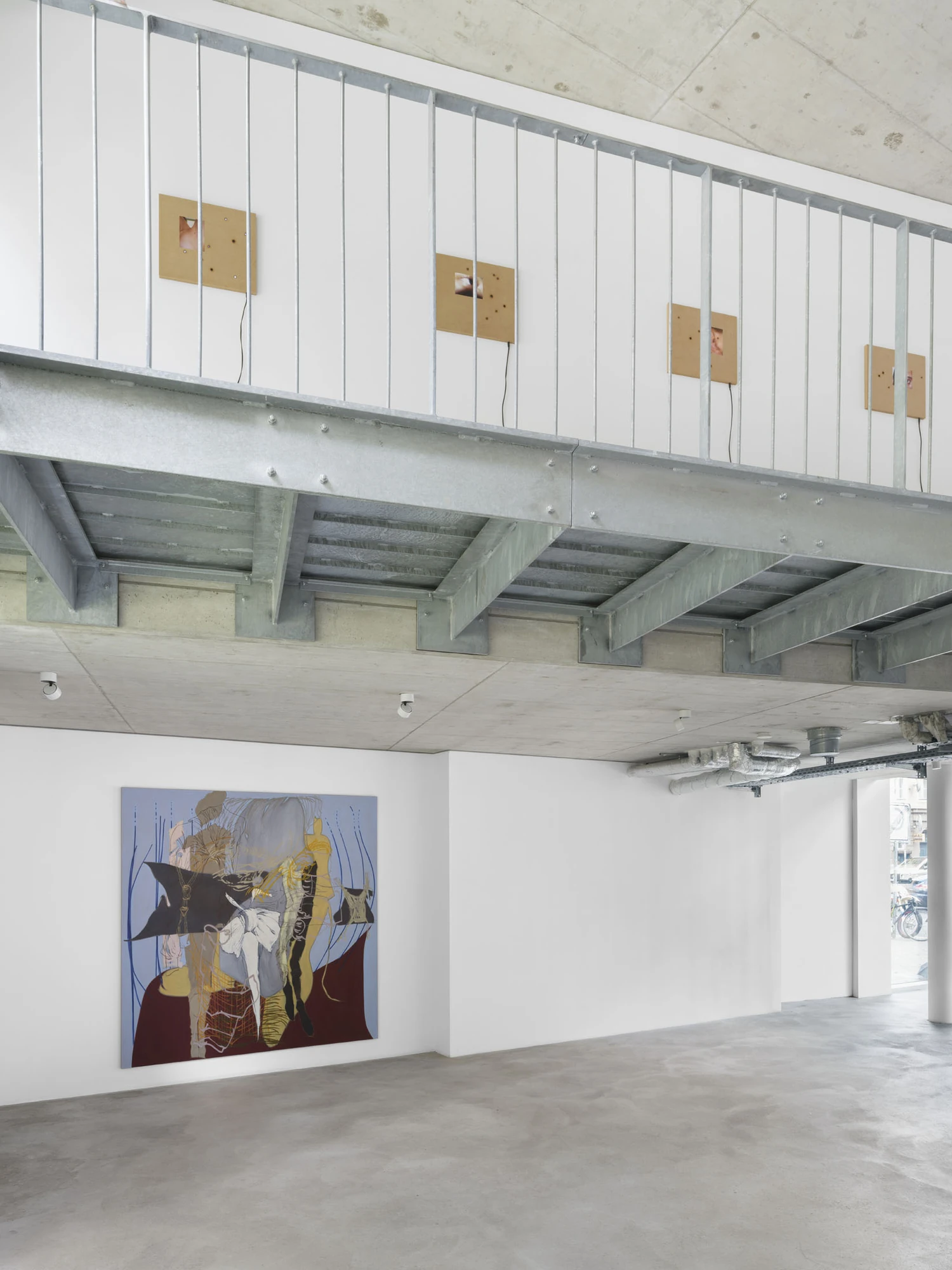
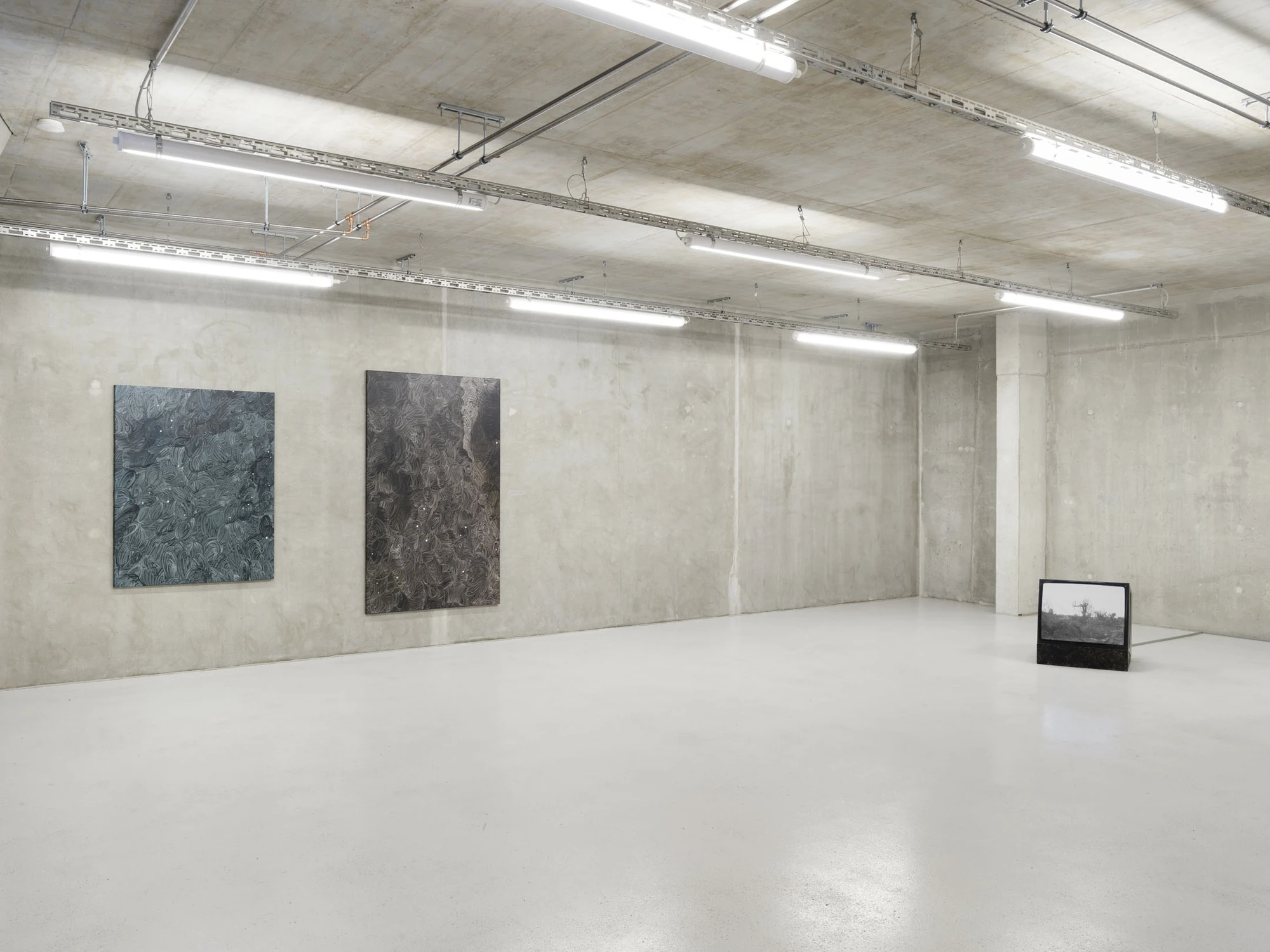
Galerie Molitor occupies a raw concrete building in Berlin, and the show it holds through the end of August makes no attempt to soften it. Fluorescent tubes hang off strut channel bolted to the slab. Galvanised beams carry a mezzanine. Floor-to-ceiling glazing opens onto a courtyard where the neighbouring wall is covered in graffiti. Apophenia, the name for the tendency to find meaningful connection between things that have none, gathers Laura Langer, Lisa Jo, Marina Xenofontos and Niloufar Emamifar, then declines to spell out the link.
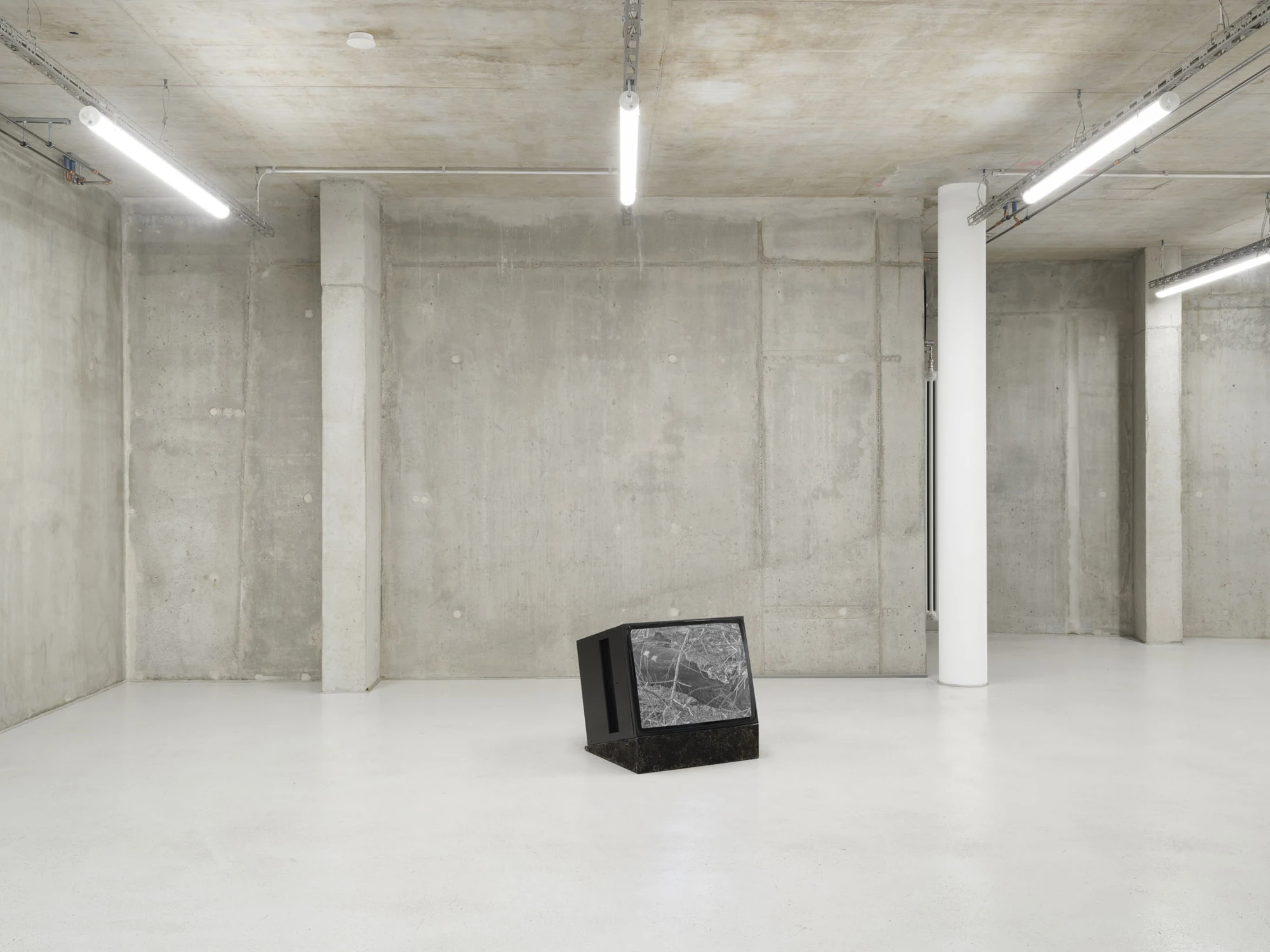
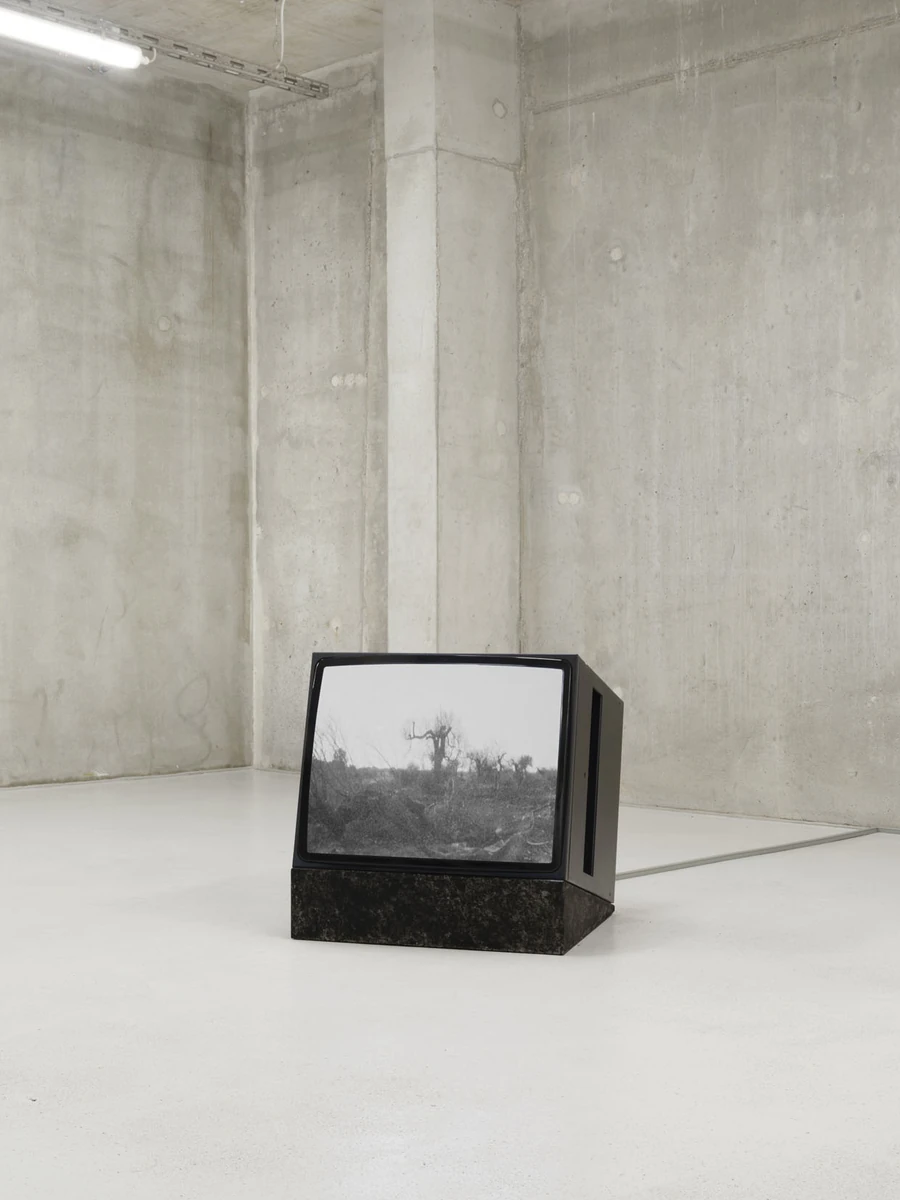
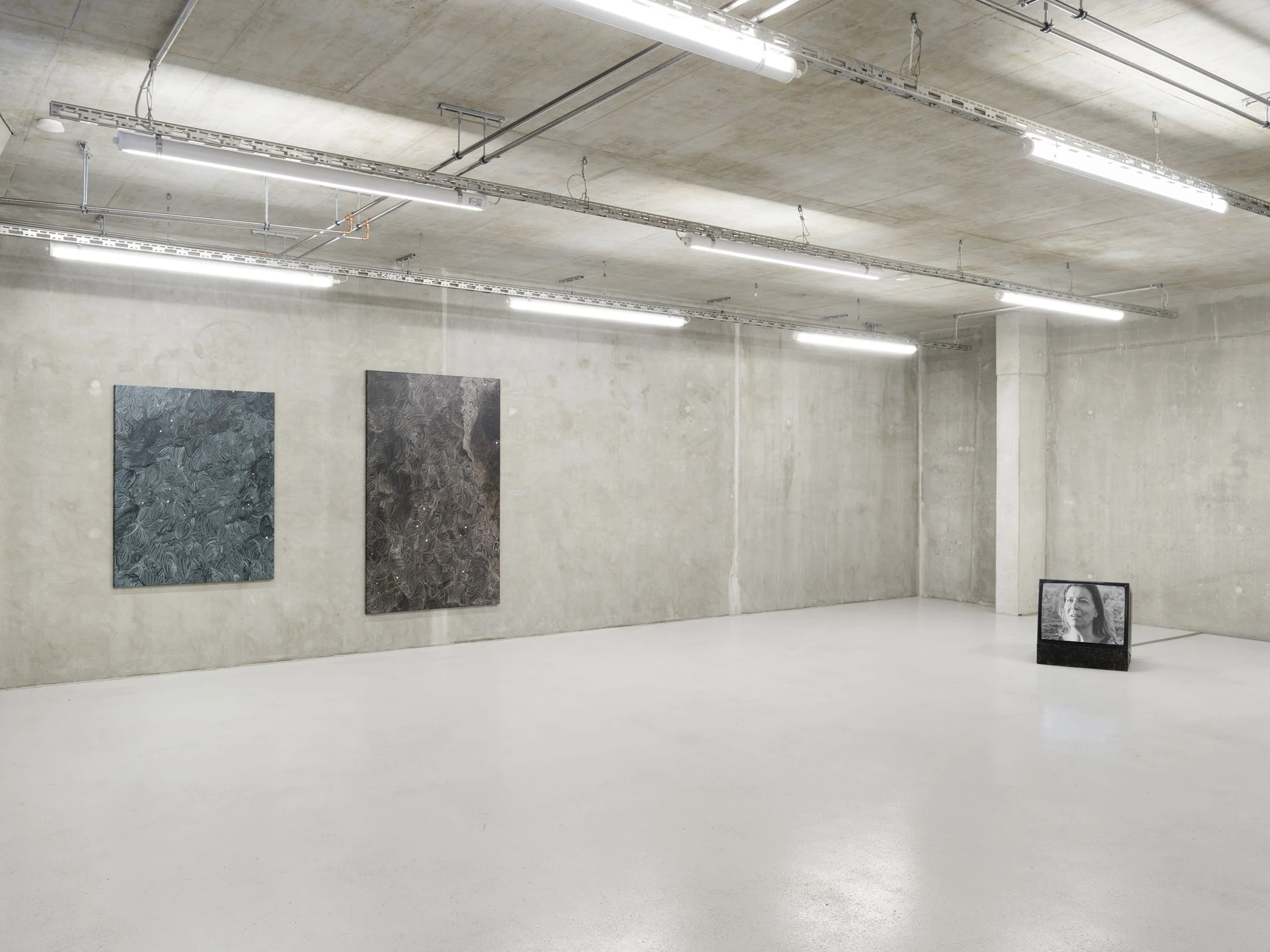
A boxy black monitor tilted on a block of speckled granite carries most of the moving image. It runs in black and white: scrubland with one bare tree standing in it, a tangle of branches, a woman's face turned slightly away, mid-sentence. The block sits low and off-centre in rooms otherwise empty, so the footage arrives at shin height from across a lot of grey floor. Nothing frames it. The concrete does the framing.
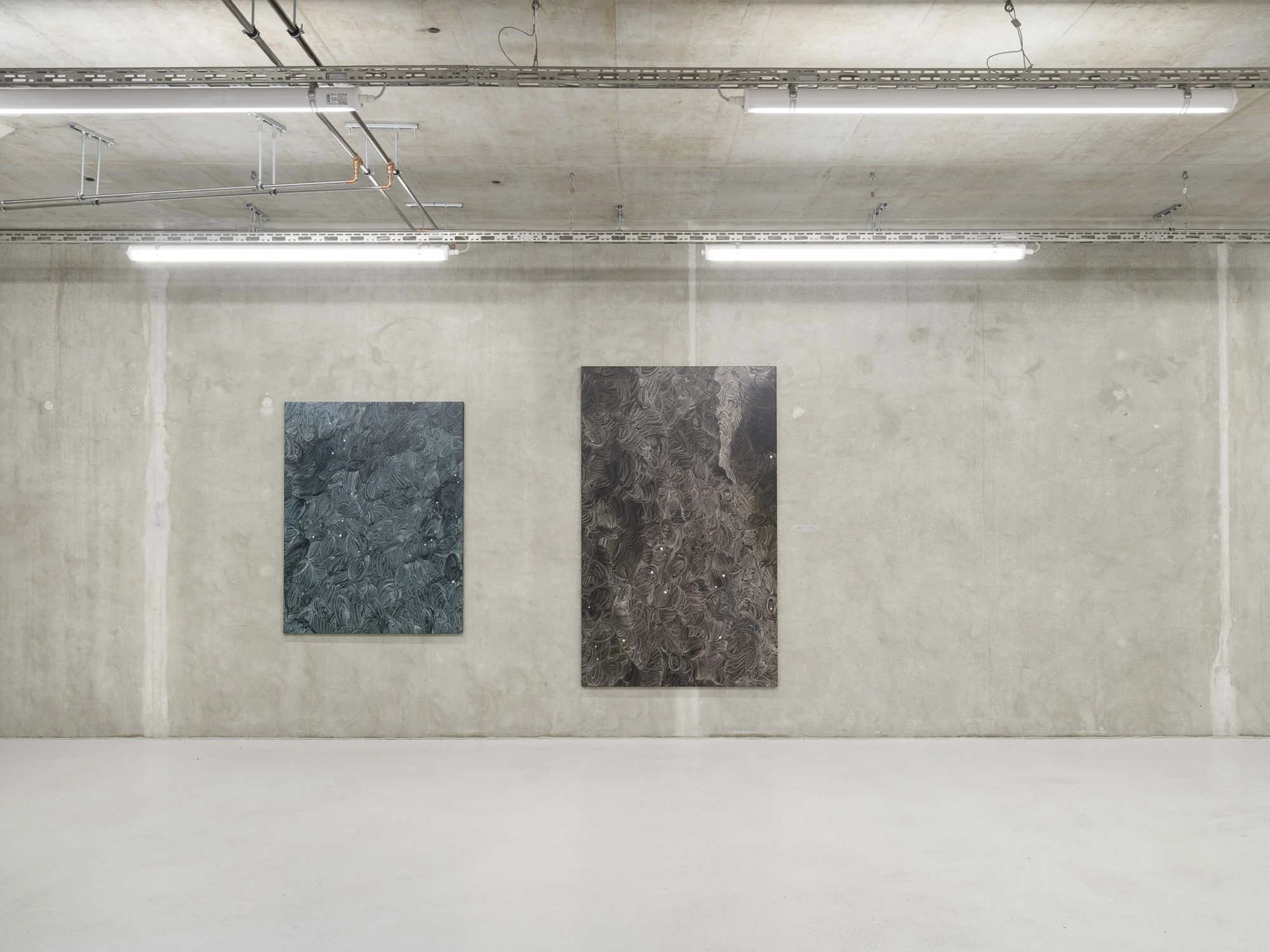
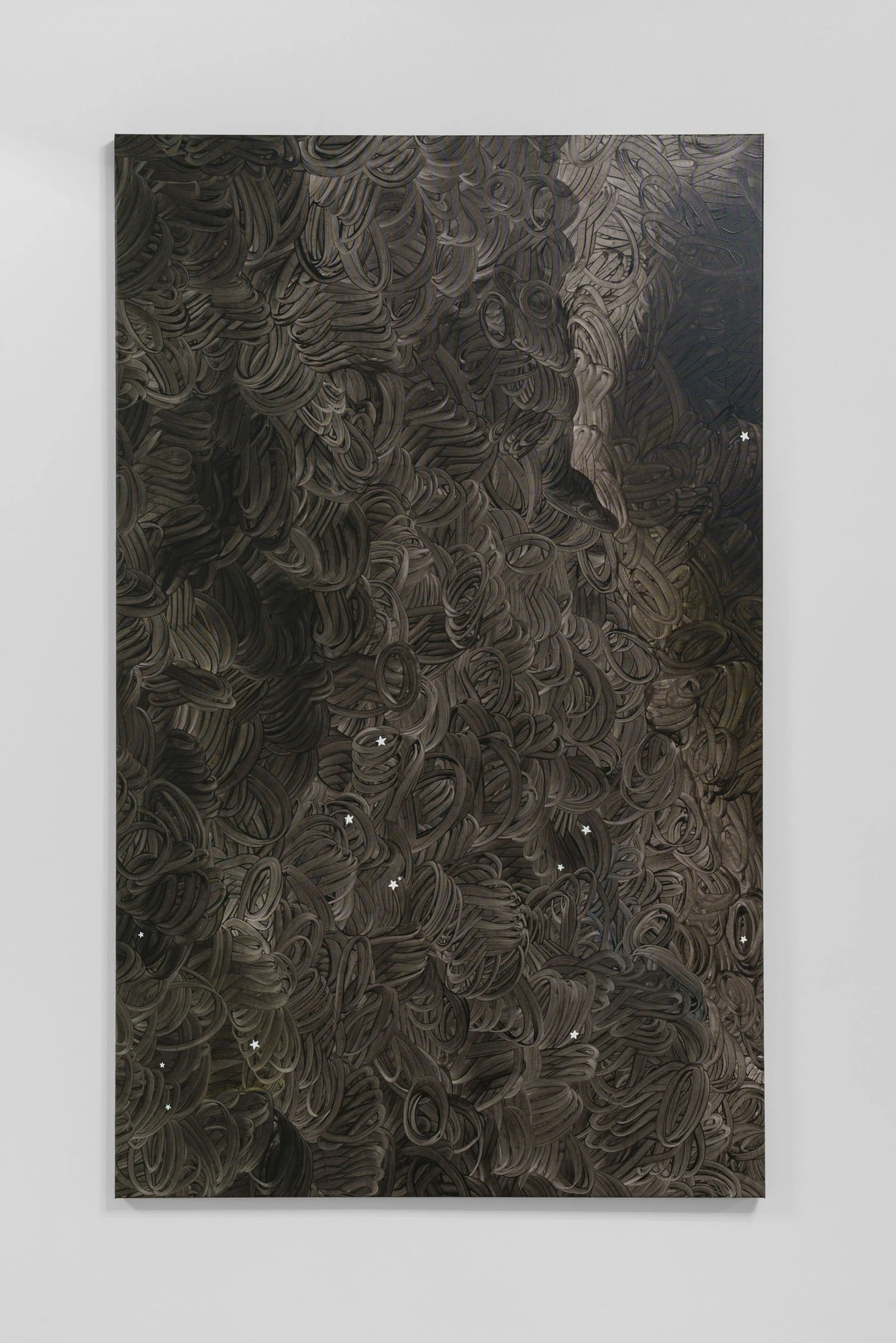
On the lower floor hang paintings built from dense looping ribbons of brushwork, teal-grey in one, warm mauve and brown in another, with small white stars scattered through the tangle like punctuation. They read flat from the doorway and open into depth at close range. Jo describes a painterly project that mediates "a process of revealing and concealing", where an initial impression of flatness belies an intricately layered composition, and where the medium's ploys for easy seduction are refused.
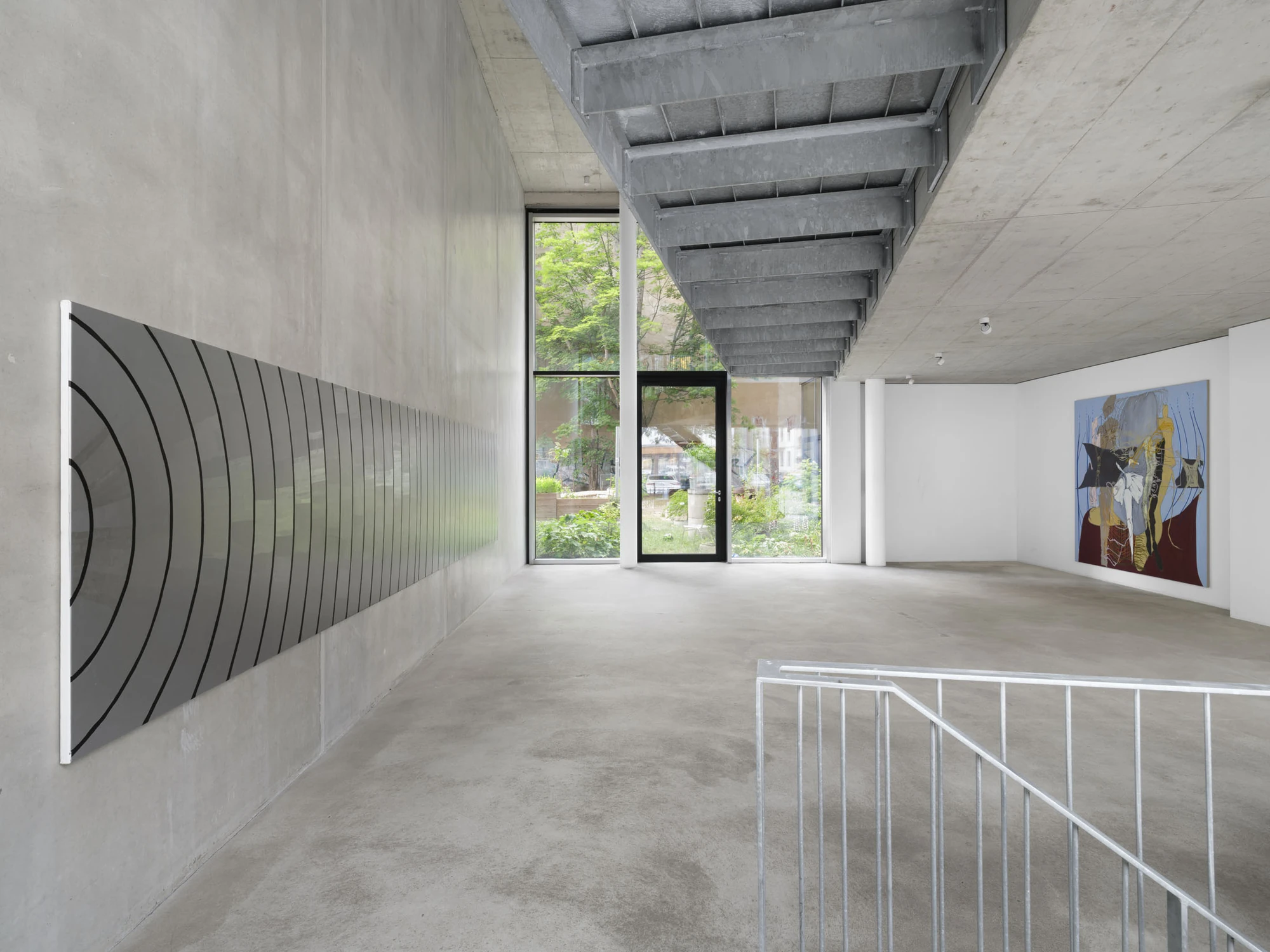
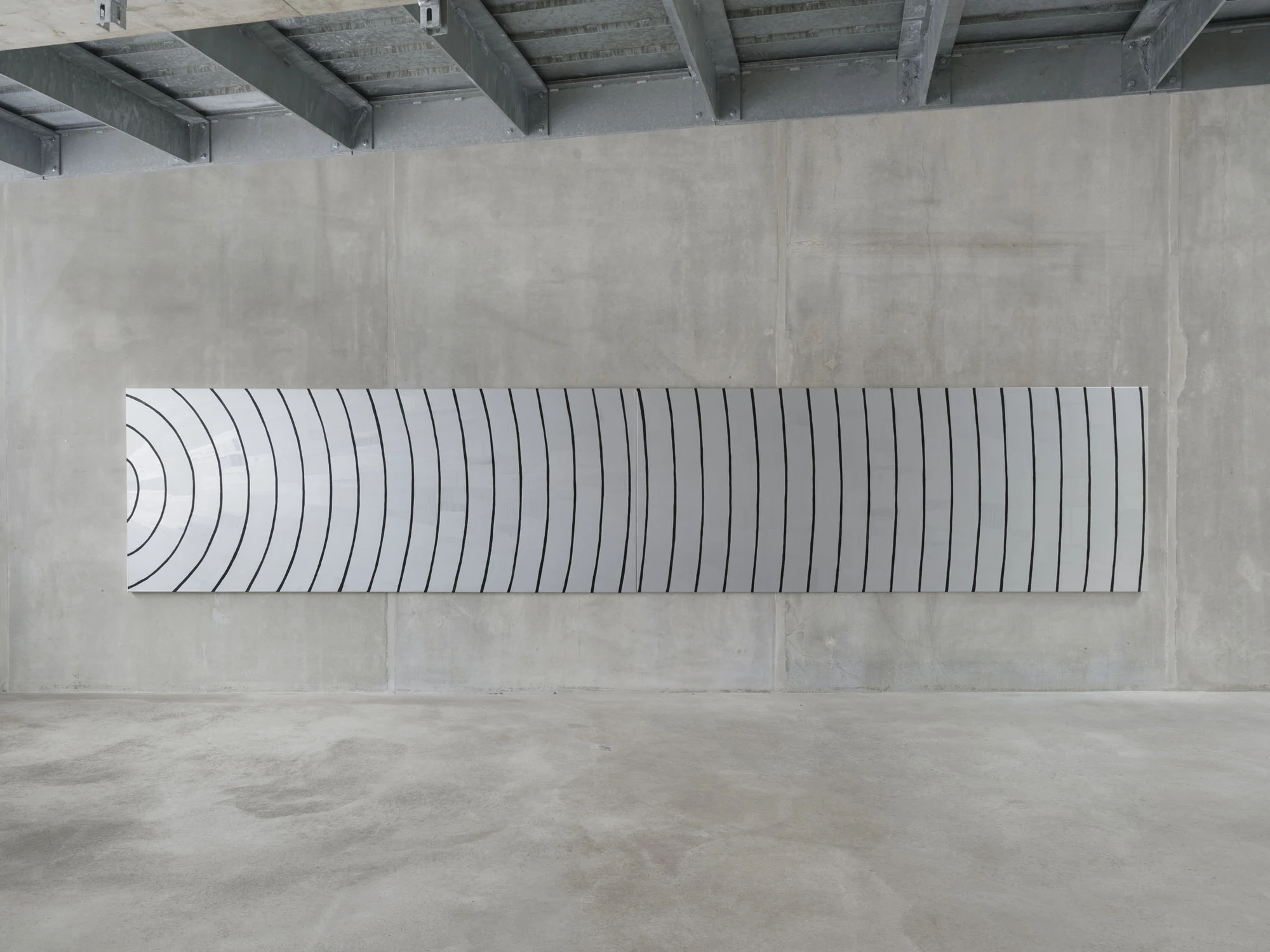
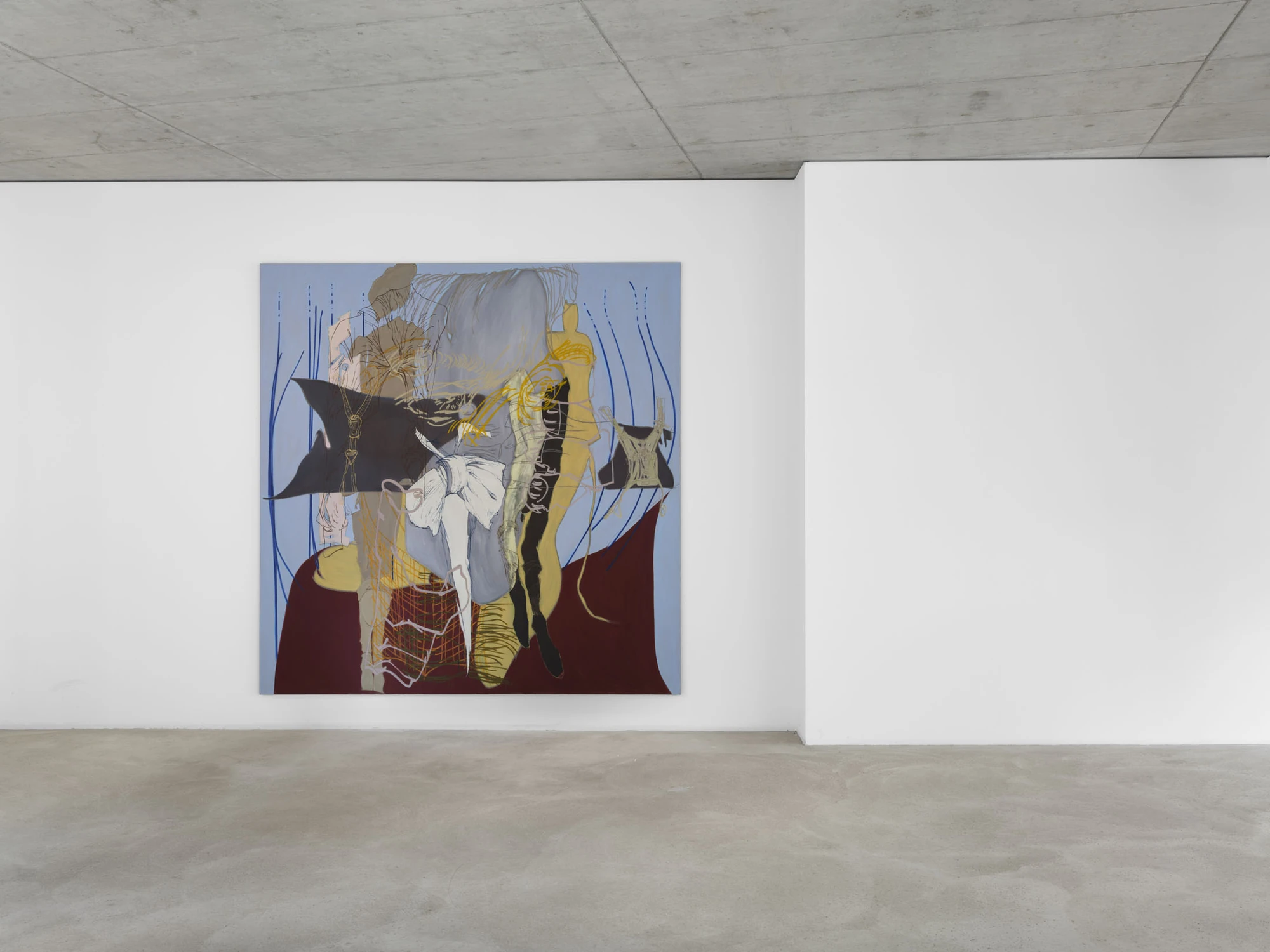
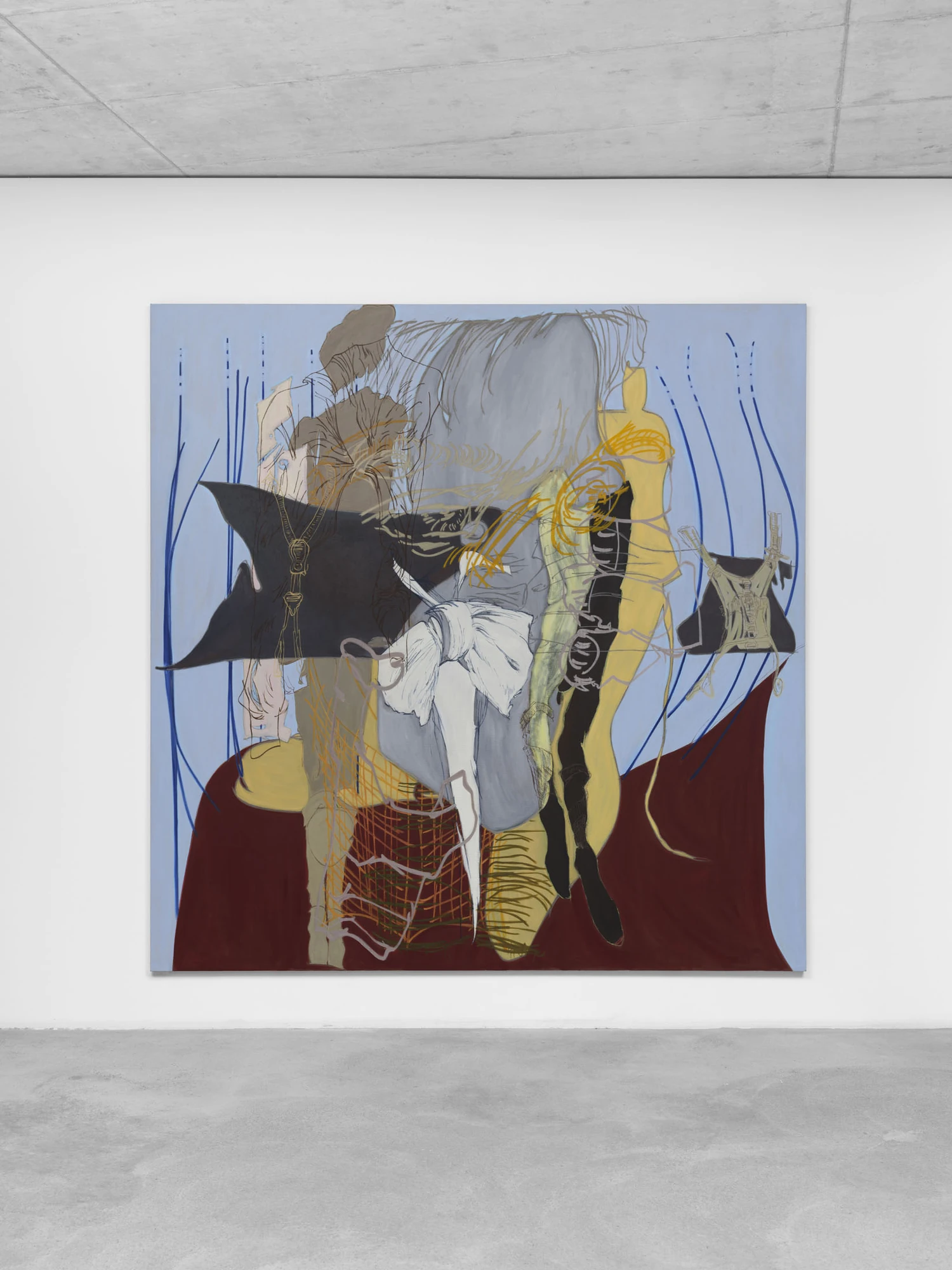
Upstairs the register changes. A powder-blue canvas holds a maroon mass like a drawn curtain, and across it drift garments and limbs: a black cape, a white knotted cloth, a yellow leg in a boot, a corset traced in ochre scribble, blue lines falling like rain. Nothing resolves before it is cut off. Opposite, a long grey panel runs the length of a concrete wall, black arcs radiating from a target at one end and straightening into vertical bars as they travel, a wave flattened onto board.
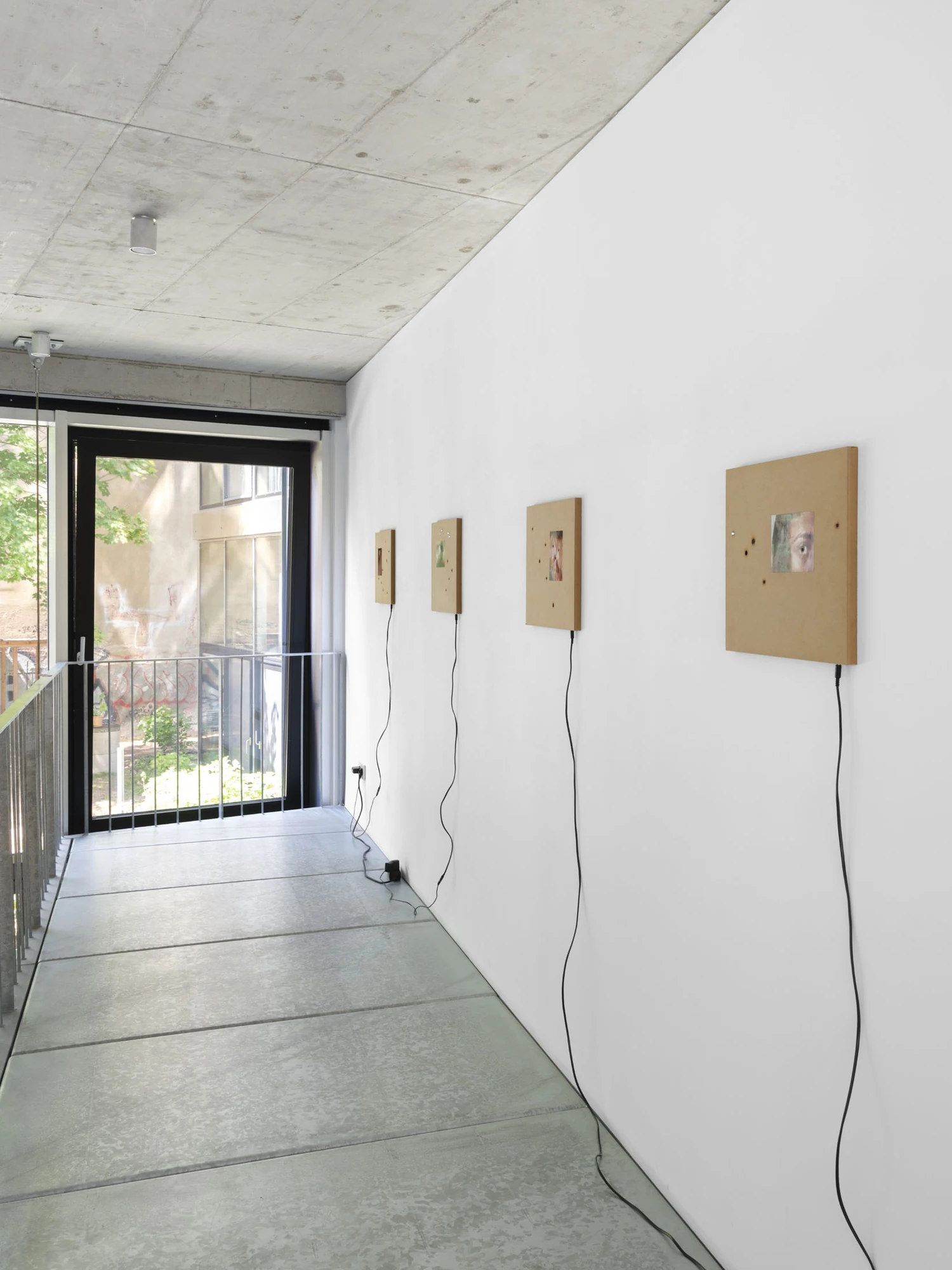
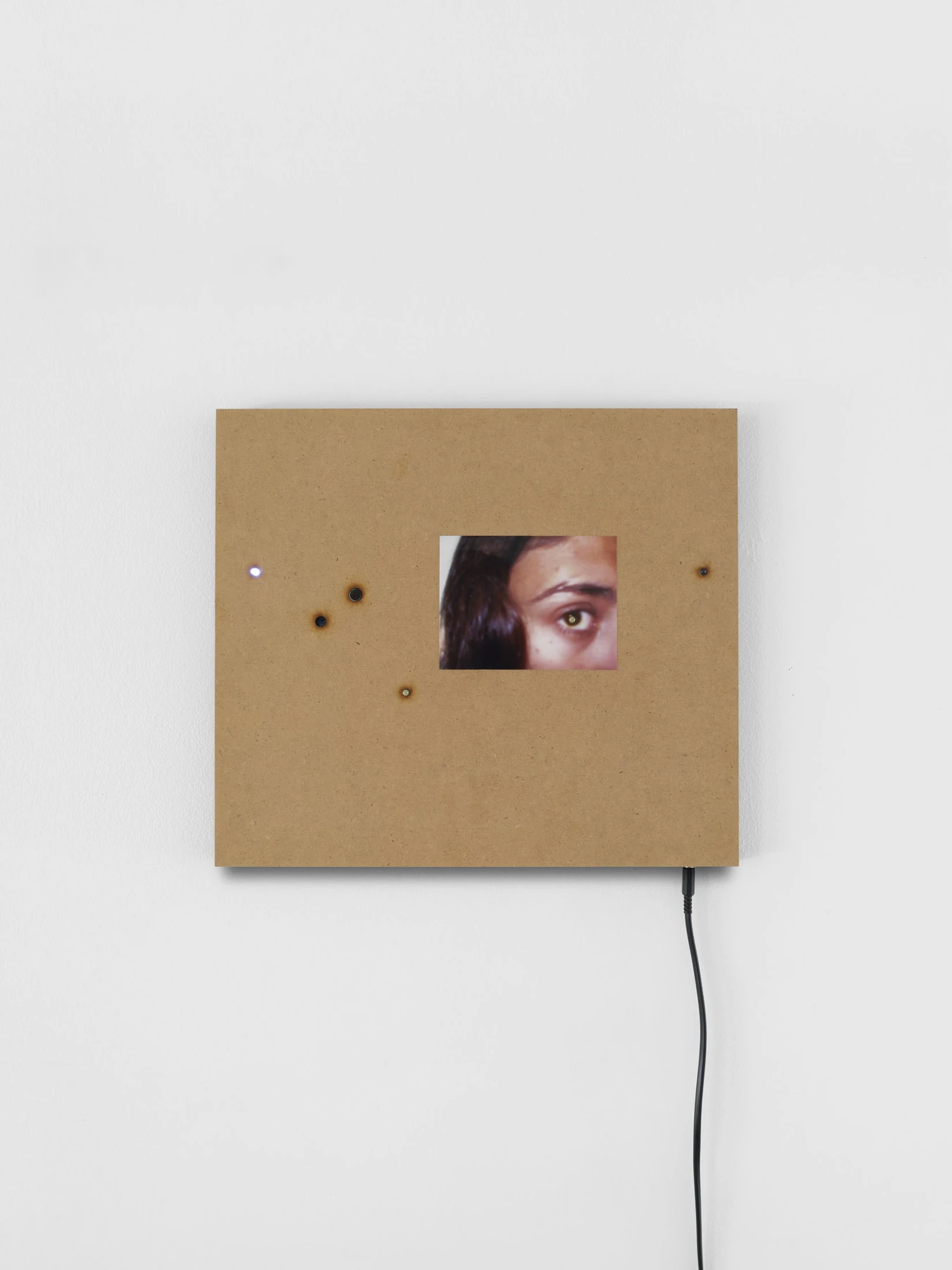
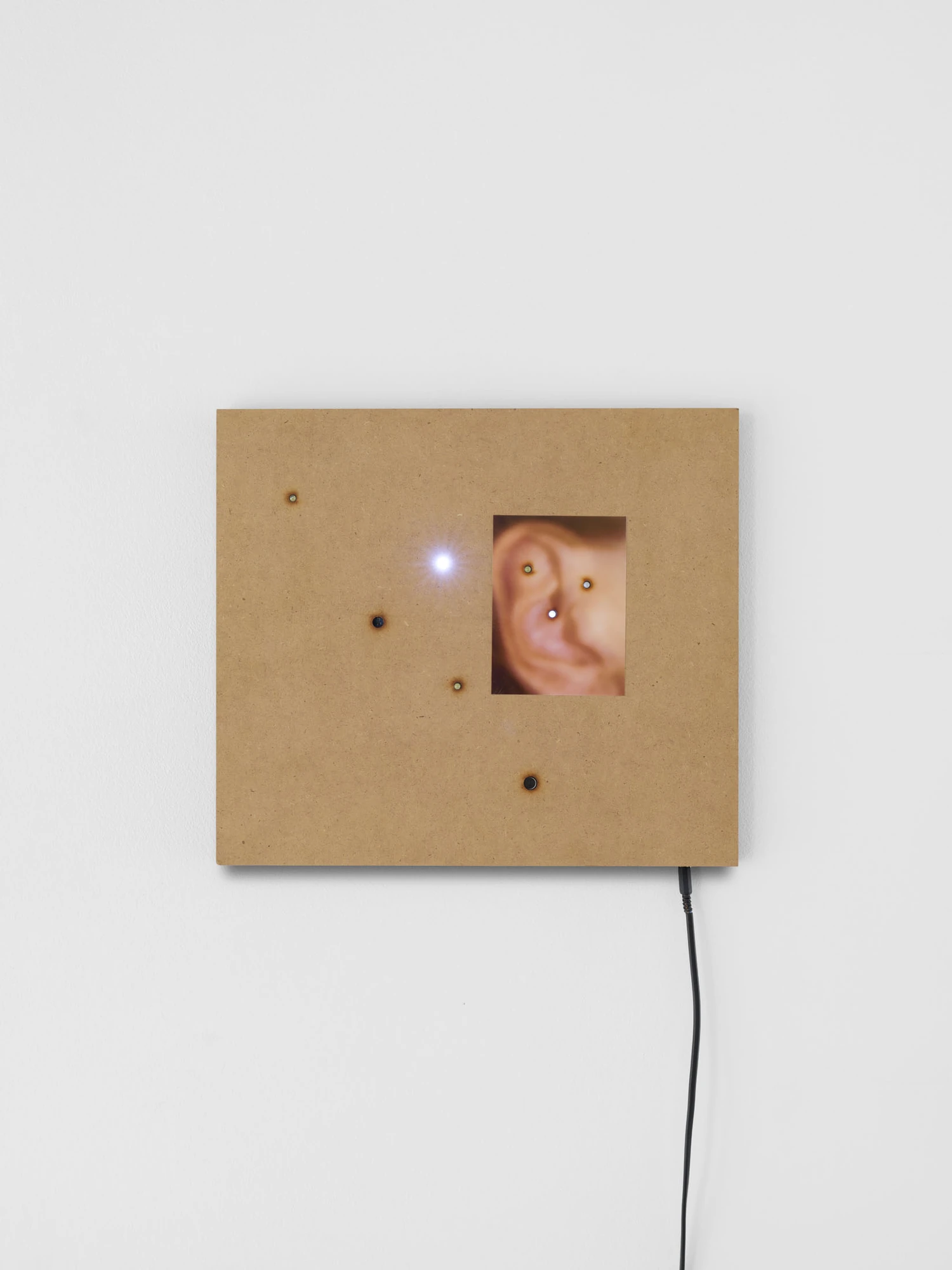
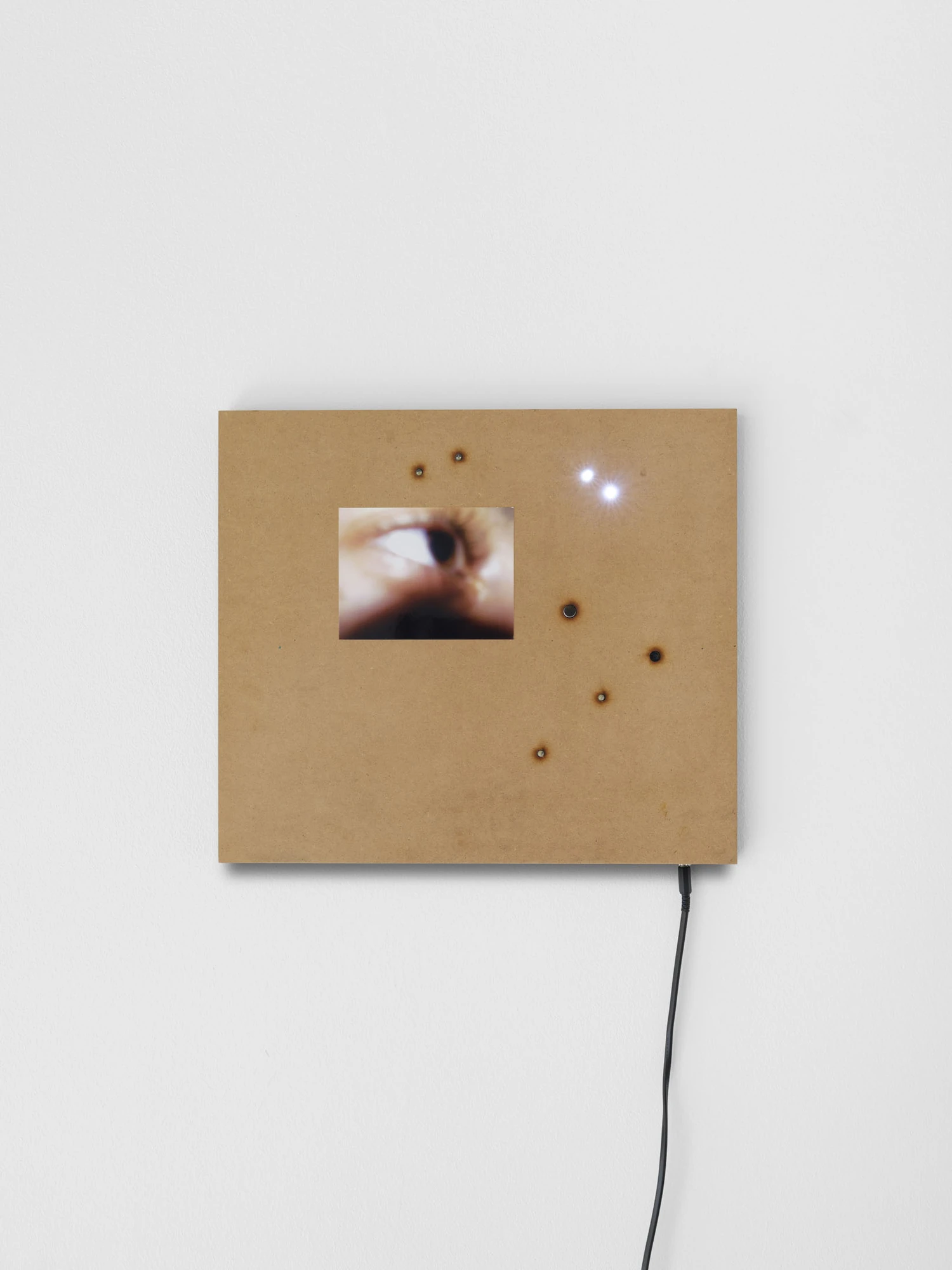
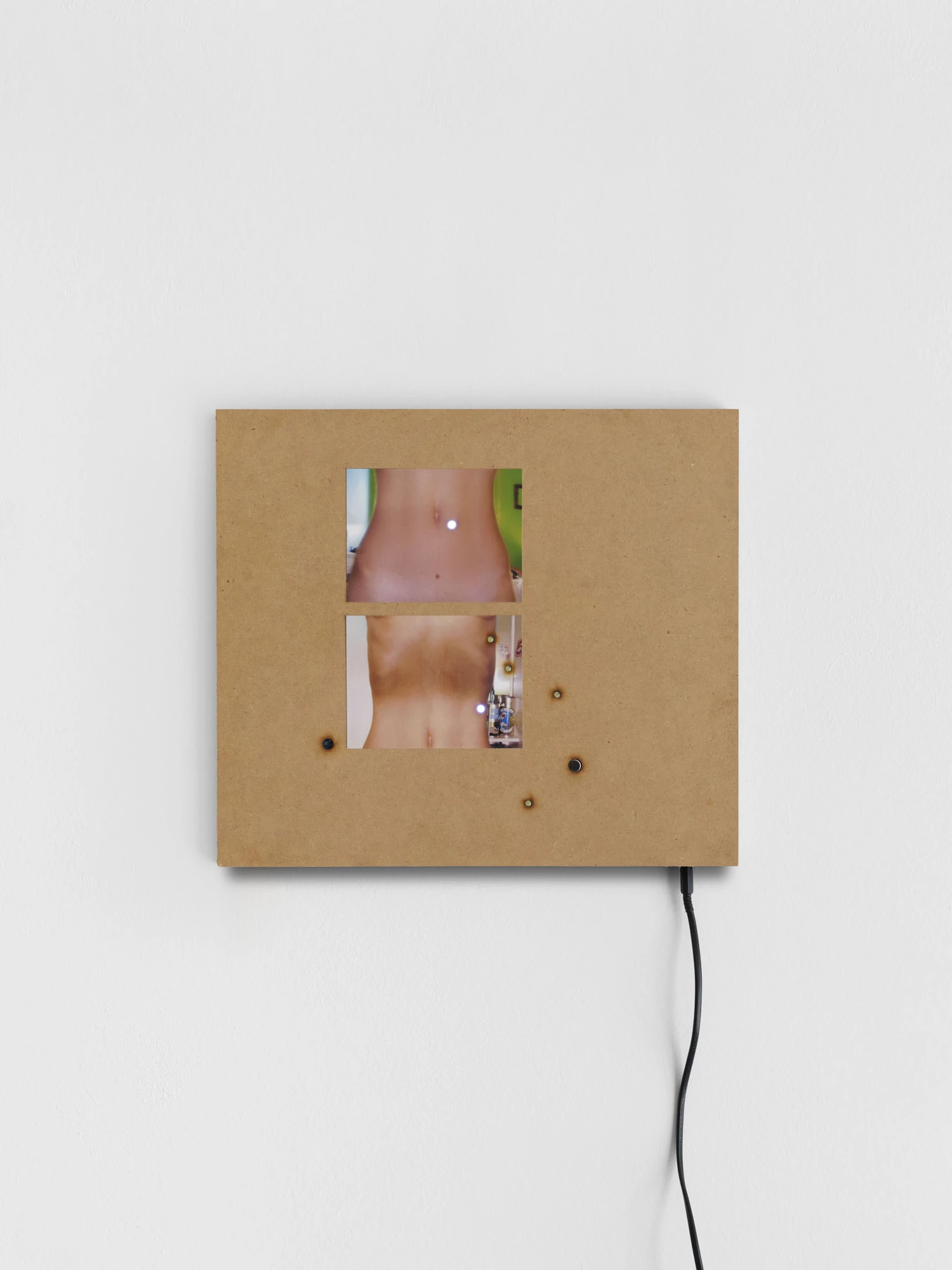
The mezzanine holds the smallest works and the strangest. Squares of unpainted MDF, each with a small screen recessed into the face: an eye under a heavy brow, the whorl of an ear, a navel above a waistband, a pupil at extreme magnification. Studs and pinpoint LEDs are set into the board around them, some lit hard enough to flare. Black cables drop from every panel and run along the floor to a socket by the window. The wiring is left exactly as visible as the work.
Set against a shell this bare, the pieces start borrowing from one another. The stars in the brushwork answer the LEDs. The granite block answers the columns. The eye on the screen answers the eye of the visitor. Xenofontos works toward recovering "the fantastical, imaginary aspects of culture obscured by historiography", Emamifar toward "the psychosocial dynamics inherent in built space". Between them the show sets a trap worth walking into, and leaves the visitor to work out which connections were put there on purpose.