Borrowed from Zhuangzi, where spillover names the looseness of plain speech that keeps pace with a restless world, the word turns against its author across two floors of Empty Gallery in Hong Kong.
For her first exhibition in Greater Asia, Shanghai-based Ann Zhao stages Spillover across two floors of Empty Gallery, high above the industrial harbourfront of Tin Wan. The title comes from a passage in Zhuangzi that ranks modes of speech by their capacity to carry the Dao. Spillover is the lowest and the most alive: the indeterminacy of everyday talk, a self-renewing looseness that lets plain words keep pace with a reality that never sits still. It also names something less consoling, the moment a subject grows too messy for its own outline and leaks into the category next door.
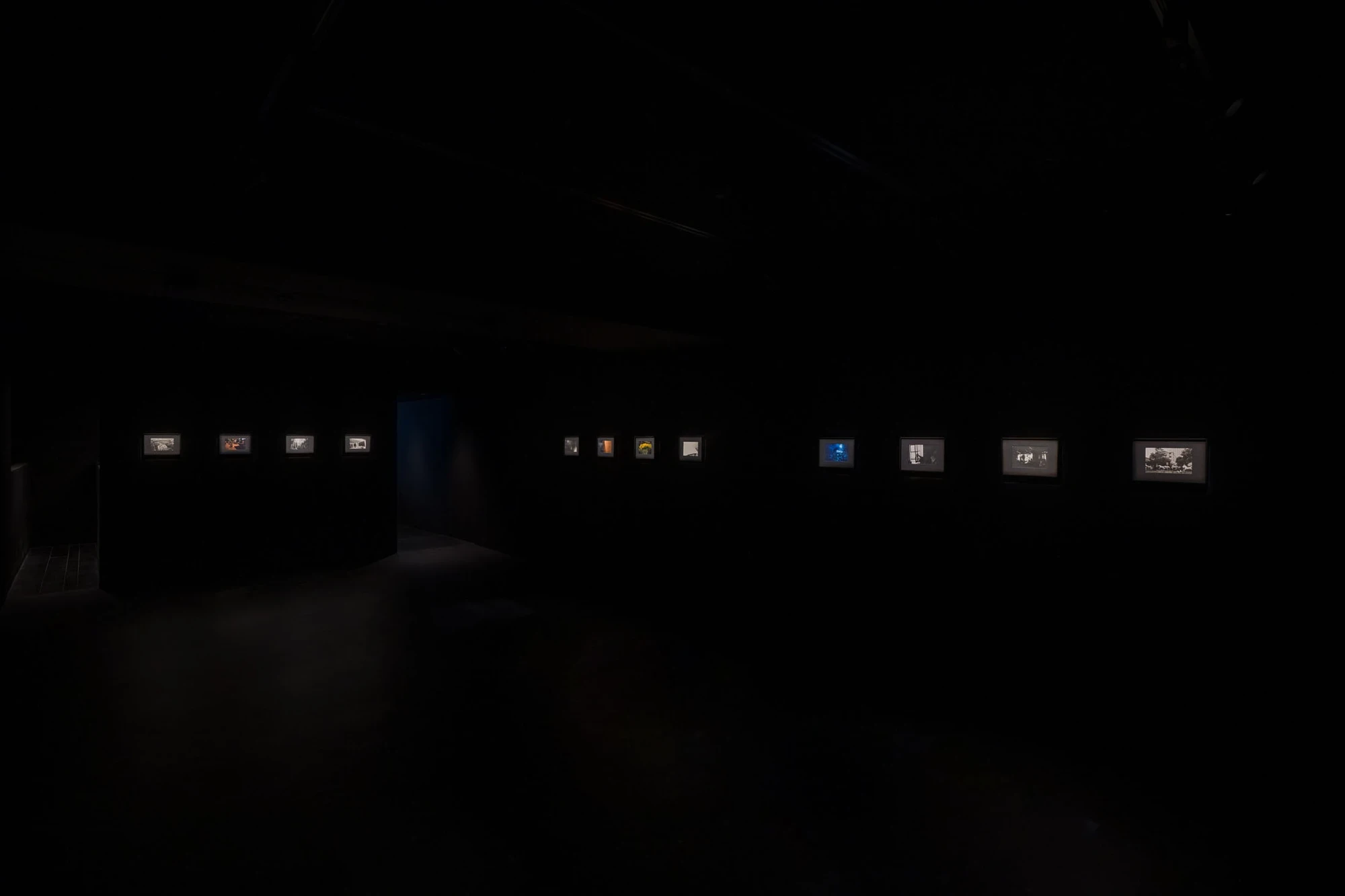
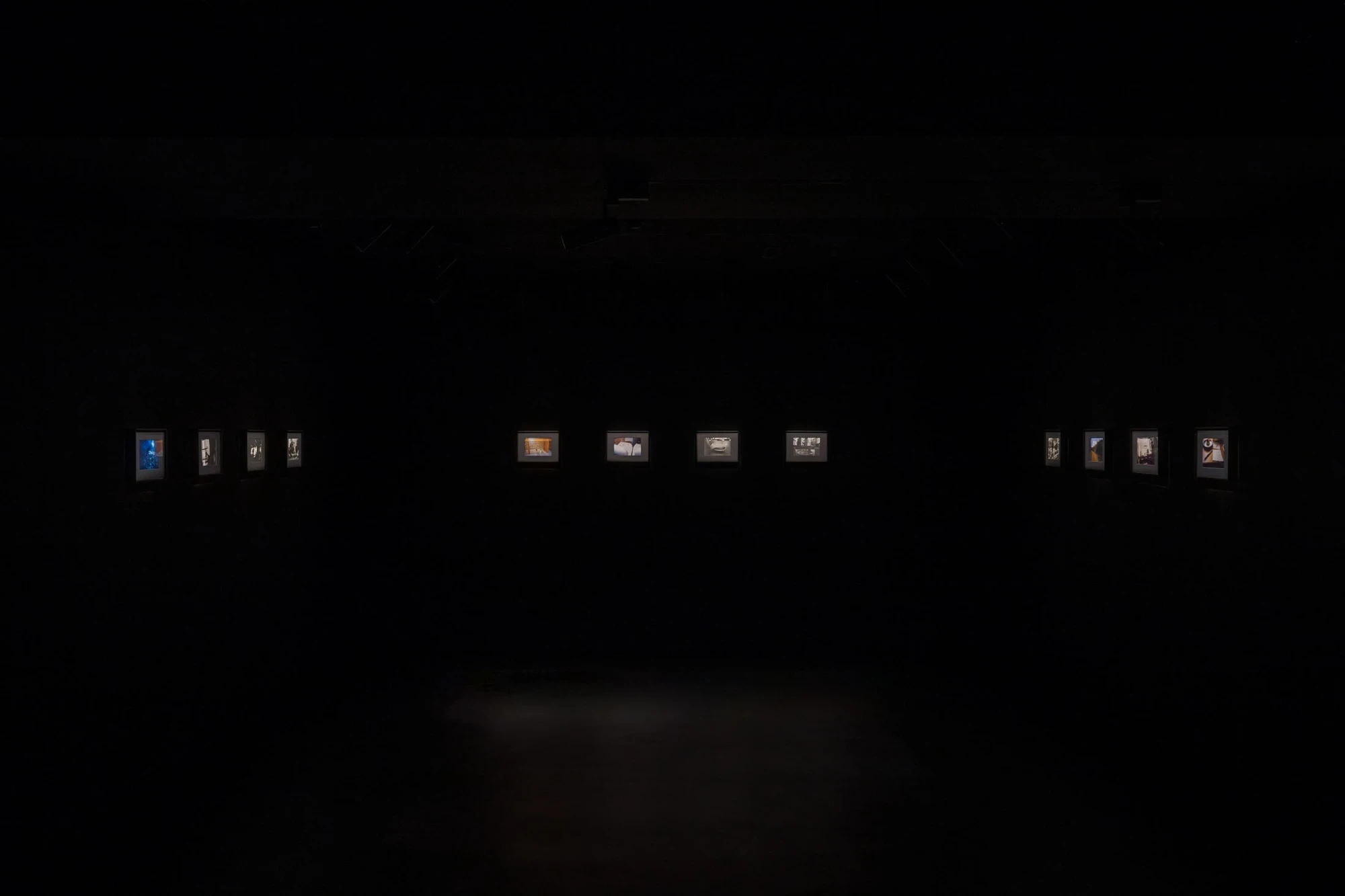
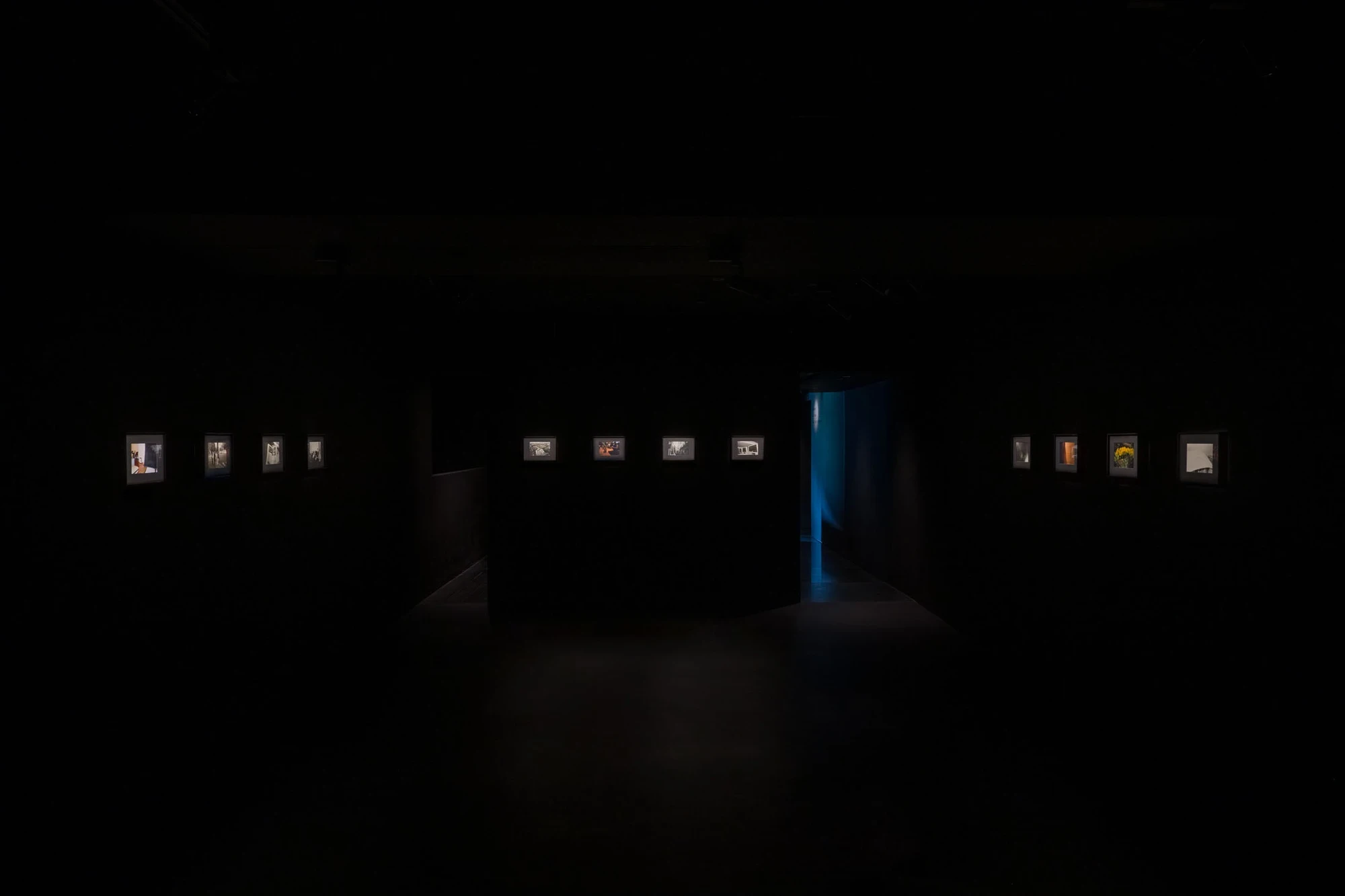
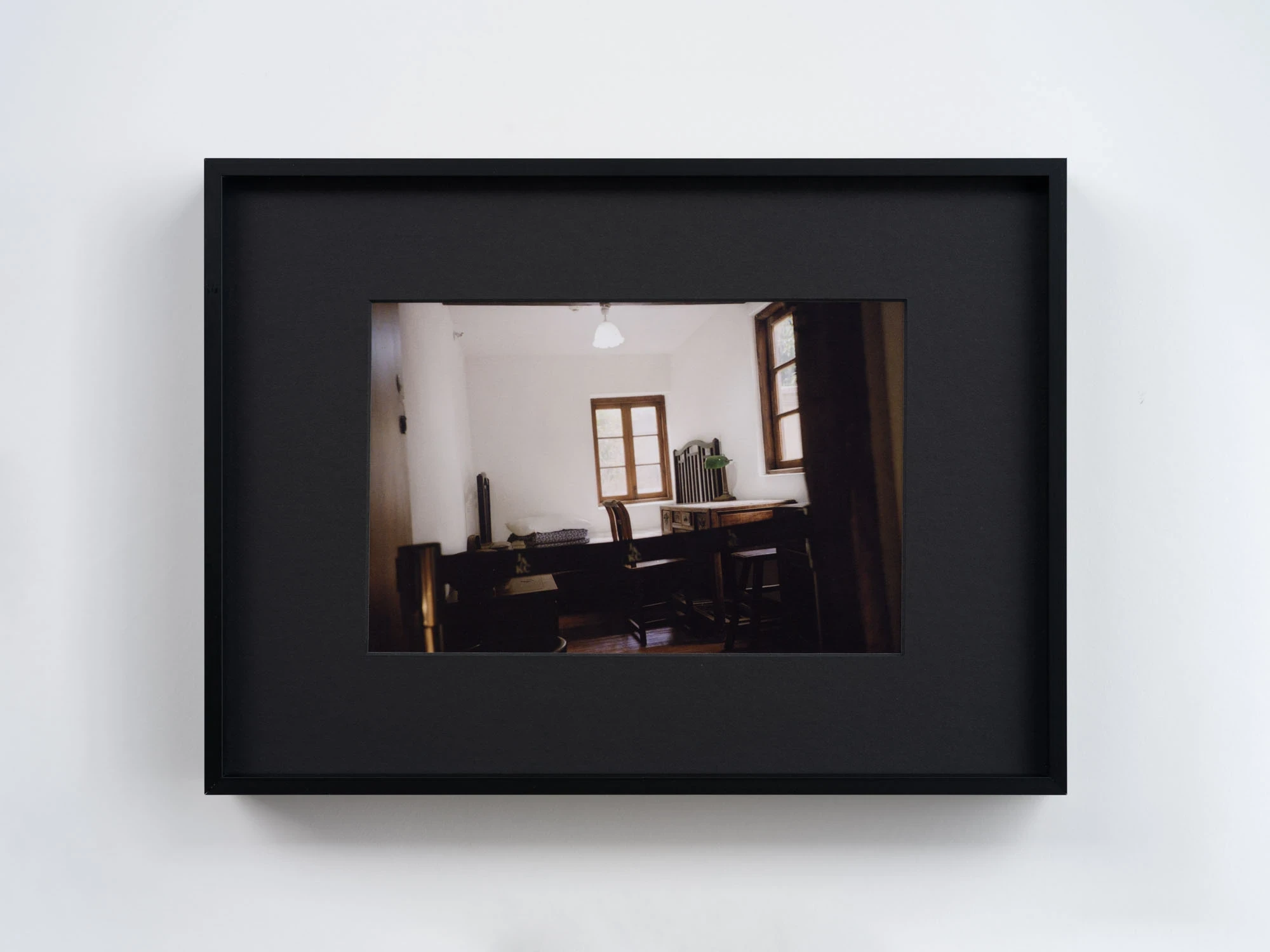
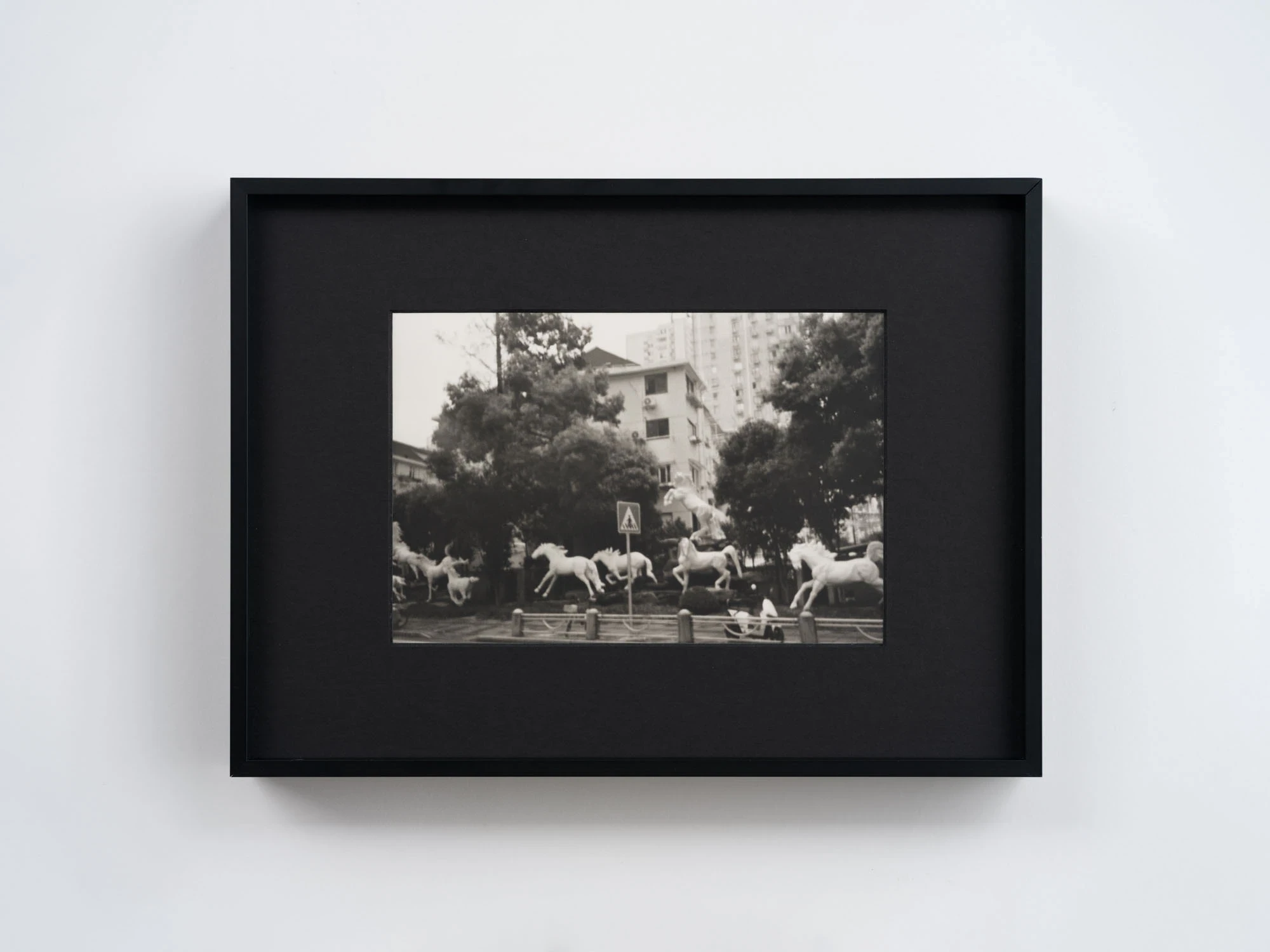
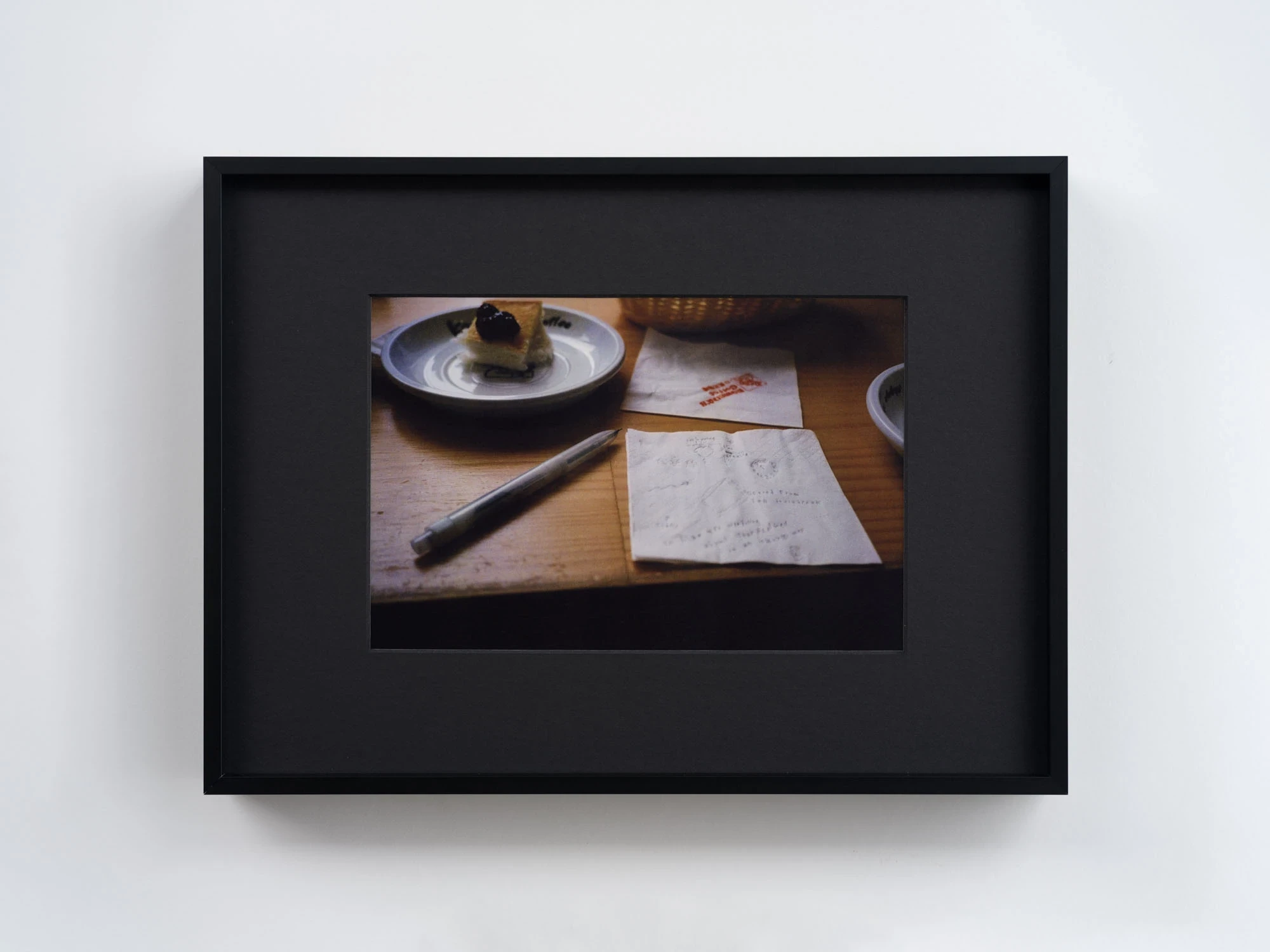
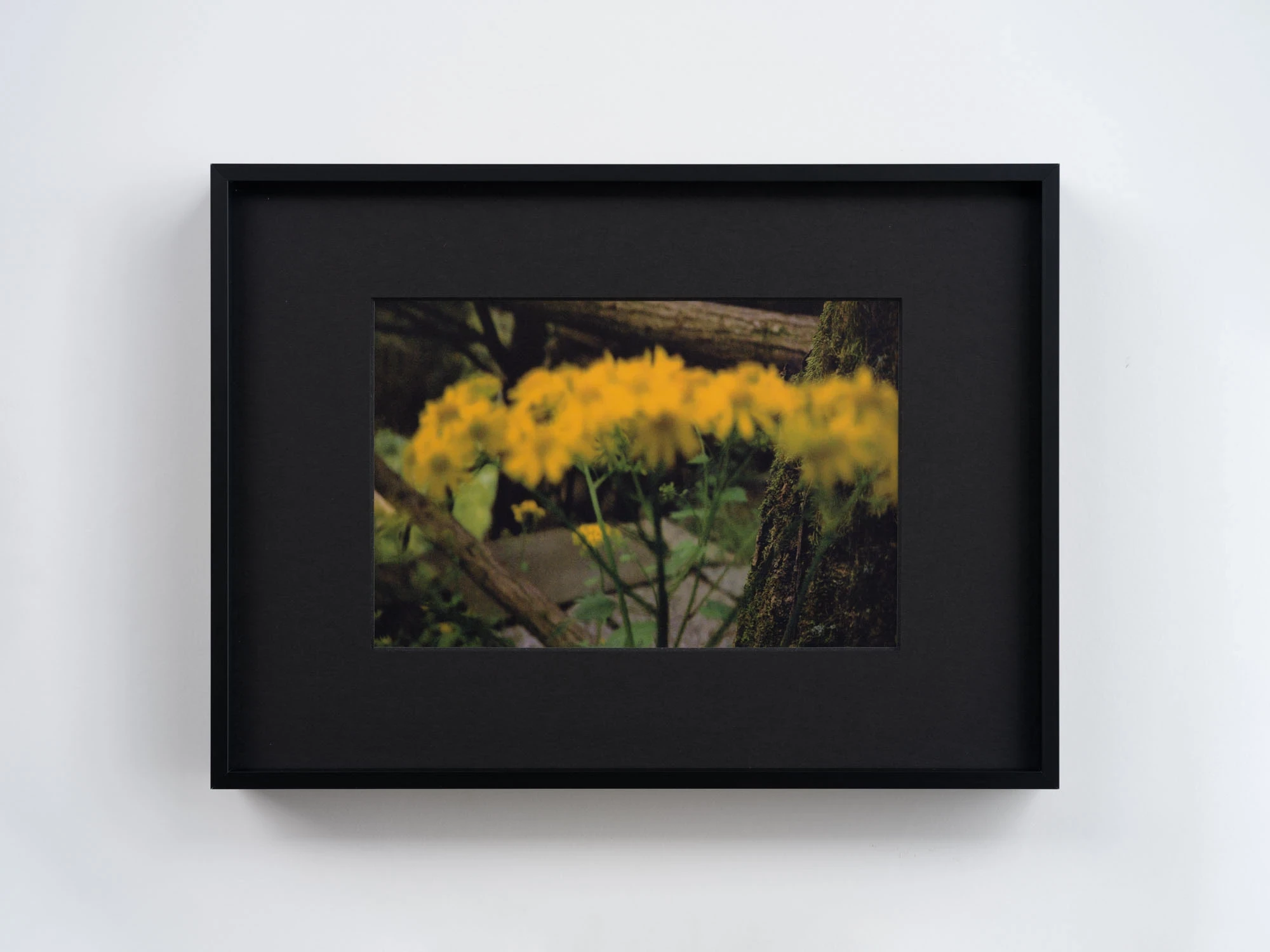
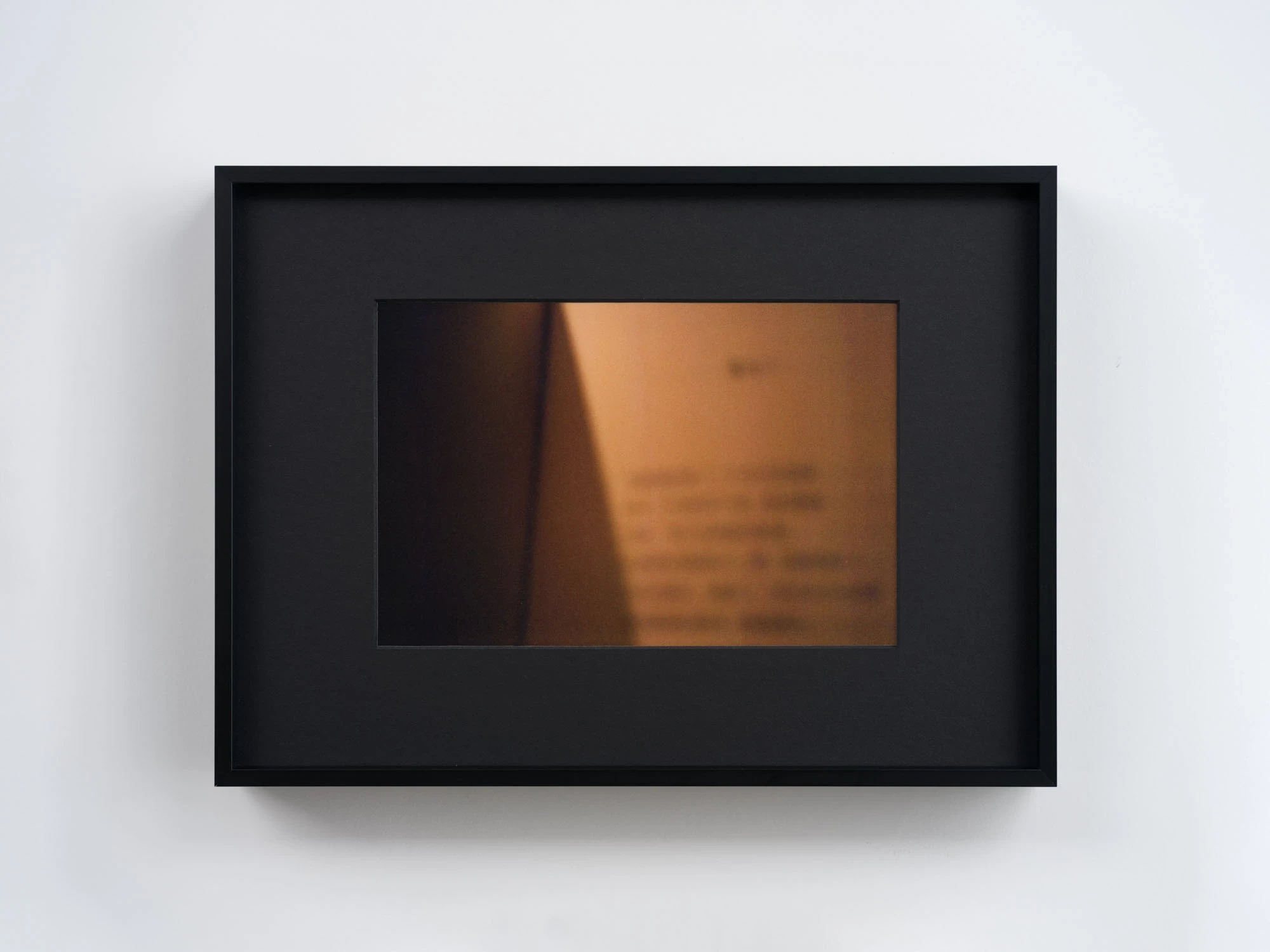
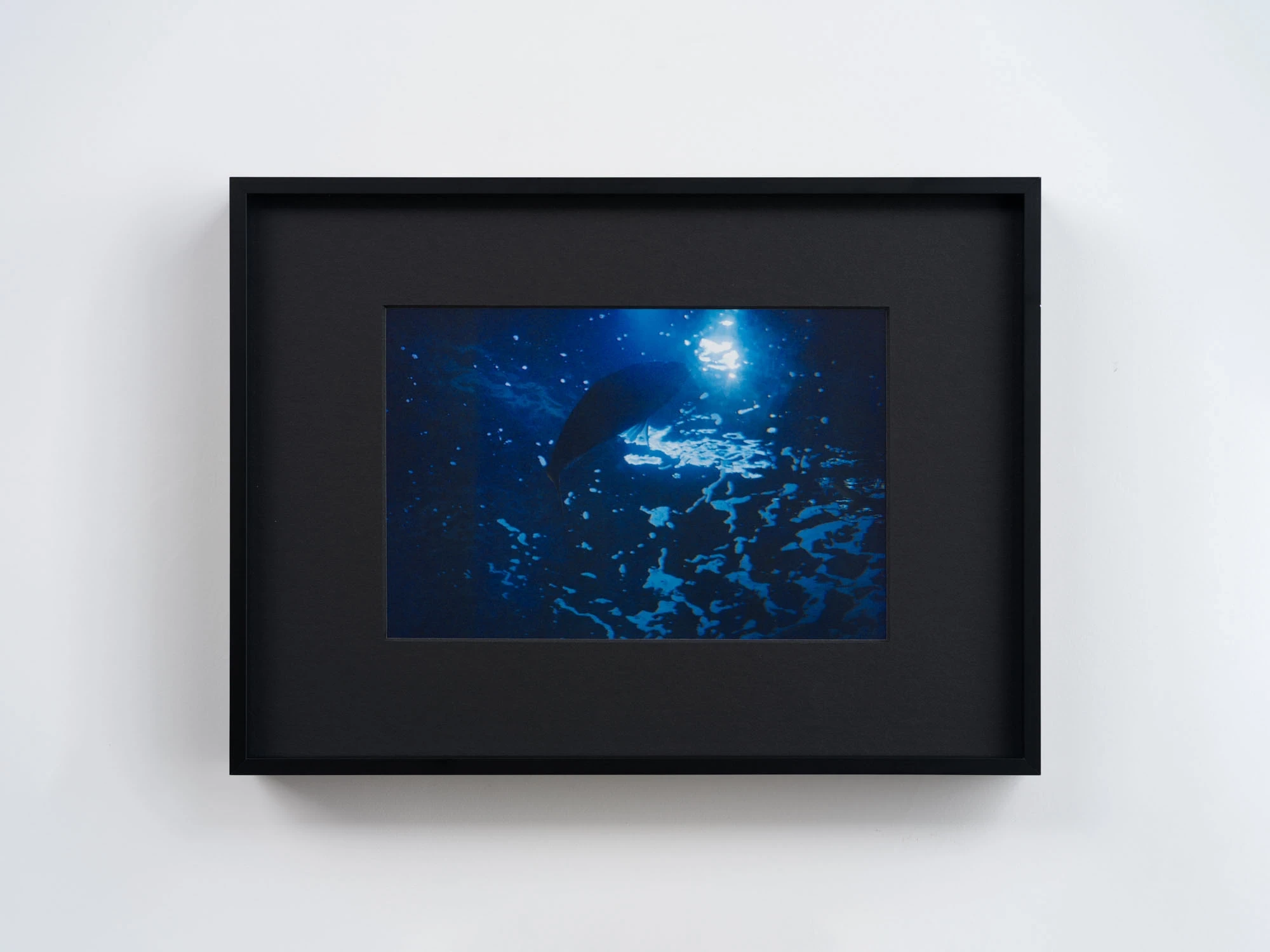
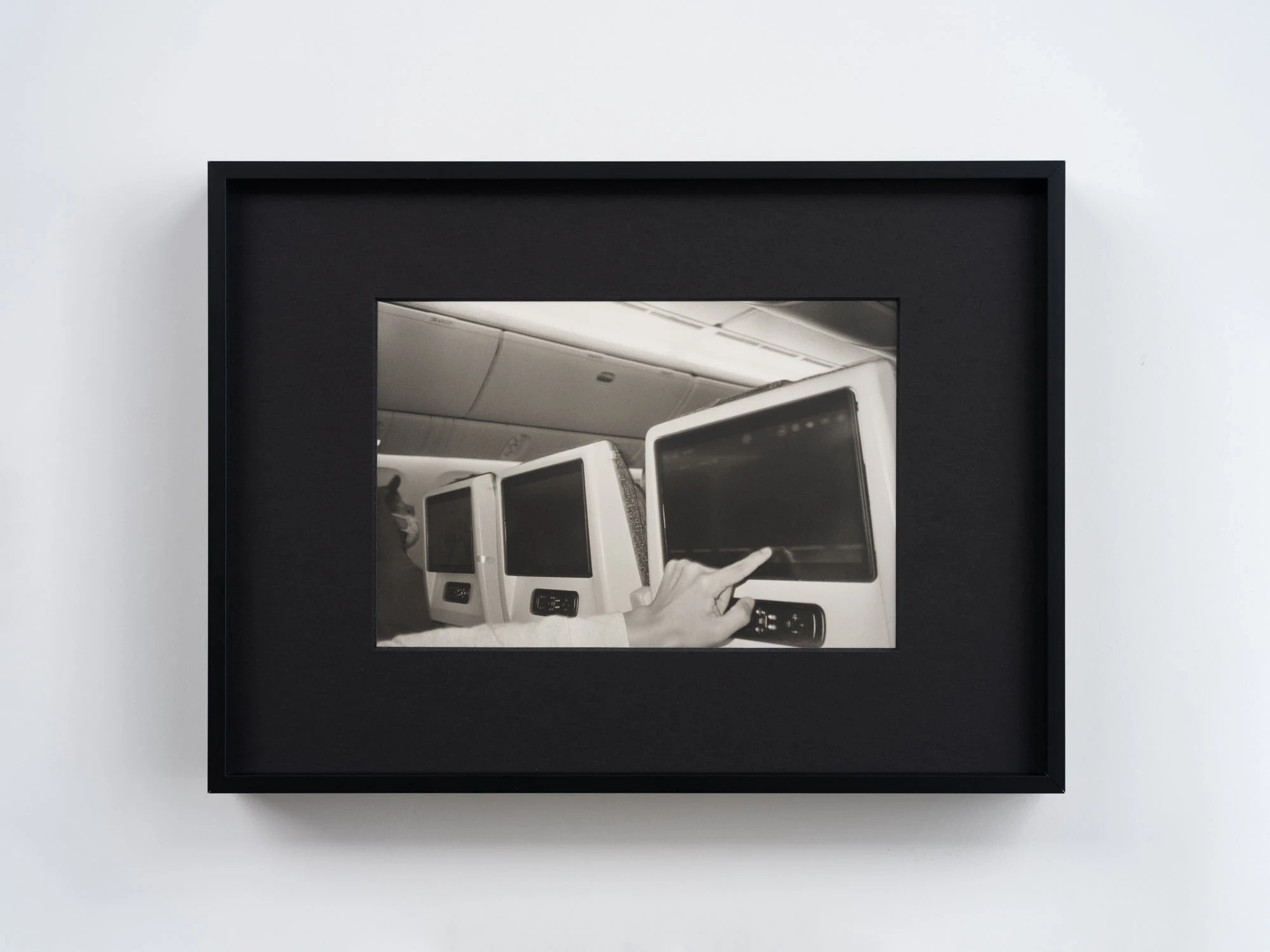
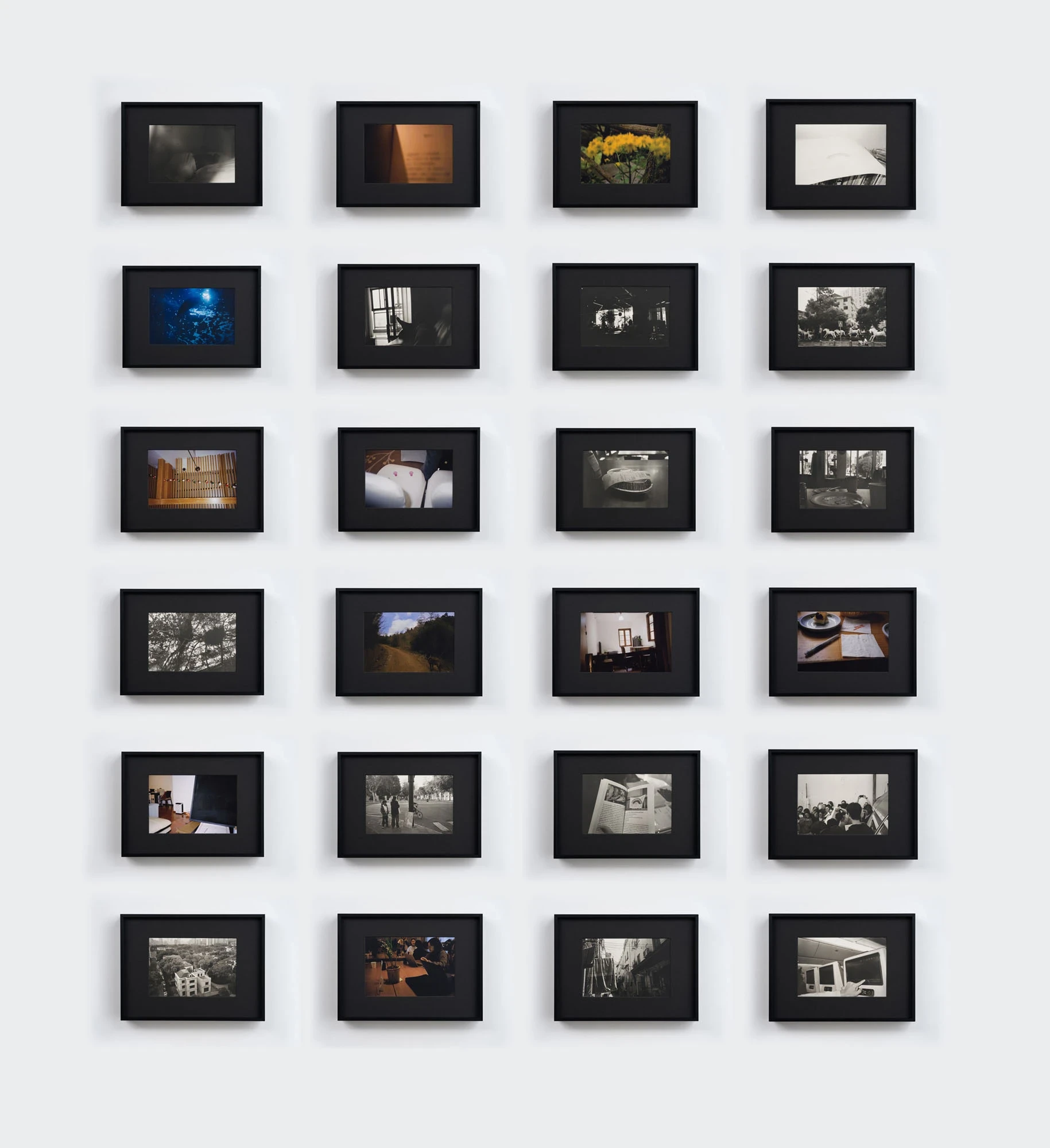
The heart of the show sits on the nineteenth floor. Ben Ming Nian, a set of twenty-four framed photographs, alternates shadowy silver gelatin prints with muted colour c-prints and hangs in near-total darkness, each image a small lit window in a black room. Ben Ming Nian refers to the zodiac year that returns every twelve years and traditionally arrives freighted with misfortune. The pictures read as a weather report from inside that curse. A breakfast plate scraped nearly clean, an aerial view of a lone villa marooned in Shanghai greenery, a hand reaching for a seatback screen, white carousel horses frozen mid-gallop in a courtyard, yellow flowers thrown out of focus. Nominally diaristic, they refuse to cohere into a persona. More atmosphere than evidence.
Zhao borrows the grammar of the personal snapshot, its inconsistent exposure and drifting focus, then declines to deliver the confession it promises. A minor narrative surfaces anyway: the flight from New York, a deliberate second life built in Shanghai, old attachments dissolving as new ones take hold. The pictures circle back to nourishment, to passage between states, to a recurring tenderness toward animals.
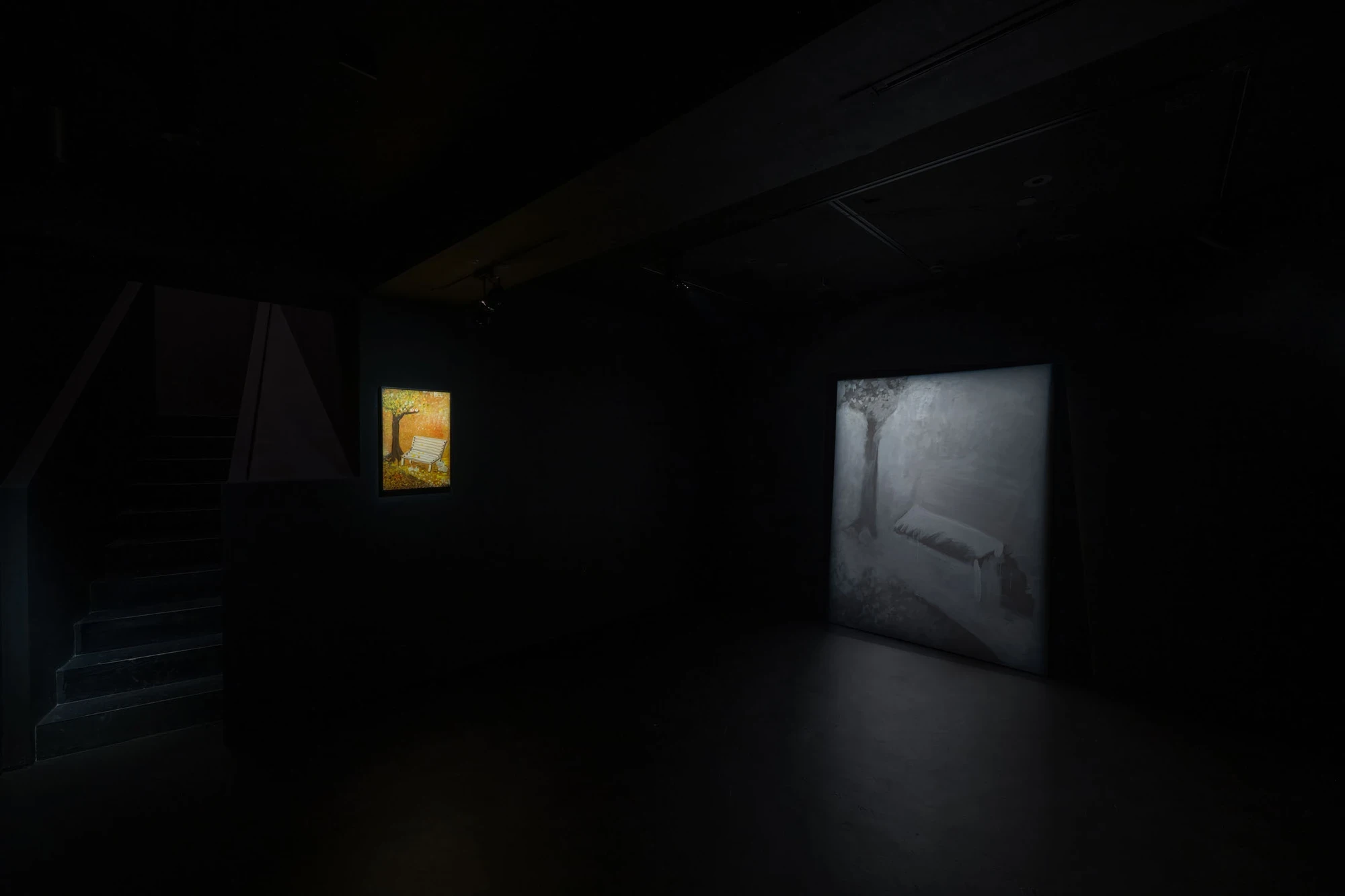
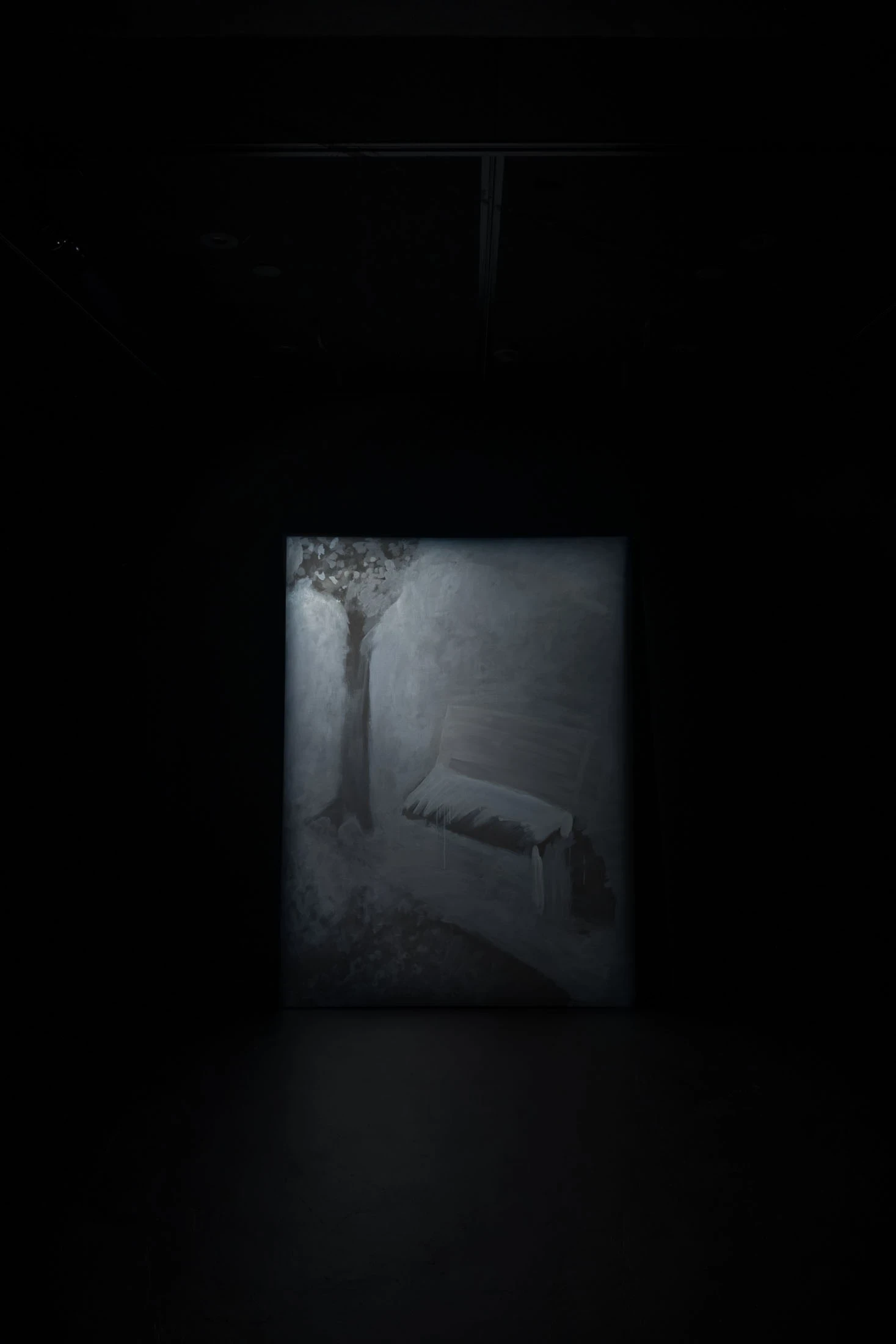
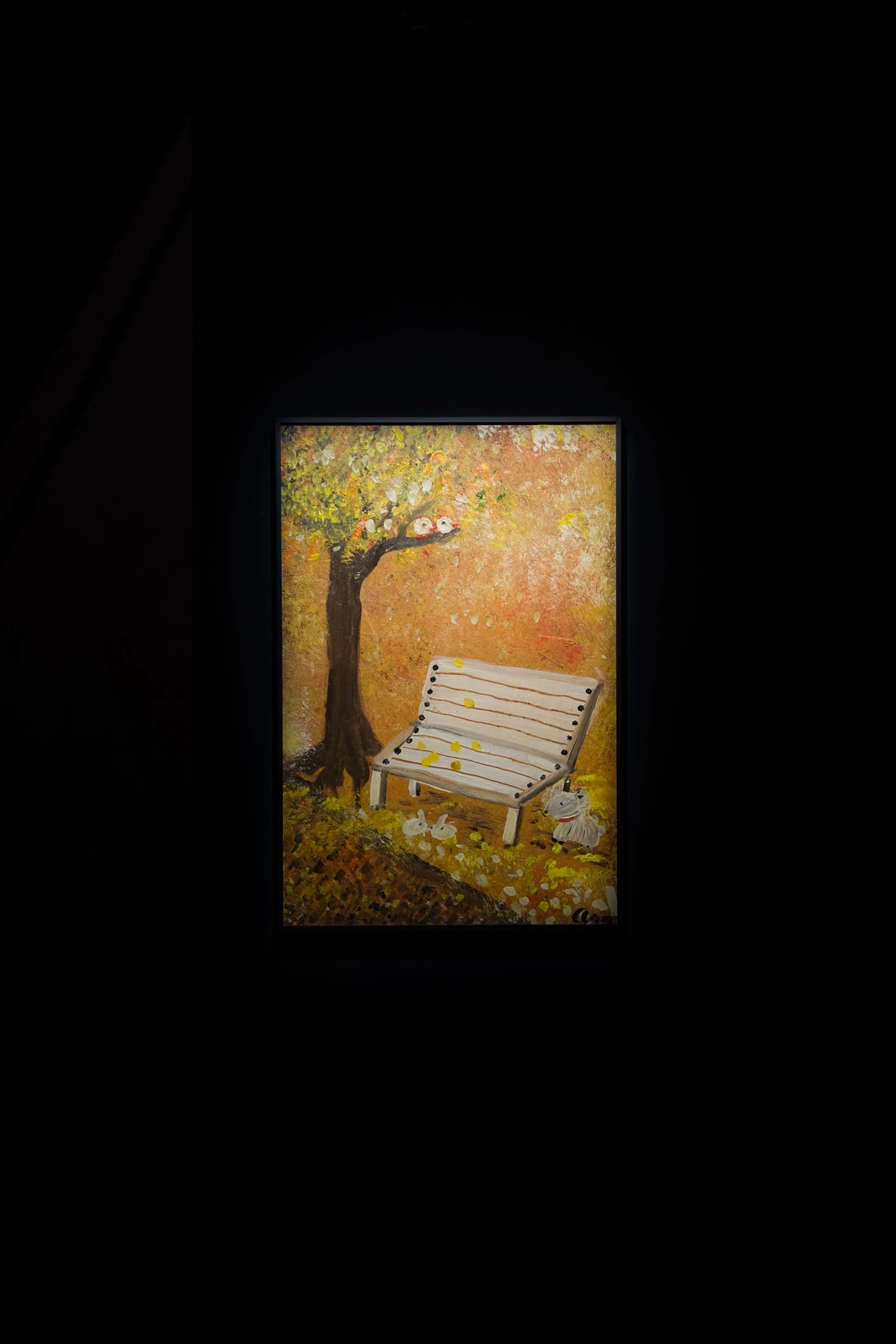
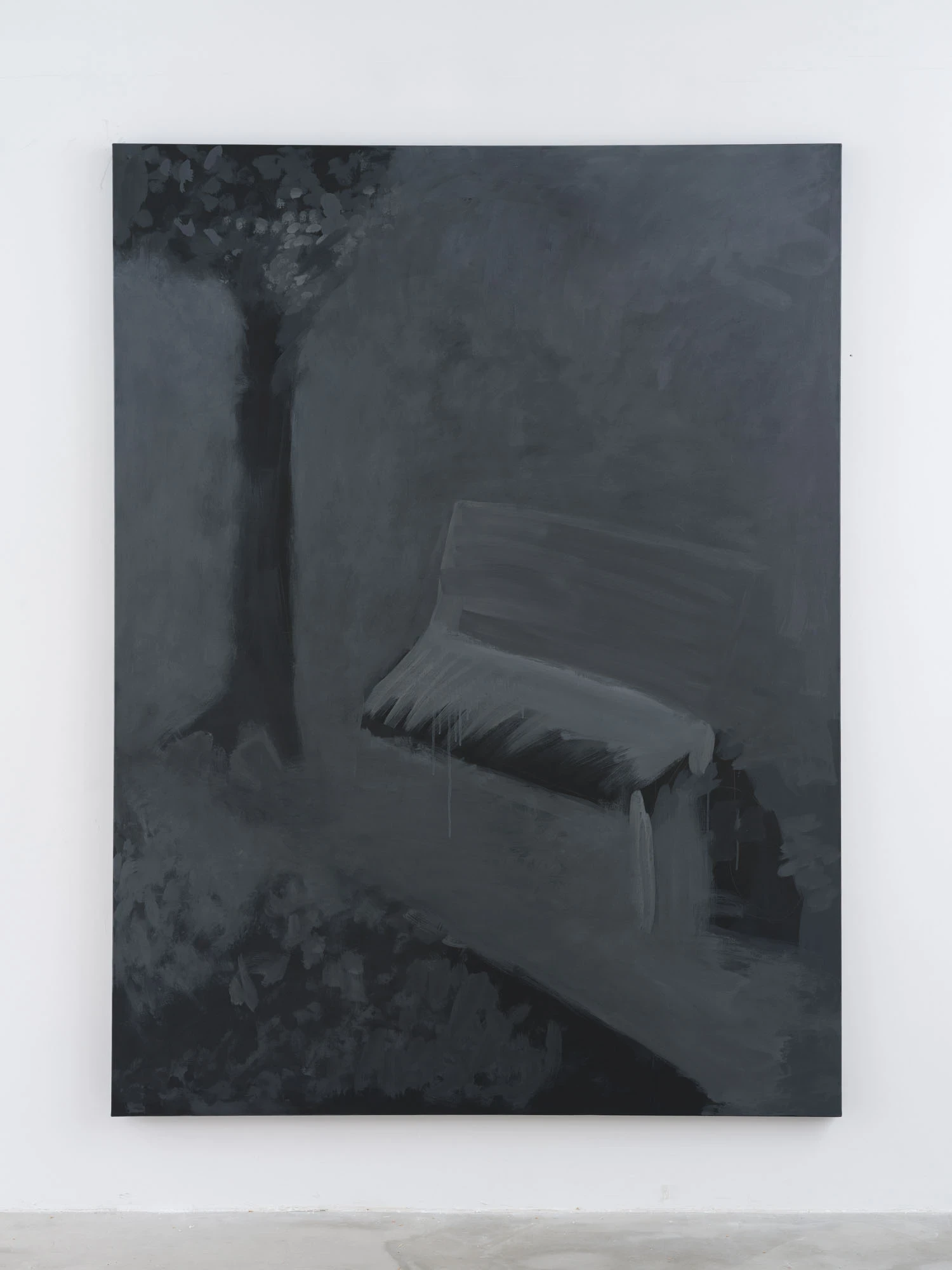
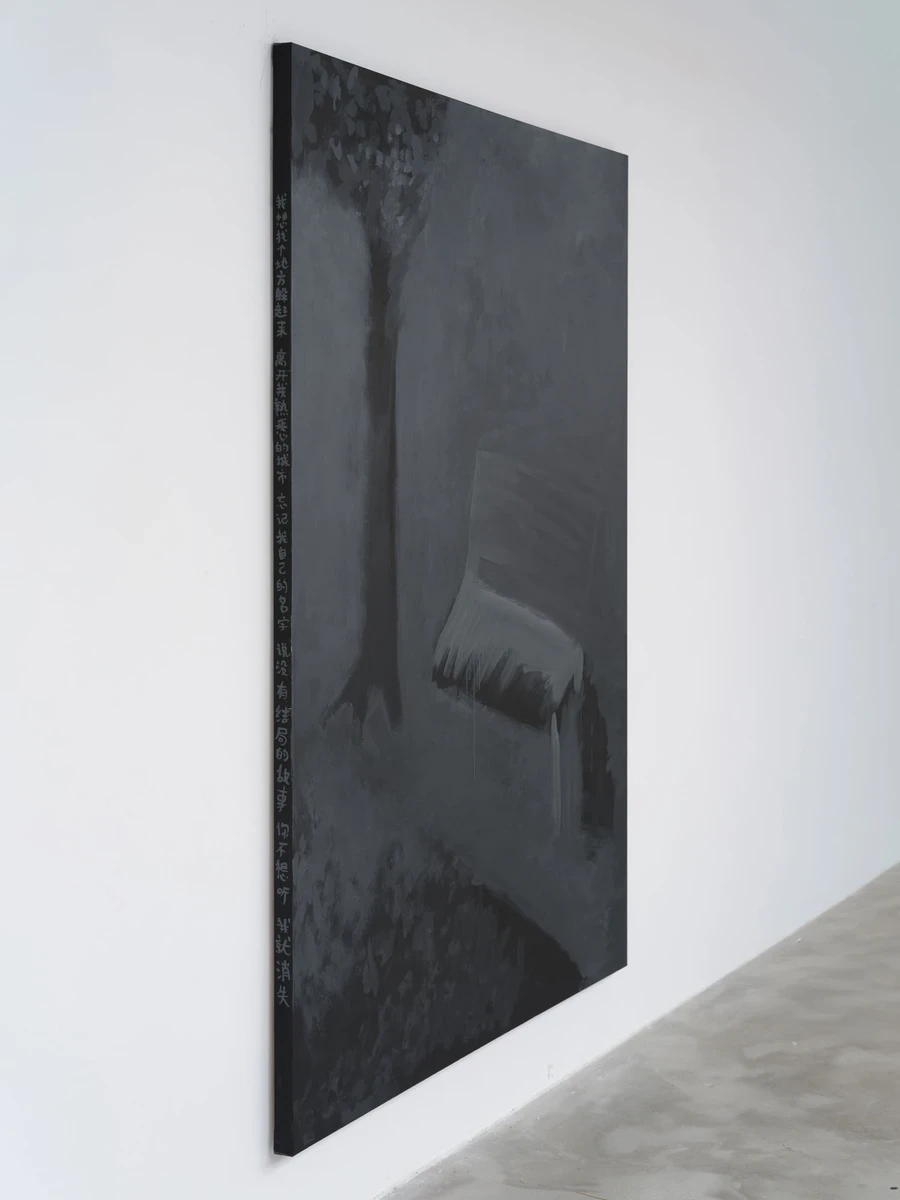
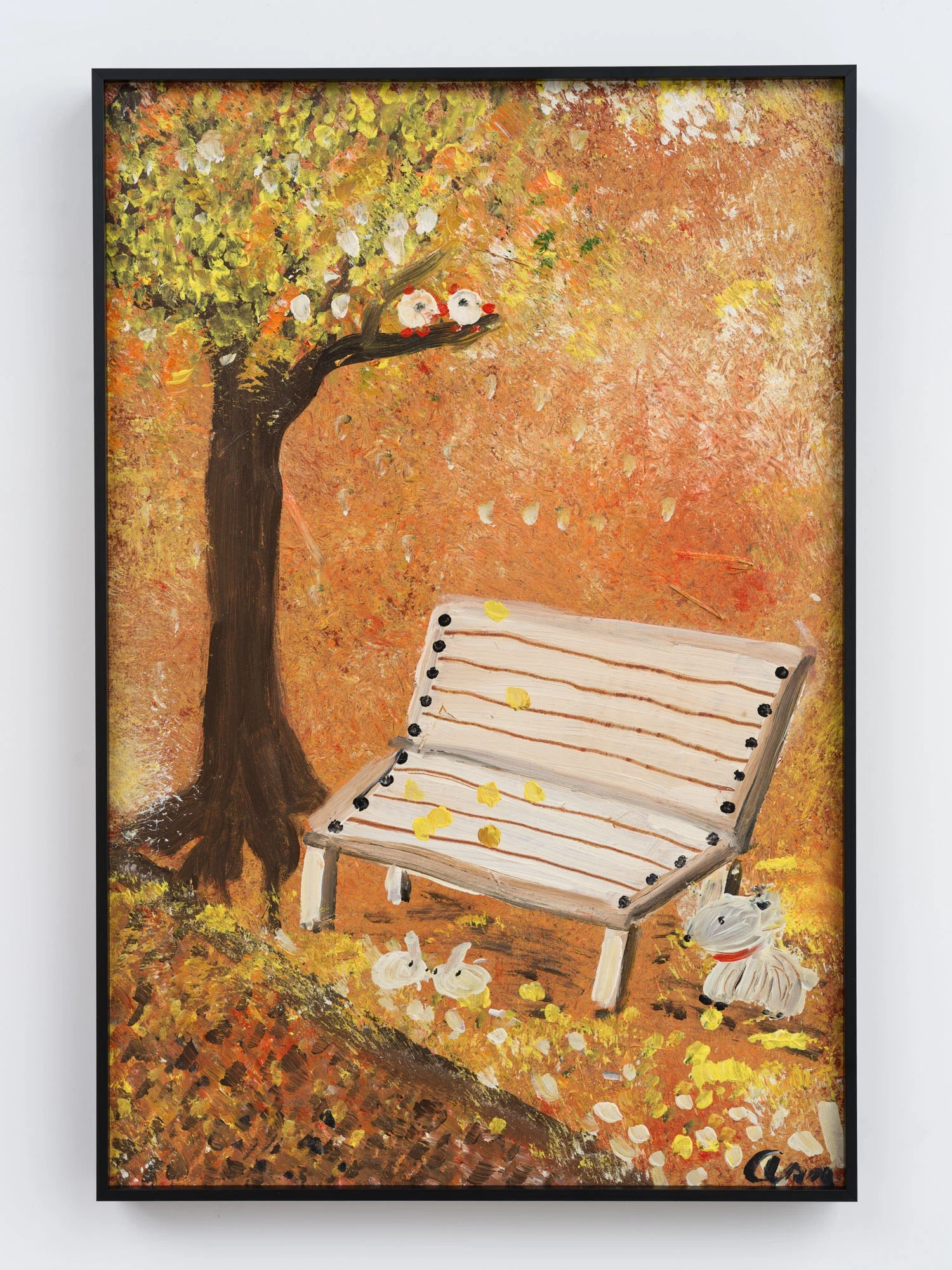
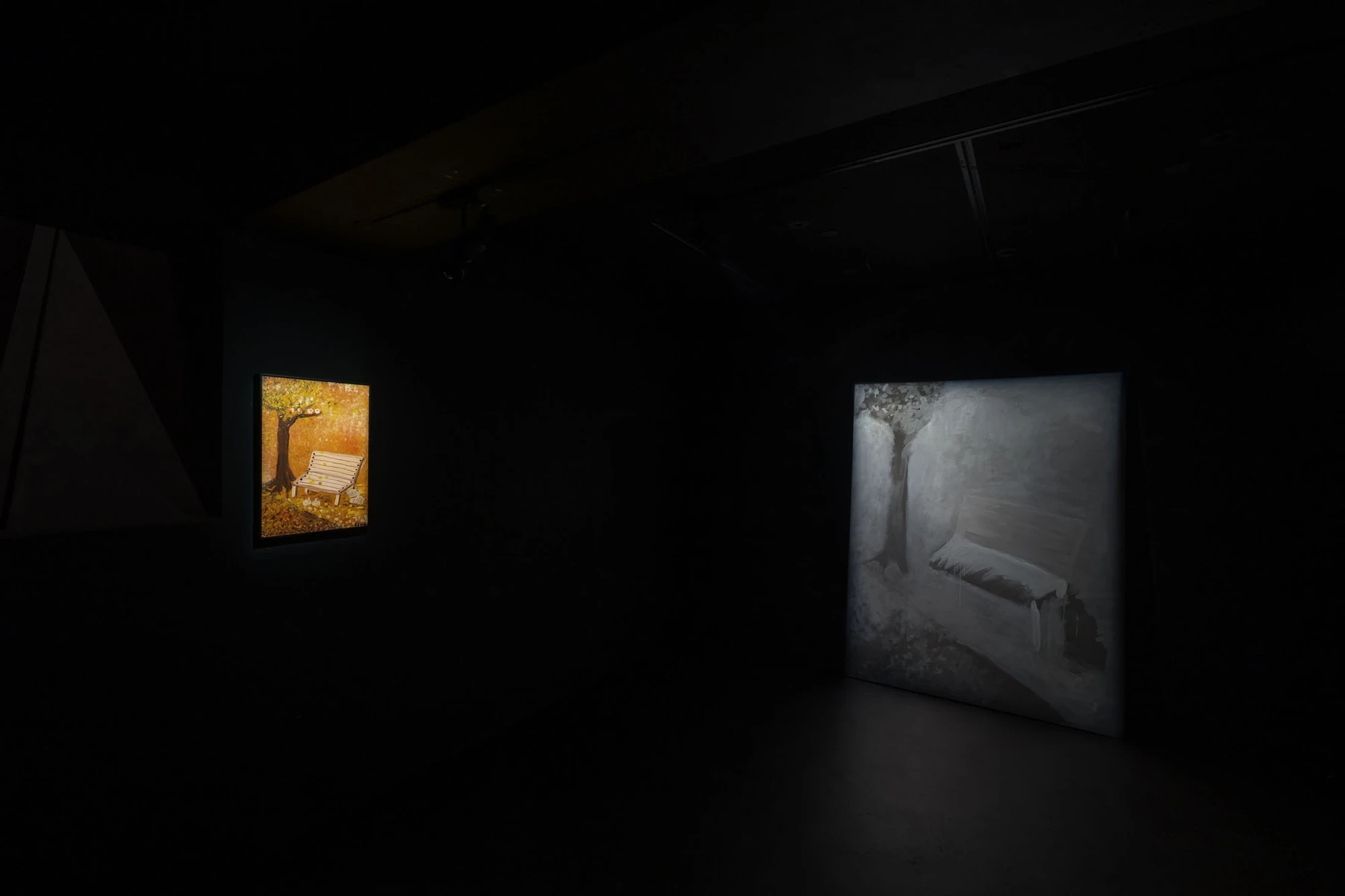
One floor down, the register turns colder. Zhao sets a small childhood painting, Untitled, against Curse, made this year. The early canvas shows a park bench beneath an autumn tree, rabbits and a dog scattered across warm ochre ground, signed in a child's hand. Curse enlarges the identical scene and drains it to brushy washes of grey and black, the bench and tree dissolving toward the ground that threatens to swallow them. Down the left edge runs a painted colophon in Chinese, a fantasy of vanishing offered as a cure for loss. Rather than hang the work, Zhao leaves it leaning against the wall, closure withheld, the space between naivety and self-knowledge left open.
What the show proposes is that the two states are not a line but a loop. Innocence and its undoing keep circling back into each other, and the hardest lesson maturity offers is that the process never finishes. The work is not the paintings, Zhao suggests, but the charged emptiness held between them.